 Ultimate guide
Residential Irrigation Backflow Testing Requirements
Last Updated: November 5, 2026
Quick Summary
Residential irrigation backflow testing requirements generally mean any sprinkler system connected to a public potable water supply needs an approved mechanical backflow device, installed by permit, and tested after installation. Your water provider sets the specific assembly type, testing interval, and reporting rules, so confirm those local requirements before you buy or book.
- Annual testing is the most common requirement for residential irrigation assemblies, especially pressure vacuum breakers and reduced pressure assemblies.
- A licensed plumber is not automatically a certified tester, so verify certification and registration with your water provider.
- The test report records assembly details, measured values, and the gauge's calibration date as a compliance document.
- A failed test starts a short retest window that is separate from your routine testing interval.
- Schedule your test before your utility's deadline and before the spring rush when demand peaks.
Table of Contents
- Why Backflow Testing Protects Your Drinking Water
- Residential Backflow Preventer Requirements for Irrigation Systems
- Irrigation System Backflow Preventer Testing Frequency
- Who Is Qualified to Perform the Test
- What the Backflow Prevention Assembly Test and Maintenance Report Shows
- When a Test Fails: Backflow Preventer Test and Repair
- Scheduling Your Annual Irrigation Backflow Test
- Frequently Asked Questions
Why Backflow Testing Protects Your Drinking Water
Backflow testing is the process of verifying that a mechanical device installed on your irrigation line will stop contaminated water from reversing into your household drinking water supply. At H-Town Backflow, we run these tests across the Greater Houston area, and the reason they matter is simple: your sprinkler system sits in dirt, fertilizer, and standing puddles, and the pipe connecting it to your kitchen tap runs in both directions.
The physics is unforgiving. Water pressure in a municipal main fluctuates constantly, and when it drops, the pressure inside your irrigation lines can exceed the pressure in the main. Whatever is sitting in those lines gets pulled backward.
Back-Siphonage vs. Back-Pressure
Back-siphonage happens when negative pressure in the supply main pulls water backward through the service connection. A water main break, a fire hydrant opened at full flow, or heavy demand from a nearby hydrant can all create that vacuum. Back-pressure occurs when a downstream system generates pressure higher than the supply line, pushing water the wrong way. Both routes end at the same place: your potable water.
Cross-connection control exists to break that path. A cross-connection is any actual or potential link between the drinking water supply and a source of contamination, and an irrigation system is one of the most common residential examples. The EPA's cross-connection control guidance treats protecting the public water supply from these links as a shared responsibility between the utility and the property owner.
Residential Backflow Preventer Requirements for Irrigation Systems
Residential backflow preventer requirements for irrigation systems generally follow one rule: any sprinkler system connected to a public potable water supply needs an approved mechanical backflow device, installed by permit, and tested after installation. The specifics come from your water provider, not from a single national standard.
Most jurisdictions build their local rules on plumbing code adopted at the state or municipal level, plus the utility's own cross-connection control program. That means three things typically apply to a homeowner:
- A permit and inspection for the initial installation
- An initial test performed by a certified tester before the device goes into service
- Ongoing periodic testing at an interval your water utility sets
Installation details matter more than most homeowners expect. Devices must sit at the correct height above finished grade, be accessible for testing and repair, and be protected from freezing and flooding. A device buried in a valve box or installed below the required elevation fails inspection regardless of how well it works.
Which Assembly Fits Your Irrigation System
Three assembly types dominate residential irrigation:
| Assembly | Typical Use | Key Trait |
|---|---|---|
| Pressure vacuum breaker | Residential irrigation, no below-grade outlets | Testable, must stay above the highest downstream outlet |
| Reduced pressure assembly | Irrigation with chemical injection or below-grade lines | Highest protection level, drains continuously |
| Double check assembly | Irrigation with no health hazard risk | Lower protection tier, some utilities restrict use |
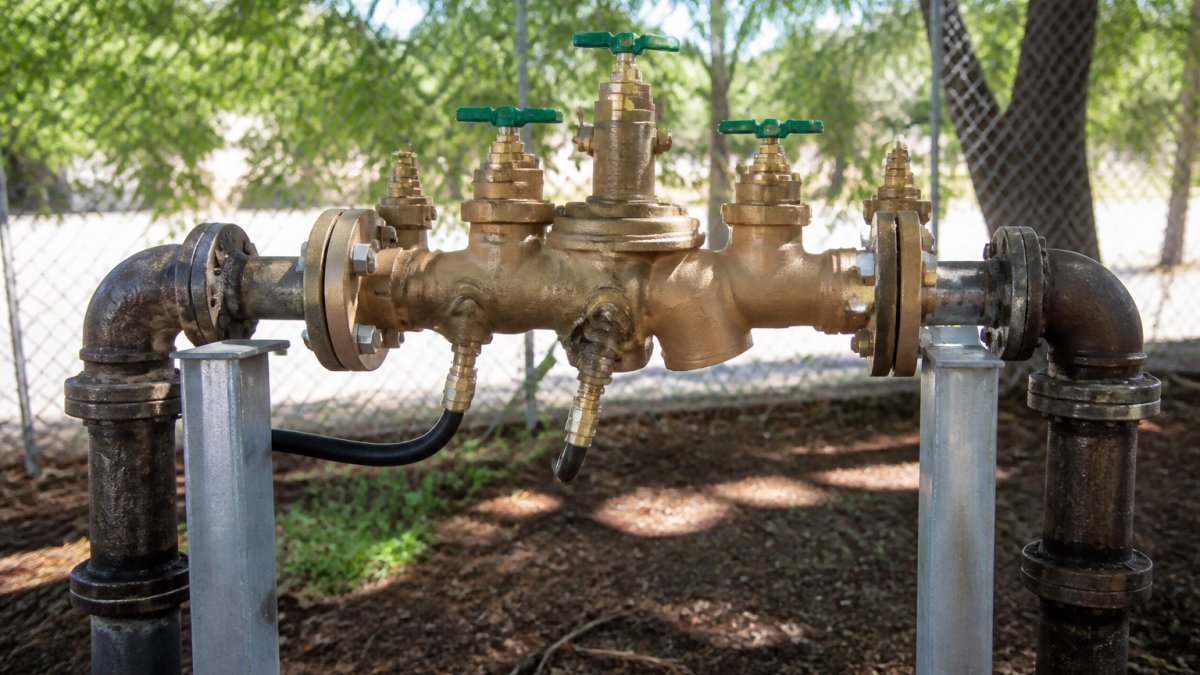
A pressure vacuum breaker is the most common choice for a straightforward lawn sprinkler system. A reduced pressure assembly, often called an RP device, is what you need when fertilizer injectors, drip lines, or buried emitters create a genuine health hazard. Your water provider decides which assemblies it will accept, so confirm before you buy.
Irrigation System Backflow Preventer Testing Frequency
Irrigation system backflow preventer testing frequency is set locally, and the range across U.S. water providers is wider than most homeowners expect. Testing intervals are set by each utility's own cross-connection control program, so the same device can fall on different cycles in different service areas. There is no single national interval.
What the schedules actually look like:
-
Annual testing is the most common requirement for residential irrigation assemblies, and it is almost universal for pressure vacuum breakers and reduced pressure assemblies. A lawn irrigation system with a PVB or RP device typically falls here.
-
Seasonal or pre-season testing is required by some providers that want the test completed before irrigation systems are charged in spring, rather than on a calendar anniversary.
-
Retest windows after repair, replacement, or relocation are separate from the routine interval and are usually much shorter, often measured in days rather than months.
Because the interval is a local rule, the only reliable way to know yours is to check your water provider's published cross-connection control program or the notice on your utility bill. A common pattern is that the utility tracks test reports against the service address and mails a reminder before the due date; missing that reminder does not extend the deadline.
A Practical Compliance Timeline for Homeowners
The scattered local rules become manageable when you turn them into a repeating process:
- At installation: confirm the approved assembly type with your water provider, pull the required permit, and have the initial test performed by a certified tester before the device goes into service. Keep the permit and the first report.
- Sixty days before your due date: confirm your device type and your provider's current interval, since programs occasionally revise schedules.
- Thirty days before: book the test and confirm the tester is registered with your specific water provider, not just certified statewide.
- Test day: clear landscaping and make the device accessible; a buried or obstructed assembly can prevent the test from being completed.
- Same day: get a copy of the report and confirm it was filed with the utility.
- If it fails: schedule repair and retest immediately, because the retest window is short and separate from your routine interval.
- If a notice arrives: treat it as a deadline, not a reminder. Utilities generally escalate from notice to compliance action, and some programs can move toward discontinuing water service for a persistently untested device.
Watch out: assuming a lapsed year quietly resets the clock can turn a routine test into a compliance notice. Rebuilt or relocated devices should be retested, and the utility's published requirements are the authority to follow.
For the full case on why the annual cycle exists and what happens when it lapses, read our breakdown of why annual backflow testing is mandatory.
Who Is Qualified to Perform the Test
Testing is generally performed by a certified backflow prevention assembly tester, and certification and registration requirements are set by the local authority. A licensed plumber is not automatically a certified tester, and that distinction matters when you hire.
Test equipment counts too, and gauges must be calibrated according to the requirements of the local authority. A tester with a dead gauge produces a report nobody accepts.
Before you book anyone, verify three things: current certification, registration with your specific water provider, and calibration documentation for the test kit. Our guide to how to verify backflow technician credentials walks through exactly what to ask for. If you want the underlying requirements contractors must meet, see backflow certification requirements for contractors.
What the Backflow Prevention Assembly Test and Maintenance Report Shows
A backflow prevention assembly test and maintenance report is the formal record of your device's performance, filed with the water utility and retained by the property owner. It is not a receipt. It is a compliance document.
Expect the report to list the assembly type, make, model, size, and serial number, along with the service address and the tester's certification number.
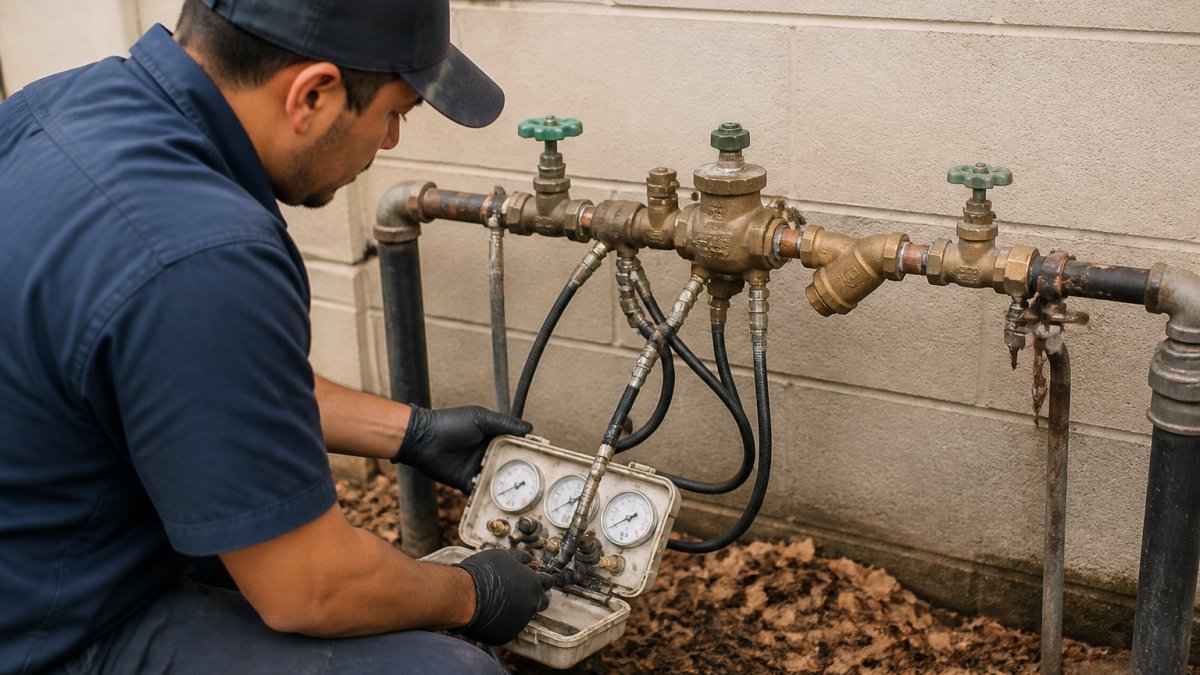
The report also records the test method and the gauge's calibration date. Municipal reporting requirements vary in how and when the form must be submitted, which is why our team handles municipal backflow reporting requirements as part of the service rather than leaving the paperwork with you.
When a Test Fails: Backflow Preventer Test and Repair
A failed test is a compliance event, not just a mechanical one. The report records which check failed and the measured values, and that record can start a compliance timeline with your water provider.
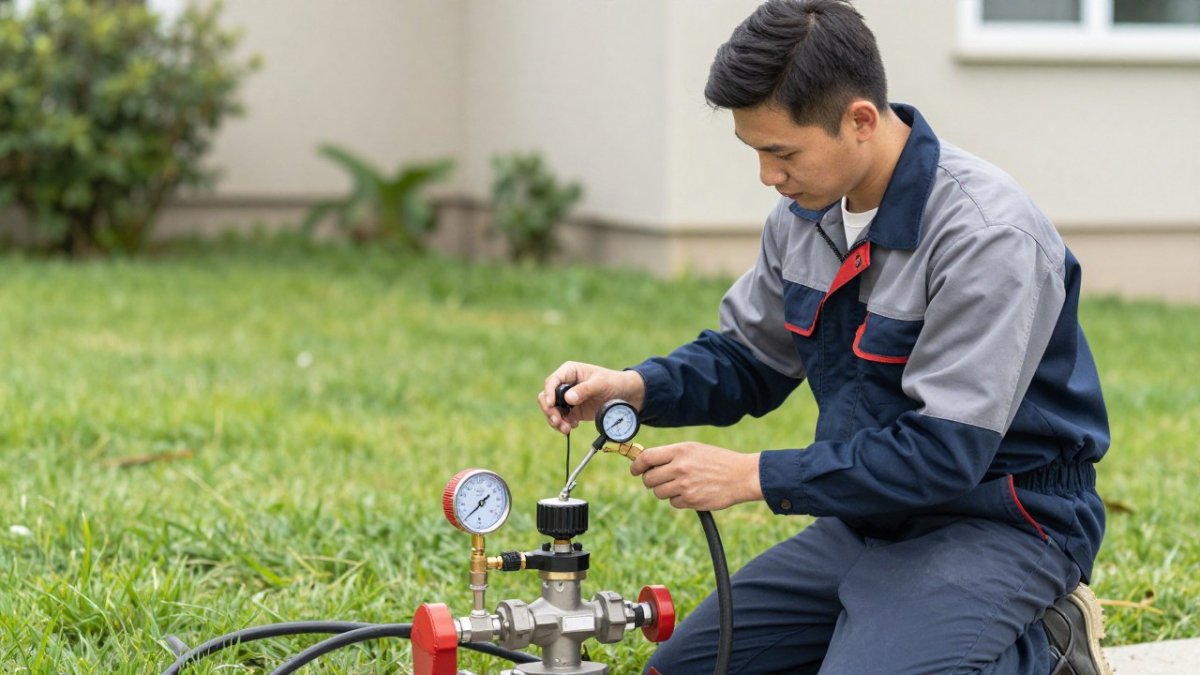
What typically fails, and what it means:
Repair versus replace is a judgment call that depends on the device's condition and cost, and your tester can advise on the appropriate path under local rules.
Responsibility generally sits with the property owner. The utility sets the requirement and receives the report, while the homeowner arranges the test, any repair, and the retest.
Watch out: treating a failed test as something that resolves on its own timeline is the mistake that turns a repair into a shutoff notice.
If you want to understand what typically goes wrong first, our article on common reasons backflow tests fail covers the usual suspects.
Scheduling Your Annual Irrigation Backflow Test
Timing beats urgency. The best time to schedule is before your utility's deadline and before the spring rush, when every irrigation system in the area needs attention at once. Testing itself is generally brief.
Here is a practical compliance timeline we recommend to homeowners and facility managers:
- Sixty days out: confirm your device type and your utility's current interval
- Thirty days out: book the test, and confirm the tester is registered with your provider
- Test day: have the device accessible, with any landscaping cleared away
- Same day: get a copy of the report and confirm it was filed
- If it fails: schedule repair and retest promptly
H-Town Backflow offers night and weekend appointments, and serves the Greater Houston area and surrounding municipalities. Get started with H-Town Backflow and keep your required testing current, your water clean, and your system operating safely.
Frequently Asked Questions
Do I need a backflow preventer for a residential irrigation system?
In most jurisdictions, yes. Any irrigation system connected to a municipal potable water supply is a potential cross-connection, so water utilities generally require an approved mechanical backflow device at the service connection. The exact assembly type depends on local code and your water provider's cross-connection control program. Check with your utility before installation, because a device that does not meet local requirements may be rejected at the initial test.
How often does an irrigation backflow preventer need to be tested?
Annual testing is the most common requirement for residential irrigation backflow preventers, though some water providers allow biennial testing for certain low-hazard assemblies. Testing frequency is set by your local water utility or cross-connection control program, not by the manufacturer. Confirm the interval in writing when your device is registered, and keep the test due date on a calendar so you do not miss it.
Can a homeowner perform their own backflow test?
No. Testing a backflow prevention assembly requires a certified backflow prevention assembly tester, calibrated test equipment, and in most programs a license or registration with the local authority. A homeowner cannot self-certify results, and utilities will not accept a report from an uncertified person. Hiring a licensed tester also protects you if the device fails, since the report documents the failure and the required repair.
What happens if an irrigation backflow test fails?
A failed test means the assembly did not hold against backflow or did not meet the required pressure differential. The tester documents the failure on the test report and notifies the water provider. You then have a limited window, often set by local rules, to repair or replace the device and have it retested. Ask your tester about same-day repair options so you can close out the failure before any compliance deadline.
How do I submit a backflow assembly test report?
Your certified tester usually completes and submits the backflow prevention assembly test and maintenance report to the water utility, either through the utility's online portal or by a required form. Ask for a copy for your records. Keep reports for every device and every test cycle, because utilities can request proof of testing and property sales or insurance reviews may require the history.
How long does the actual test take, and will water service be interrupted?
Testing time depends on the number of assemblies on the property. H-Town Backflow offers night and weekend appointments, and you can contact us for details on scheduling.