 how-to
Common Reasons Backflow Tests Fail
Table of Contents
- Why Backflow Tests Fail: The Main Culprits
- Understanding Backflow Test Failure Causes
- What Happens If a Backflow Test Fails
- Backflow Preventer Repair Options
- Backflow Retest After Repair
- Prevention and Maintenance Schedule
- Frequently Asked Questions
Last Updated: October 11, 2026
Why Backflow Tests Fail: The Main Culprits
Backflow tests fail when internal components stop working as designed. We've inspected thousands of assemblies across the Greater Houston area and identified the same mechanical issues repeatedly.
The most common reasons backflow tests fail involve wear, contamination, and corrosion. A certified tester checks whether water flows backward under pressure, if it does, your system fails.
Worn or Damaged Check Valves and Check Discs
The check valve is the core of any backflow preventer. Its check disc allows forward flow but blocks reverse flow. When worn or damaged, water leaks backward and your test fails.
Check discs deteriorate from constant opening and closing against their seat. After years of operation, surfaces become pitted or warped. Debris caught between disc and seat accelerates wear, creating an imperfect seal that allows backflow.
A certified tester spots this through test readings showing reverse flow. Replacing the check disc or entire check valve assembly is the standard repair.
Leaking Relief Valves
Relief valves release excess pressure by opening slightly, then closing. When they leak, water escapes continuously, creating a failure point during testing.
Relief valves fail when seals wear out or debris lodges in the valve seat. Hard water deposits prevent full closure. A leaking relief valve cannot hold the pressure needed to pass a backflow test.
If pressure drops during testing, a leaking relief valve is the likely cause. Repair involves cleaning or replacing the valve assembly.
Debris, Dirt, Rust, and Mineral Buildup
Contamination blocks water flow and prevents valves from seating properly. Dirt, rust flakes, and mineral deposits accumulate in tight spaces where check discs and valve seats meet.
Rust forms when metal components corrode, especially in older systems or those exposed to moisture.
When contaminants prevent a valve from closing fully, water leaks backward during testing. A certified tester will recommend flushing or replacing the assembly.
Worn Seals and Rubber Components
Seals and rubber gaskets keep water from leaking past moving parts. Over time, these materials harden, crack, or shrink. Once a seal fails, water finds a path around the valve.
Rubber components degrade from constant exposure to water, pressure changes, UV light, and temperature fluctuations. After 5-10 years, many seals need replacement.
A tester identifies leaking seals by watching for water seeping from joints or pressure loss during testing. Replacing seals is usually straightforward and restores working condition.
Broken or Weakened Springs
Springs inside your backflow assembly hold check discs in the closed position. A broken or weakened spring allows the disc to move, creating a gap where water can flow backward.
Springs weaken from metal fatigue over decades of use or break suddenly if corrosion has weakened the metal. Once a spring fails, the check disc no longer seats properly.
A broken spring means the valve stays open too long or doesn't close at all. Replacing the spring or entire check valve assembly solves the problem.
Understanding Backflow Test Failure Causes
A backflow test measures whether water can flow backward through your preventer assembly. If water moves backward, the test fails, meaning contaminants could potentially enter your potable water supply.
The test follows strict procedures set by local water providers and industry standards. Different assembly types require different testing methods.
How Test Procedures and Pass/Fail Criteria Work
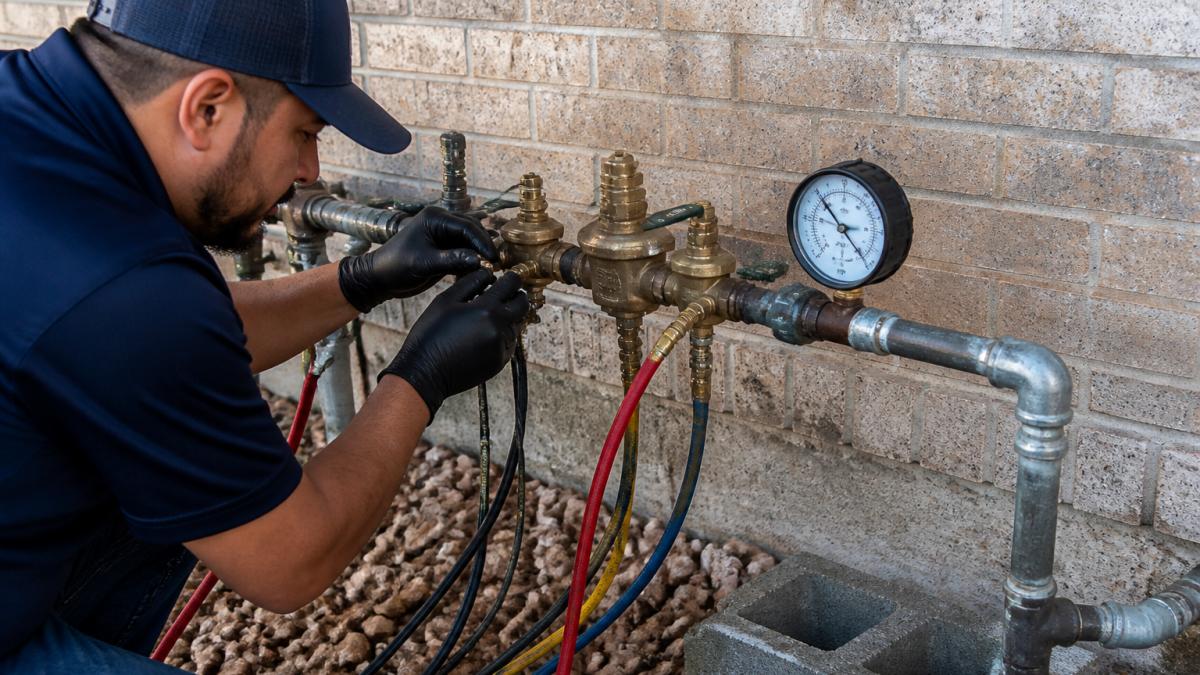
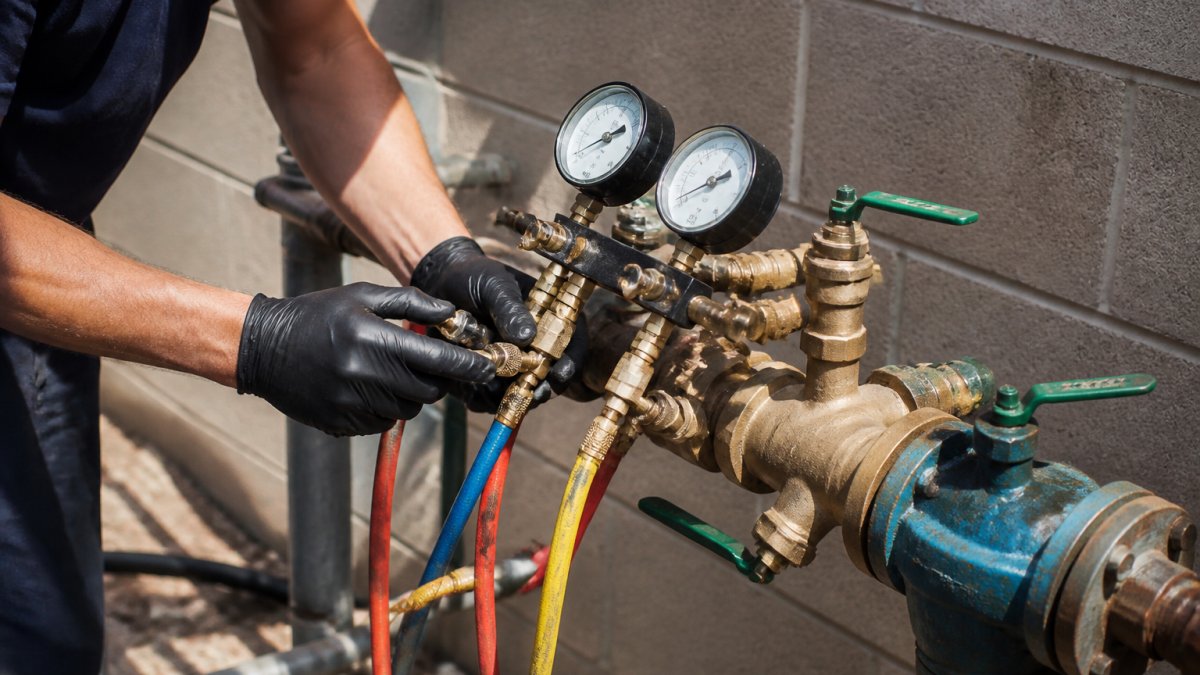
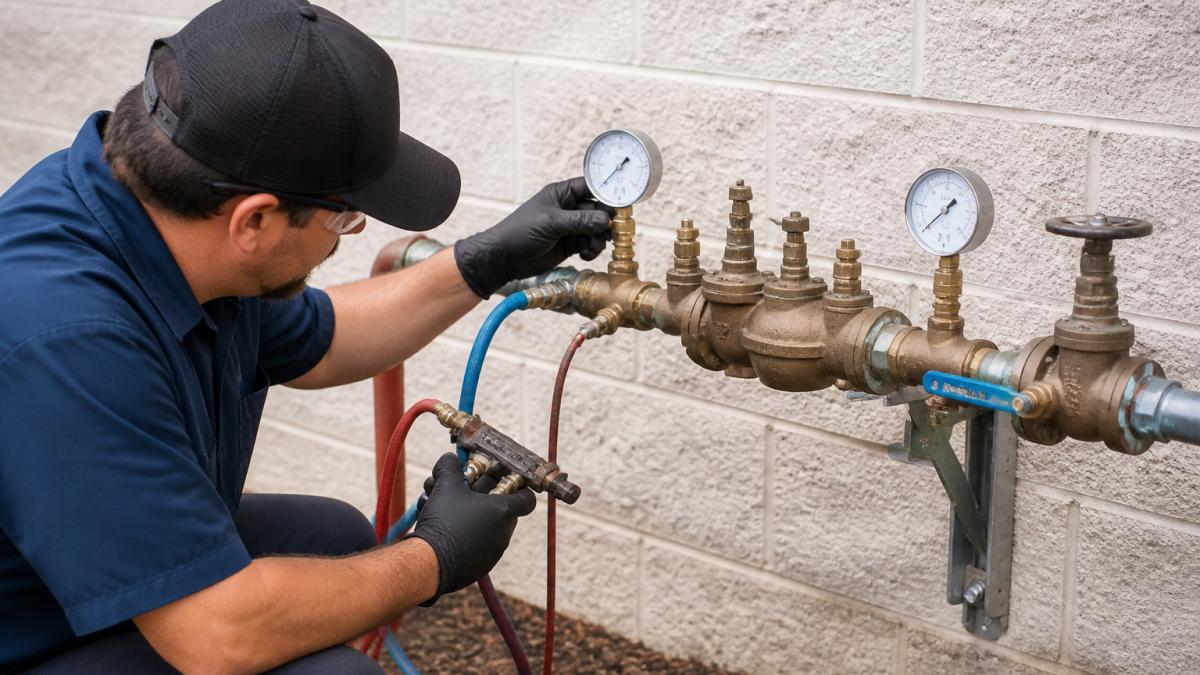
A certified tester pressurizes your backflow assembly and monitors pressure gauges and valve movement to check whether each internal component holds its position under pressure.
For a double-check assembly, the tester applies pressure to each check valve. Both must hold pressure with zero backflow.
For a reduced-pressure assembly, the tester checks both check valves plus the relief valve. The relief valve must stay closed under normal pressure but open if pressure drops too low.
Pass criteria: zero backflow detected, pressure holds steady, and all valves respond correctly. Fail criteria: any backflow, pressure loss, or valve not responding as designed.
Differences Between Assembly Types
Double-check assemblies have two check valves in series and require annual testing. Reduced-pressure assemblies add a relief valve between the two check valves for higher-risk situations and also require annual testing. A double-check can only fail at its check valves, while a reduced-pressure assembly can fail at check valves or the relief valve.
What Happens If a Backflow Test Fails
A failed test means your water system is no longer protected against contamination. You have a limited time to repair and retest before facing penalties or water service interruption.
Immediate Steps and Compliance Deadlines
Contact a licensed backflow repair company immediately. Most water providers give you 10-30 days to submit a passing retest. H-Town Backflow offers flexible scheduling, including night and weekend appointments.
Your repair technician will diagnose the failed component and explain your options: repair the specific part or replace the entire assembly. Most failures can be repaired.
After repair, schedule a retest with a certified tester. Your water provider requires proof of a passing retest before your account status returns to compliant.
Inspection Report and Documentation
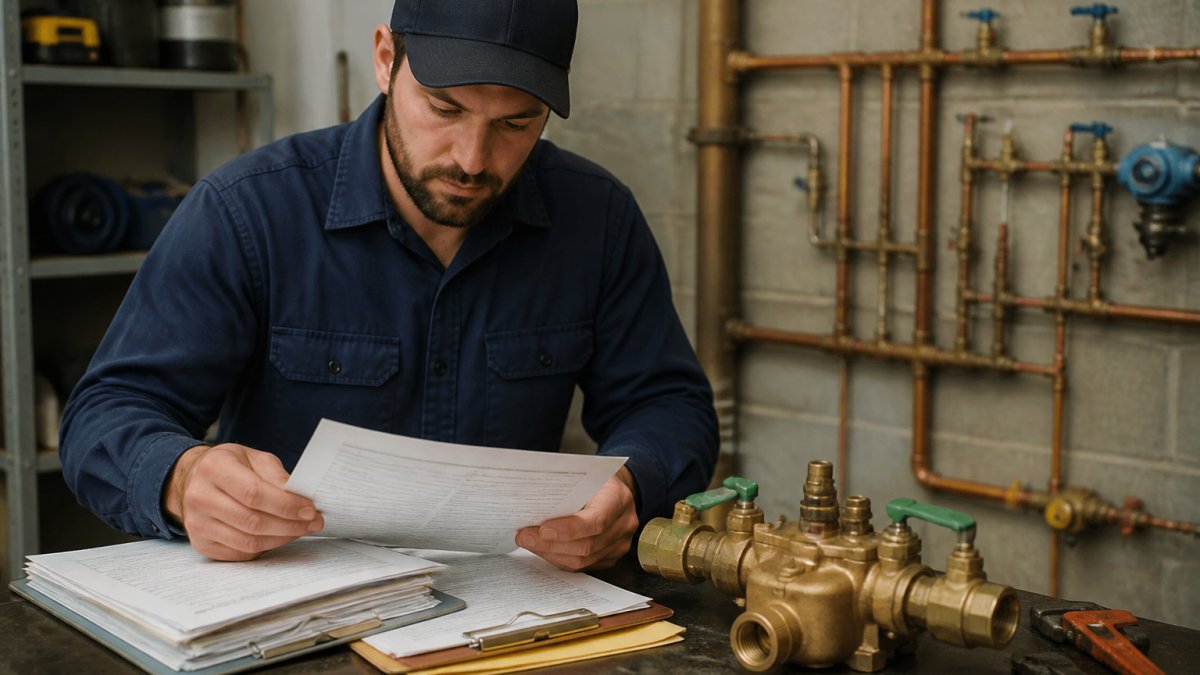
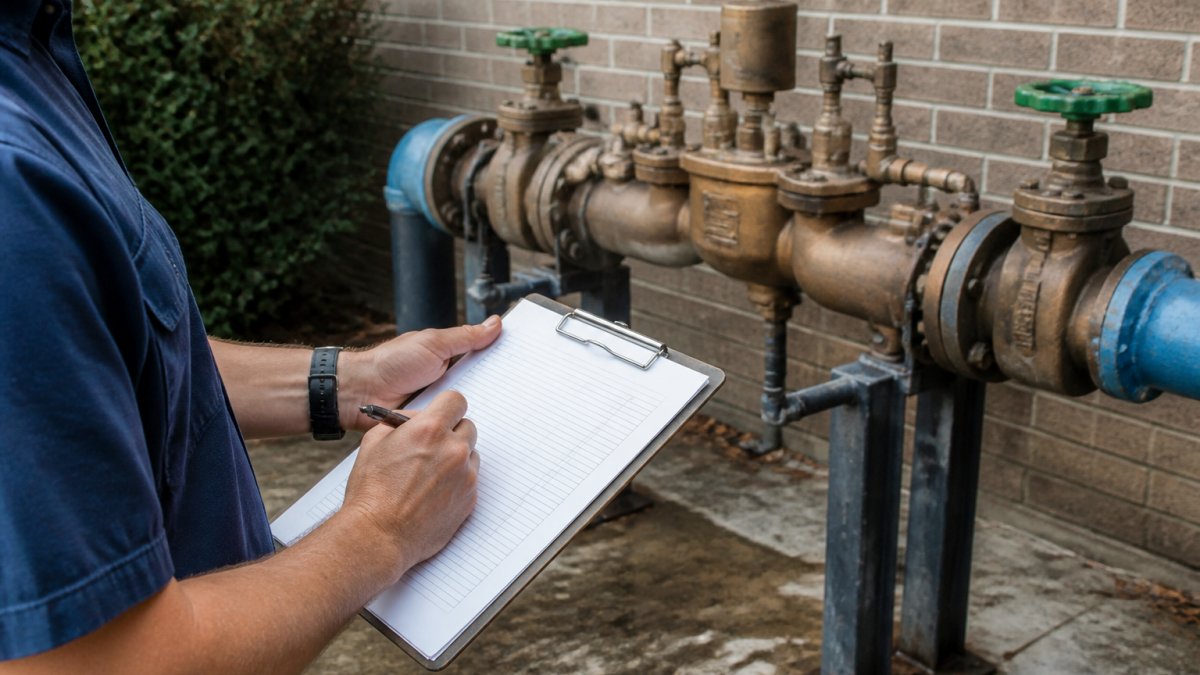
Your failed test generates an inspection report listing which component failed and why. Keep this report to guide your repair technician and explain the failure to your water provider.
After repair, request a new inspection report from the retest as proof of compliance. Submit it to your water provider as required.
We handle the reporting side of backflow compliance. We coordinate with your local water authority and ensure all documentation reaches the right department on time.
Backflow Preventer Repair Options
Once you know what failed, you face a repair decision: fix the broken component or replace the entire assembly.
When to Repair vs. Replace
Repair is the right choice when one component has failed but the assembly is relatively new. Replacing just a check disc, relief valve, or spring costs far less than full assembly replacement.
Replace the entire assembly when the preventer is very old, heavily corroded, or multiple components have failed. An assembly over 15 years old may be more cost-effective to replace than repair repeatedly.
Your repair technician will recommend which approach makes sense. Your repair technician will assess your specific assembly and explain both options with clear reasoning.
Common Repairs and What They Involve
Check disc replacement takes 30-60 minutes. Relief valve cleaning or replacement takes 45-90 minutes. Seal and gasket replacement takes 60-120 minutes. Spring replacement takes 30-45 minutes. Most repairs don't require shutting off water to your entire building, only the backflow assembly itself.
Backflow Retest After Repair
After your repair is complete, a certified tester must verify that your assembly now passes. This retest follows the same procedures as the original failed test.
Retesting Timeline and Procedures
Schedule your retest within 48 hours of repair when possible. Most water providers accept retests up to 30 days after the failed test, but don't wait. The sooner you pass the retest, the sooner your account returns to compliant status.
The retest uses the same equipment and follows the same pressure-testing protocol as the initial inspection. The tester applies pressure, watches the gauges, and confirms that all valves hold correctly.
We can arrange both repair and retest with the same certified professional. We coordinate the appointments and handle all documentation, so you don't have to contact the tester separately.
What to Expect During the Retest
The retest takes 20-30 minutes. The tester will access your backflow assembly, attach pressure gauges, and run the diagnostic sequence. You'll see the same procedures as the original test, the difference is that this time, the assembly should hold pressure without any backflow.
If the retest passes, the tester issues a passing report immediately. If it fails again, it usually means the repair didn't fully address the problem or a second component has also failed.
Most retests pass on the first attempt after proper repair. Having a licensed, experienced repair company handle the initial work dramatically improves your odds of passing the retest.
Prevention and Maintenance Schedule
Regular maintenance prevents most backflow test failures. A simple inspection schedule catches problems early, before they cause a failed test.
Regular Inspection and Preventive Care
Schedule a visual inspection of your backflow assembly every 6 months. Look for signs of leaking, corrosion, or mineral deposits around the assembly. Listen for unusual sounds, a hissing or dripping noise often signals a failing relief valve.
Flush your assembly annually to remove debris and mineral buildup. This is especially important in areas with hard water. Flushing takes 15-30 minutes and can prevent failures caused by contamination.
Keep the area around your backflow assembly clean and dry. Water pooling around the base indicates a leak. Good drainage and ventilation slow corrosion and extend the life of internal components.
Seasonal Considerations and Hard Water Protection
In areas with hard water, mineral deposits form faster. Consider installing a water softener or using a flushing schedule every 3-4 months instead of annually.
Seasonal temperature swings can stress rubber seals and springs. Before winter, inspect your assembly for cracks or leaks. Cold weather makes rubber more brittle.
We schedule regular inspections and cleanings so your assembly stays in peak condition year-round. This approach prevents failures, eliminates emergency repairs, and keeps you compliant without stress.
| Maintenance Task | Frequency | Time Required | Benefit |
|---|---|---|---|
| Visual inspection | Every 6 months | 10 minutes | Catch leaks early |
| Assembly flushing | Annually (3-4 months in hard water) | 15-30 minutes | Remove debris and mineral buildup |
| Professional inspection | Annually (required) | 20-30 minutes | Meet compliance, identify wear |
| Seal/gasket replacement | Every 5-10 years | 1-2 hours | Prevent leaks and backflow |
| Full assembly replacement | Every 15-20 years | 2-3 hours | Restore full protection |
A failed backflow test creates urgency, but it's also a fixable problem. Most failures result from worn internal components or contamination, issues that repair addresses quickly.
H-Town Backflow provides same-day diagnostics, licensed repairs, and certified retesting across the Greater Houston area. We offer night and weekend appointments so your property stays compliant without operational disruption.
Frequently Asked Questions
What is the most common reason a backflow test fails?
Worn or damaged check valves and check discs are the leading cause of backflow test failures. Over time, these internal components wear down from constant water flow and pressure changes, preventing them from sealing properly. Debris, dirt, and mineral buildup can also settle on valve seats, causing leaks that result in failed test readings. A certified tester will identify which component is failing during the inspection.
What happens if a backflow test fails?
After a failed backflow test, you receive an inspection report documenting the failure. You must schedule repairs with a licensed plumber and arrange a retest within a set compliance deadline, typically 10-30 days depending on your municipality. Until the system passes, you risk water service interruption or fines. Many property managers address failed tests immediately to avoid operational downtime and maintain compliance with local water authority requirements.
Can a backflow preventer be retested after repair?
Yes. After repairs are completed, the backflow assembly must be retested by a certified tester to confirm it now passes all criteria. The retest follows the same procedures as the annual inspection, checking pressure readings and valve function. A passing retest restores your compliance status and documents that the backflow preventer is functioning correctly to protect your potable water supply from contamination.
Does a failed backflow test mean the device needs to be replaced?
Not necessarily. Many failed tests can be resolved through repair of worn internal components like check discs, relief valves, seals, or springs. However, if the assembly is severely corroded, has multiple failing components, or is very old, replacement may be more cost-effective than repair. A qualified technician will evaluate the damage and recommend whether repair or replacement is the best option for your situation.