 how-to
Backflow Assembly Maintenance Tips for 2026
Table of Contents
- Backflow Preventer Testing Requirements: What 2026 Demands
- Annual Testing: Your Backflow Assembly Maintenance Schedule
- Common Backflow Assembly Problems and How to Spot Them
- How to Insulate Backflow Preventers Before Winter Hits
- Repair or Replace? Decision Criteria for Aging Assemblies
- DIY vs. Professional Scope: What You Can and Cannot Handle
- Troubleshooting Common Error Codes and Test Failures
- Frequently Asked Questions
Last Updated: October 2, 2026
Backflow Preventer Testing Requirements: What 2026 Demands
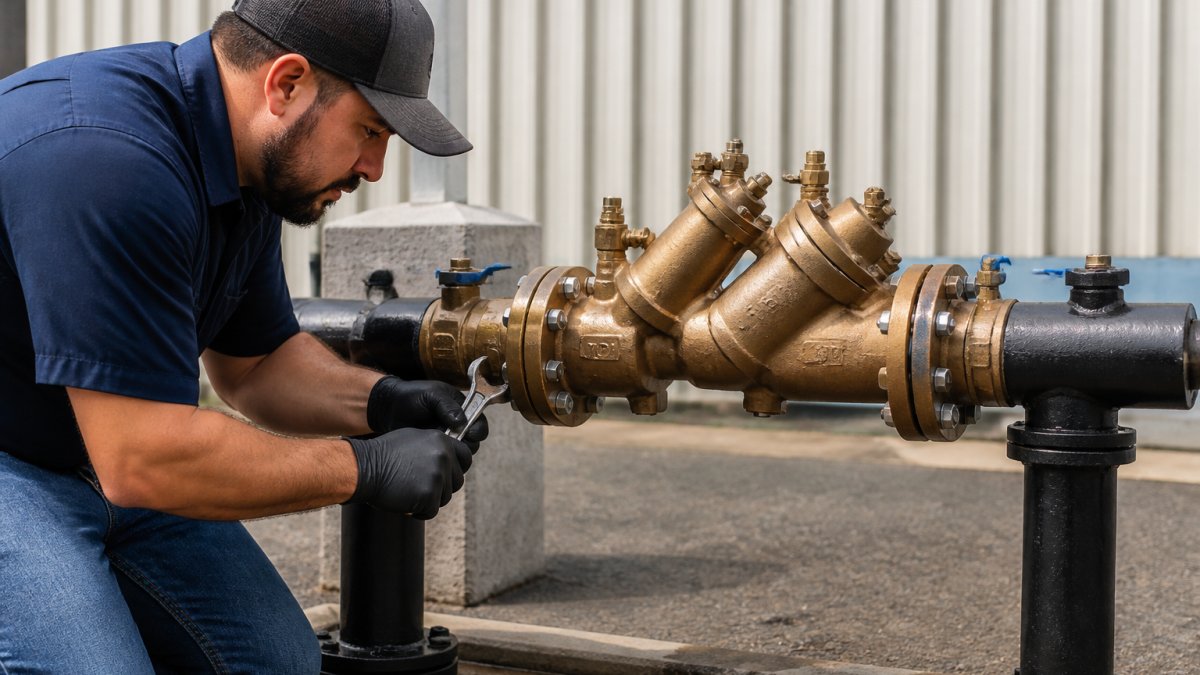
Backflow assembly maintenance tips for 2026 start with one hard fact: most assemblies must be tested every year, and paperwork now matters as much as the wrench work. A backflow assembly is a testable device installed on your water line to stop contaminated water from reversing into the potable water supply.
Cities across the Greater Gulf Coast run cross-connection control programs. They require annual testing by a certified tester, and they want the report filed on time. Miss it, and you risk fines or a shut-off notice.
The rules shift by municipality, so confirm your local plumbing code before you schedule anything. The EPA's cross-connection control guidance explains why these devices exist in the first place.
At H-Town Backflow, we test assemblies day or night, so your water service never stops. That matters when tenants are on the other side of the meter.
Annual Testing: Your Backflow Assembly Maintenance Schedule
Annual testing is the core of any backflow assembly maintenance schedule. A certified tester checks the check valves, relief valve, and pressure differential, then files the report with your water authority.
Between tests, keep a simple schedule:
- Monthly: look for leaks, corrosion, and standing water
- Quarterly: test the shut-off valves by hand
- Annually: full functional testing by a certified tester
- After any repair: retest before you file
A common mistake is skipping the visual checks. Small drips become failed internal seals, and failed seals become a device replacement.
Common Backflow Assembly Problems and How to Spot Them
Common backflow assembly problems show up long before a test failure. Watch for these signs:
- Leaking relief valve: water dripping from the port means a worn internal seal
- Low pressure differential: the check valve may be stuck open
- Rusted or cracked body: freeze damage or age
- Constant discharge: debris lodged in the valve seat
- No tag or missing report: a compliance problem, not a repair one
Back-siphonage and back-pressure are the two failure modes these devices guard against. A stuck check valve defeats both.
Most problems trace back to one thing: skipped preventative maintenance. A rebuild kit costs far less than a new assembly, and it takes minutes to install.
How to Insulate Backflow Preventers Before Winter Hits
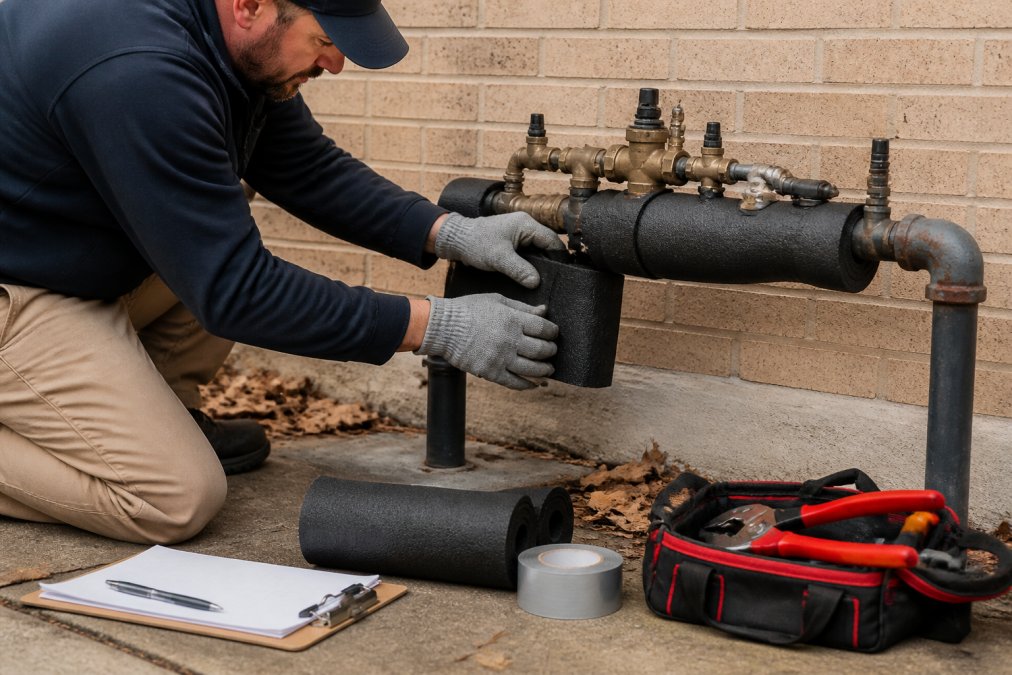
Insulating a backflow preventer takes about 30 minutes and one freeze. Here is the process:
- Shut off the water and drain the assembly
- Wrap the pipe and valve body in foam insulation
- Seal every seam with tape so no air gets in
- Fit an insulated cover over the whole assembly
- Check the relief valve still drains freely
A hard freeze can crack the body and flood the vault. Winterization is cheap insurance, especially for irrigation systems that sit idle all season.
Repair or Replace? Decision Criteria for Aging Assemblies
Repair wins when the body is sound and only the internal seals or check valve have failed. Replace the device when the body is cracked, the model is obsolete, or repairs cost more than a new assembly.
Use this rule of thumb:
- One failed component: repair with a rebuild kit
- Two or more failures in a year: price a replacement
- Cracked or frozen body: replace, no question
- Obsolete model with no parts: replace
The decision also depends on your plumbing code. Some jurisdictions require a specific testable device for certain hazards, and an old model may no longer qualify.
DIY vs. Professional Scope: What You Can and Cannot Handle
Most backflow content blurs the line between "maintenance" and "testing," which is exactly where property owners get into trouble. The cleanest way to think about it: you can maintain the assembly, but you generally cannot certify it. Those are two different legal acts.
- Visual inspections for leaks, corrosion, mineral buildup, and standing water in the vault
- Clearing dirt, mulch, and debris away from the assembly and its air gap
- Wrapping insulation and fitting an insulated cover before a freeze
- Exercising the shut-off valves by hand a few times a year so they do not seize
- Recording what you see, date, condition, any drips, in a log you keep with the assembly tag
What generally requires a certified tester:
- The annual (or semi-annual) performance test itself
- Any test that produces a compliance report filed with the water authority
- Replacing internal seals, check valve poppets, or relief valve components on most testable assemblies
- Any repair that changes the assembly's model, size, or orientation
Where DIY quietly voids your coverage:
- Disassembling a reduced pressure zone assembly to "clean" a check valve can disturb the relief valve differential setting. The assembly may pass a static look but fail the next certified test.
- Replacing a check valve with a non-OEM part can make the assembly non-compliant with its original approval listing, which some programs treat as an unapproved device.
- Tampering with a sealed or tagged assembly can trigger a violation separate from a failed test.
State plumbing and backflow certification requirements
Troubleshooting Common Error Codes and Test Failures
A failed backflow test is not a single problem, it is a reading that fell outside an allowed range, and the reading tells you which component failed. Learning to interpret the numbers before you call a tester saves you a second visit and often a second fee.
Reading the gauge on a reduced pressure zone assembly:
What each symptom usually points to:
- Relief valve drips continuously: the first check valve is not holding, so supply-side pressure is bleeding through and pushing the relief open. This is a check valve seat problem, not a relief valve problem, replacing the relief valve alone will not fix it.
- Relief valve opens during a normal test: the second check valve may be leaking, or the relief valve's own seat is fouled. Debris is the most common cause; a rebuild is the second.
- Low differential across check valve #1: a stuck-open or debris-fouled check. Flushing sometimes clears it. If the differential stays low after flushing, the seat or poppet is worn.
- Assembly passes static but fails under flow: a classic sign of a partially seized check that only leaks when pressure changes. This is easy to miss on a quick visual and is why the certified test exists.
- Water weeping from the body or bonnet: a gasket or O-ring failure, or freeze damage. If the body is cracked, no rebuild kit will help.
The flush-first sequence:
- Confirm both shut-off valves are fully open, a partially closed valve mimics a low-differential failure.
- Open a downstream fixture to move water through the assembly and dislodge loose debris.
- Re-check the relief valve drain path; a clogged drain line can look like a relief valve failure.
- If the reading is still out of range, stop. Further disassembly without a calibrated gauge and certification is where DIY repairs go wrong.
| Symptom | Most Likely Cause | First Action |
|---|---|---|
| Relief valve drips at rest | Check valve #1 not holding | Flush, then rebuild check #1 |
| Relief opens during test | Check #2 leak or fouled relief seat | Flush and reseat |
| Low differential, check #1 | Stuck or debris-fouled check | Flush; rebuild if it persists |
| Passes static, fails under flow | Partially seized check | Certified retest after flush |
| Weeping body or bonnet | Gasket, O-ring, or freeze crack | Inspect for cracks; replace if cracked |
When to stop troubleshooting and call a certified tester:
Frequently Asked Questions
How often do backflow assemblies need to be tested?
Most jurisdictions require annual testing of backflow assemblies, including reduced pressure zone (RPZ) devices and double check valve assemblies. Some high-hazard commercial or industrial applications may require testing more frequently. Your water authority will notify you when your test is due. Marking your calendar 30 days before the deadline gives you time to schedule a certified tester without risking a compliance gap or water service interruption.
What are the signs that a backflow preventer needs repair?
Watch for continuous water discharge from the relief valve, reduced water pressure on the downstream side, visible corrosion or mineral buildup on internal components, and failed annual test results. A relief valve that keeps dripping usually means the internal seals or check valve discs have worn out. Addressing these issues early with a rebuild kit or device replacement prevents more expensive damage and keeps your backflow assembly maintenance on track.
Who is responsible for maintaining backflow devices?
The property owner or facility manager is responsible for ensuring backflow assemblies are tested and maintained on schedule. For commercial properties and multi-unit residential complexes, that means coordinating with a certified tester, keeping records, and submitting results to the local cross-connection control program. Residential irrigation systems also fall under this rule in most areas. Your water provider can clarify local requirements and deadlines.
Can I insulate my backflow preventer myself, or should I hire a professional?
Basic insulation wraps and heat tape are homeowner-friendly for mild freezes, but exposed assemblies in unheated spaces may need a professional enclosure or relocation. If your backflow preventer sits above ground near a parking lot or on a rooftop, a certified technician can install proper insulation without blocking test ports or access panels. The goal is to protect the device while keeping it testable and compliant year-round.
Backflow compliance is not optional, and the paperwork does not file itself. H-Town Backflow handles testing, repair, and reporting across the Greater Houston area, with night and weekend appointments so your water service stays on. Our certified team keeps your system's required testing up to date and your water free from contaminants. Send us a message and get your next test scheduled today.