 How-to
How to Budget the Cost of Residential Backflow Testing
Last Updated: November 4, 2026
Quick Summary
The cost of backflow testing depends on your device type, test length, and how the tester prices travel and scheduling. Simple irrigation devices like PVBs cost far less to test than complex reduced-pressure assemblies, and a vague phone quote can hide a trip charge.
- PVBs test quickly, DCVAs take longer, and RPZs are typically the most expensive to test.
- Weekend, evening, and after-hours appointments can carry a premium.
- A failed test means paying for the test, the repair, and a retest as separate line items.
- Water authorities generally require an annual test for backflow prevention assemblies.
- Ask each provider to break the quote into test fee, trip charge, reporting fee, and retest fee.
Table of Contents
- What Drives the Cost of Residential Backflow Testing Houston
- Residential Backflow Testing Cost: What Homeowners Actually Pay For
- Backflow Test and Repair Cost: Budgeting for a Failed Test
- Backflow Testing Frequency and Annual Compliance Requirements
- How to Get an Accurate Backflow Testing Quote
- How to Verify a Tester's Houston Eligibility
- Schedule Your Houston Backflow Test Without the Guesswork
- Frequently Asked Questions
What Drives the Cost of Residential Backflow Testing Houston
The cost of residential backflow testing in Houston depends on three things: the type of backflow preventer you have, how long the test takes, and how the tester prices travel and scheduling. A simple irrigation device generally costs far less to test than a complex reduced-pressure assembly, and a vague phone quote can hide a trip charge.
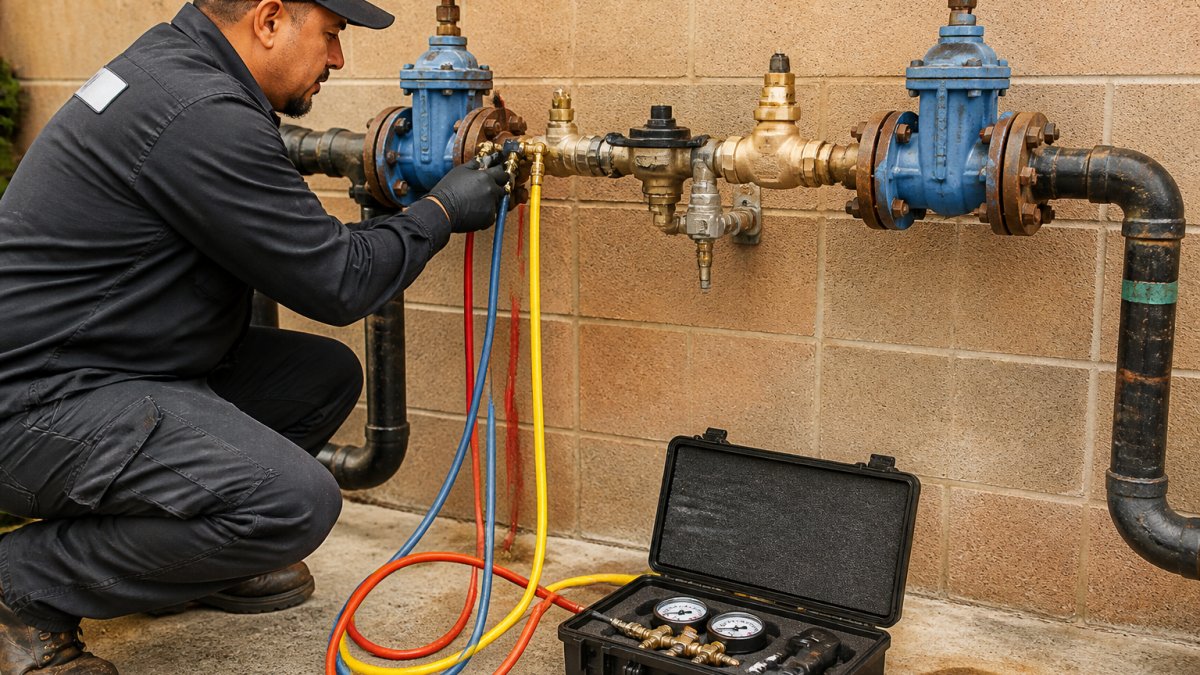
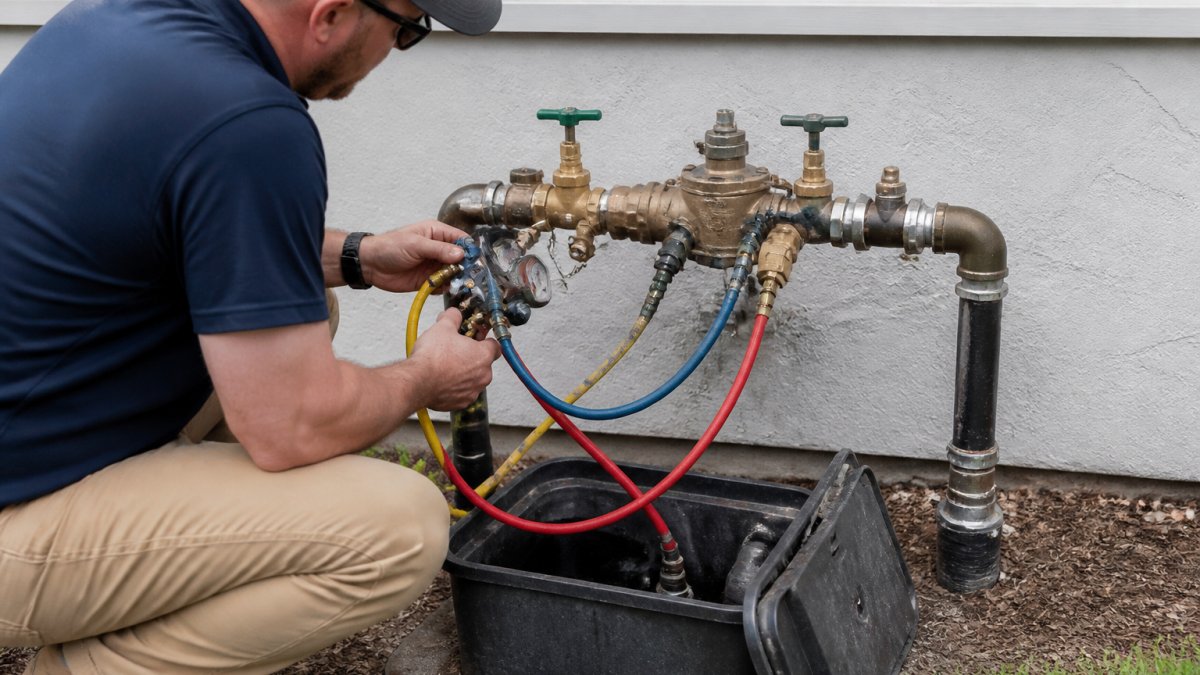
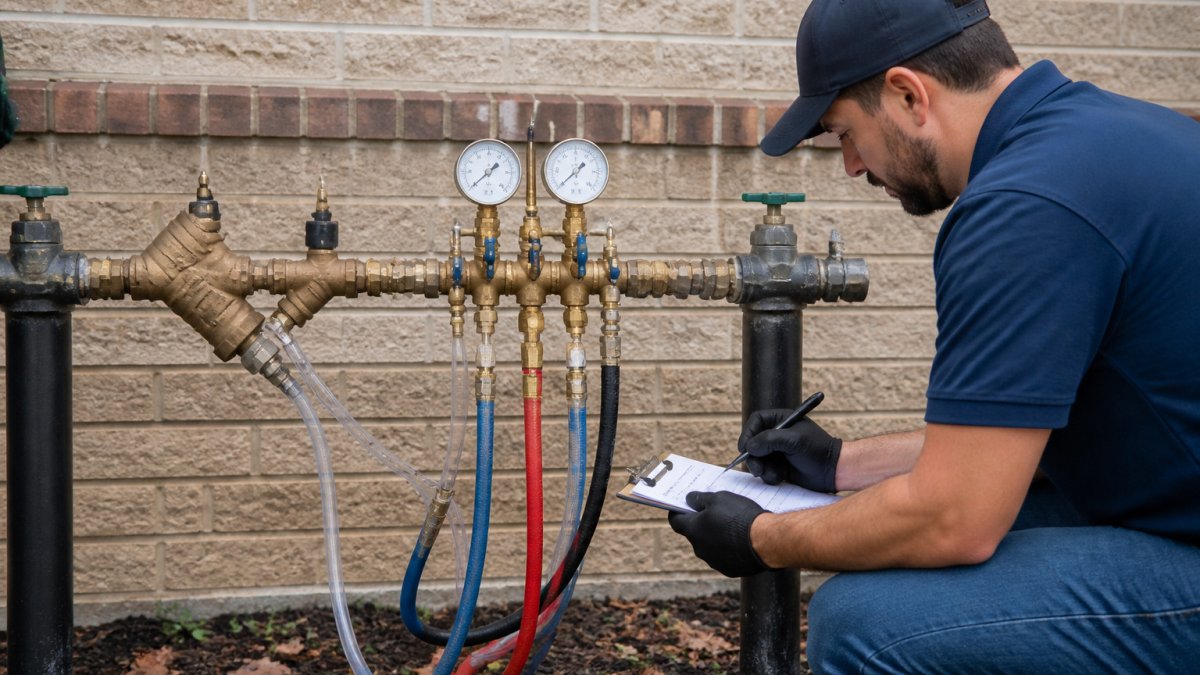
Backflow testing is the process of verifying that a backflow prevention assembly stops contaminated water from reversing into the clean water supply. A certified tester connects test equipment to the assembly, checks its check valves and relief ports, records the readings, and files a report with the water authority.
Below, we break down every line item you'll see on a residential invoice so you can budget with confidence.
Device Type and Test Complexity
Not all backflow preventers test the same way. The device on your property sets the baseline price.
- Pressure vacuum breakers (PVBs) are common on residential irrigation systems and test quickly.
- Double check valve assemblies (DCVAs) take longer because both check valves need separate readings.
- Reduced pressure zone assemblies (RPZs) are the most complex and typically the most expensive to test, since the relief valve must be verified too.
Trip Charges, Service Calls, and Scheduling
A trip charge covers the tester's travel to your property. Some providers fold it into the test fee; others list it separately. Ask which model applies before you book.
Scheduling also moves the number. Weekend, evening, and after-hours appointments can carry a premium. H-Town Backflow offers night and weekend appointments to help prevent water service interruptions. A common mistake is booking the cheapest quote without confirming whether the trip charge is included.
Residential Backflow Testing Cost: What Homeowners Actually Pay For
A residential backflow test fee covers more than a quick look at the assembly. It bundles the on-site inspection, the test itself, the paperwork, and the submission to your water authority.
Here is what a standard residential test includes:
- Verify the device make, model, and serial number.
- Shut off water and attach calibrated test equipment.
- Record readings for each check valve and relief port.
- Confirm the assembly holds pressure and closes properly.
- Complete the test report and submit it to the city.
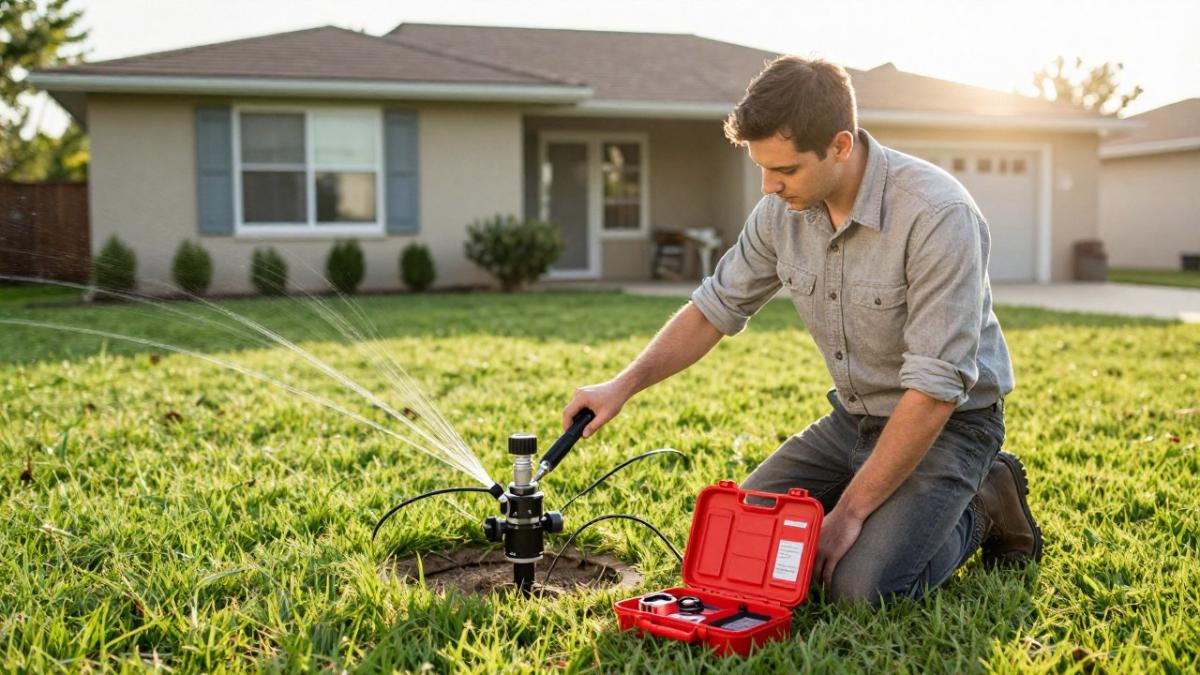
The fee you pay is largely for the certified tester's time, the calibration of the gauges, and the compliance paperwork. For a step-by-step look at what happens during a backflow inspection, see our full walkthrough of the inspection process.
Backflow Test and Repair Cost: Budgeting for a Failed Test
A failed test is where budgets get tested too. When an assembly fails, you pay for the test, the repair, and a retest, and each is a separate line item.
Why Devices Fail and What It Costs to Fix Them
Failures on backflow assemblies can stem from worn check valves, a faulty relief valve on an RPZ, or debris in a PVB. Repair cost depends on the specific part and the device type, and the tester can advise on whether repair or replacement is the better option.
Repair, Replacement, and Retest Line Items
Expect your invoice to break down like this:
| Line Item | What It Covers | Budget Impact |
|---|---|---|
| Initial test | On-site inspection and report | Base fee |
| Diagnosis | Tester identifies the failed component | Often folded into repair |
| Repair | Parts and labor to fix the assembly | Varies by part and device type |
| Retest | Second test after repair | Often discounted, sometimes full fee |
| Replacement | New assembly if repair isn't viable | Highest cost, plus installation |
| Report resubmission | Filing the corrected result | Usually included |
Retest policies vary between providers, and a separate repair technician may result in a full second test fee. Confirm the retest policy in writing before work begins.
Some providers quote a low initial test fee but charge a full-price retest after repair. Ask for the retest price along with the test price.
The Full Failed-Test Budget
To budget for a failure, add three numbers: the initial test fee, the repair estimate for your device type, and the retest fee. For a simple PVB, the repair is often minor and the retest is the main add-on. For an RPZ, ask the tester whether repair or replacement is the better value before authorizing work. To anticipate what might fail, review the common reasons backflow tests fail.
Backflow Testing Frequency and Annual Compliance Requirements
Water authorities generally require an annual test for backflow prevention assemblies. Confirm your local requirement and deadline with your water authority.
Testing frequency is set by your municipal water authority, not by the tester. That means the schedule can differ slightly depending on which city or utility serves your property. Our guide on why annual backflow testing is mandatory explains the compliance calendar in more detail.
The practical takeaway: put your test month on the calendar and book early. Slots fill up near reporting deadlines, and last-minute appointments cost more in time and stress.
How to Get an Accurate Backflow Testing Quote
An accurate backflow testing quote starts with three details: your device type, your address, and whether the trip charge is included. Give the tester all three and you'll get a firm number instead of a range. Testers often quote a base test fee plus a trip charge, and some add a separate reporting or filing fee, so two quotes that look different may be the same total.
When you call, have this ready:
- The make and model of your backflow preventer
- The service address and water authority
- Whether the device is indoors or outdoors
- Your preferred scheduling window
How to Compare Two Quotes Apples-to-Apples
Ask each provider to break the quote into four lines: test fee, trip charge, reporting fee, and retest fee. A quote that bundles everything into one number is harder to compare, but it is not automatically worse, it just means you need to ask what happens if the device fails. The lowest headline number often belongs to a provider whose retest fee is the highest.
Ask directly: "Is the trip charge included, what does a retest cost if the device fails, and do you file the report with the city or leave it to me?" A reputable provider answers all three without hesitation. For more on choosing a provider, read our advice on how to hire professional backflow testing services.
A quote given without your device model may not be accurate. Provide the make and model when requesting a quote.
How to Verify a Tester's Houston Eligibility
A tester's eligibility comes down to one thing: a current state license and registration with your local water authority. Backflow testers must hold the credentials required by Texas and your local water authority. Ask for the tester's license number before booking.
Here is how to check before you book:
-
Ask for the tester's license number and confirm it is current.
-
Verify the technician is registered with your specific water authority.
-
Ask whether the report is filed with the city or left to you.
Our step-by-step guide on how to verify backflow technician credentials walks through each check.
Schedule Your Houston Backflow Test Without the Guesswork
Backflow compliance shouldn't require a spreadsheet and three phone calls. H-Town Backflow provides prompt, reliable backflow testing and repair across the Greater Houston area and surrounding municipalities, with flexible scheduling that includes night and weekend appointments so your water service stays on.
H-Town Backflow serves the Greater Houston area and surrounding municipalities, including the City of Houston and many Gulf Coast municipalities. For current prices or a quote for your test, visit the H-Town Backflow website or send us your device details and address.
Frequently Asked Questions
How much should a residential backflow inspection cost?
There is no single flat rate. What you pay depends on the device type, how many assemblies you have, whether the tester charges a separate trip fee, and whether the test is bundled with an annual maintenance visit. Simple irrigation devices generally cost less to test than reduced pressure zone assemblies. Ask for an itemized quote that separates the test fee from any trip charge so you can compare providers fairly.
Is backflow testing required in Texas, and how often?
Yes. Backflow prevention assemblies are generally required to be tested annually, and local water authorities may set their own schedules. Your water utility or city cross-connection program sets the exact frequency and deadline for your property. Missing the deadline can lead to notices, fees, or interrupted water service, so confirm your due date directly with your municipality.
Can I test my own residential backflow preventer?
No. Testing requires a certified tester with a calibrated differential pressure gauge, and the results must be submitted on the approved test report form to your water authority. A homeowner cannot self-certify. Hiring an uncertified handyman also leaves you liable if the device fails or the report is rejected. Always confirm the tester holds a current certification recognized by your city before booking.
Does the testing fee include repairs or retesting?
Usually not. The test fee covers the inspection and report submission only. If the device fails, repairs, replacement parts, and the required retest are billed separately, which is why you should ask upfront about retest charges. A tester who can handle repairs and the retest in one visit saves you a second trip charge and shortens the time your water service is affected.
Test season fills up fast, and a missed deadline means interrupted water service. Get started with H-Town Backflow and keep your assembly compliant, your water clean, and your schedule intact.