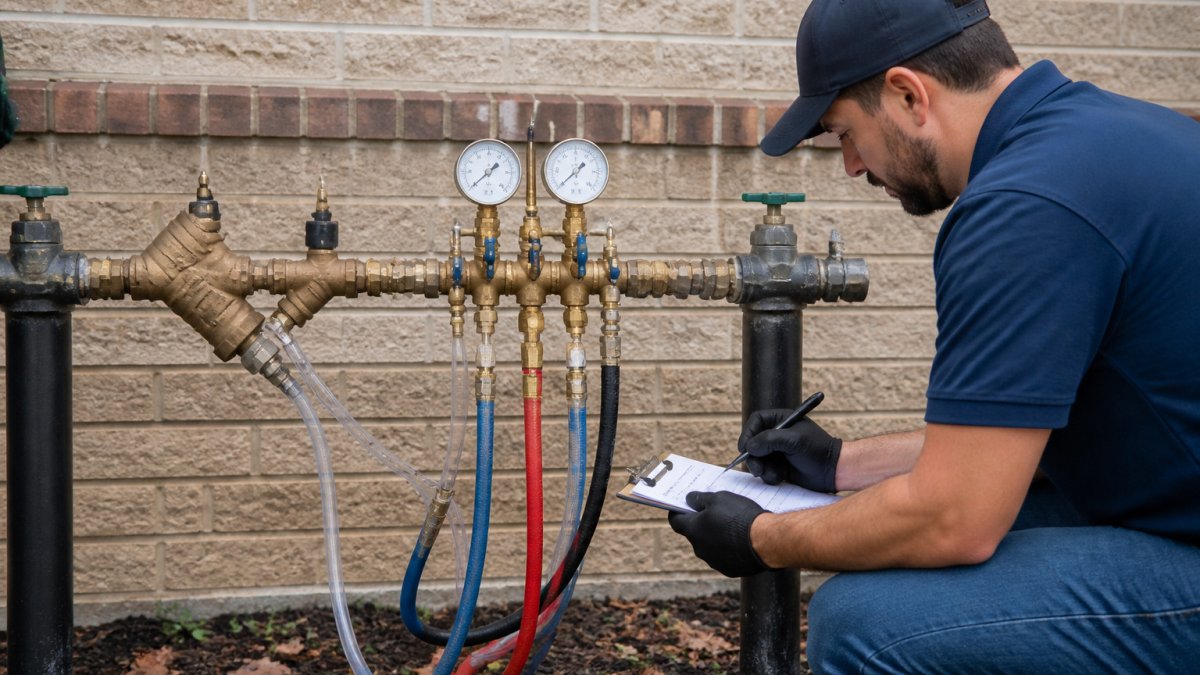
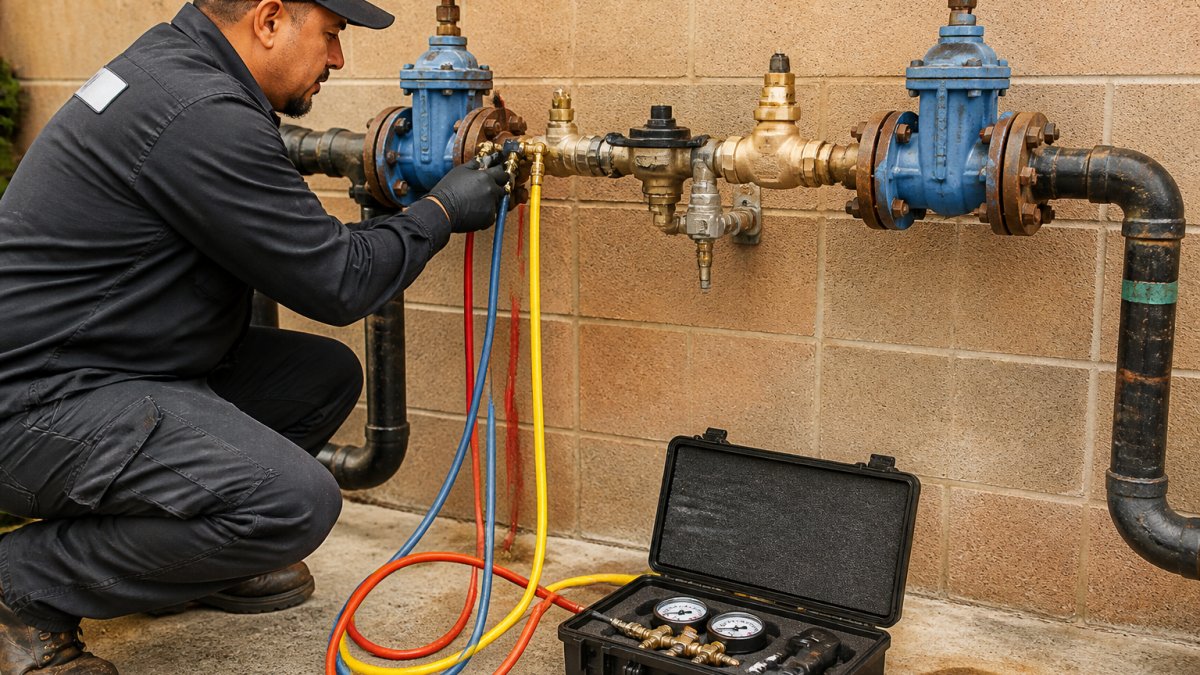
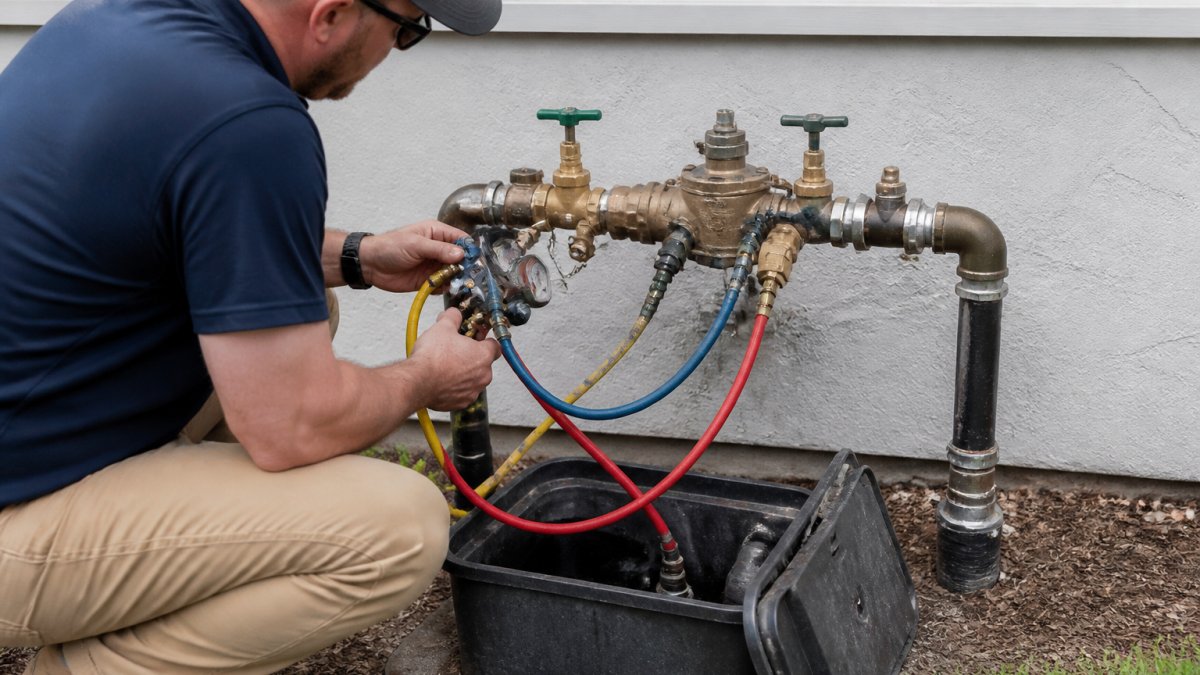
 How-to
Do You Need Emergency Backflow Testing for Your Business?
Last Updated: October 26, 2026
Quick Summary
Emergency backflow testing for businesses is the rapid response needed when a backflow incident, failed inspection, or looming compliance deadline threatens your water service. Signs like discolored water, a pressure drop, or a utility notice mean you have an urgent incident, not a routine scheduling matter. Certified testers isolate the assembly, document gauge readings, and repair and retest where parts allow.
- Most commercial properties with a backflow prevention assembly face annual testing, but new installation, repair, or a utility-ordered retest also trigger a mandatory test.
- A failed test follows a defined sequence: isolate and document the failure, diagnose the cause, then decide repair versus replace.
- A passing retest is not complete until the report reaches the correct authority within the required window.
- After-hours and weekend appointments exist so testing does not cost you a business day.
- Emergency pricing depends on the assembly, the time of day, and whether repair parts are needed, so quotes come after the job is understood.
Table of Contents
- When Backflow Testing Stops Being Routine and Becomes an Emergency
- Backflow Testing Requirements for Businesses: What Triggers a Mandatory Test
- Emergency Backflow Repair: What Happens After a Failed Test
- What Your Backflow Test Report Must Contain for Compliance
- Backflow Testing Scheduling: After-Hours and Weekend Options That Protect Operations
- Costs, Response Times, and What to Expect From an Emergency Call
- Book Your Emergency Backflow Testing With H-Town Backflow
- Frequently Asked Questions
When Backflow Testing Stops Being Routine and Becomes an Emergency
Emergency backflow testing for businesses is the rapid response needed when a backflow incident, failed inspection, or looming compliance deadline threatens your water service. At H-Town Backflow, we handle these calls across the Greater Houston area, and the pattern is consistent: most "emergencies" were preventable, but the ones that aren't require fast action.
Backflow is the unwanted reverse flow of contaminated water into the clean potable water supply. It happens through a cross-connection, a point where your business water supply touches a potential contaminant source. A backflow preventer is the mechanical assembly that blocks that reversal.
Here's the uncomfortable truth: a failed backflow preventer doesn't announce itself. Water keeps flowing, taps keep working, and nobody notices until a test fails, a utility flags the account, or contamination shows up downstream. That gap between "everything looks fine" and "you have a real problem" is where emergencies live.
Signs You Have an Urgent Backflow Incident, Not a Scheduling Problem
Discolored or foul-smelling water at fixtures, a sudden pressure drop, or a utility notice about your cross-connection is an urgent incident, not a routine scheduling matter. Routine testing happens on a calendar. An incident happens now.
Watch for these signals:
- Water that runs cloudy, brown, or smells off at multiple fixtures
- A visible leak or continuous discharge from the relief valve on your assembly
- A written notice from your water utility citing a cross-connection hazard
- Irrigation or fire protection systems losing pressure without explanation
If you're seeing any of these, stop treating it as a booking task. Before you call anyone, know whether testing will interrupt service: our guide on whether backflow testing requires a water shutdown explains what to expect so you can plan around tenants and operations.
Backflow Testing Requirements for Businesses: What Triggers a Mandatory Test
Most commercial properties with a backflow prevention assembly face annual testing, but specific events trigger a mandatory test regardless of your calendar. Those triggers include installation of a new assembly, repair or replacement of an existing one, a change in hazard level, and any utility-ordered retest after a failed result.
The rules are jurisdiction-dependent. Local requirements and state regulations vary by water authority, and what's mandatory in one municipality may differ in the next. That's why we never quote a universal deadline. We check the requirement that actually applies to your property and your assembly type.
Certified backflow tester qualifications matter here. A tester must hold current certification and use calibrated gauges to produce results a water authority will accept. An uncertified test is worse than no test, because it creates a paper trail that fails on review.
Common assembly types we test include reduced pressure zone assemblies, double check valves, and pressure vacuum breakers, each with its own testing procedure and hazard level.
Emergency Backflow Repair: What Happens After a Failed Test
A failed test is not the end of the story, it is the start of a defined sequence. Businesses that understand the sequence lose less operating time and avoid repeat failures. Here is what actually happens, step by step, from the moment the gauge readings come back bad.
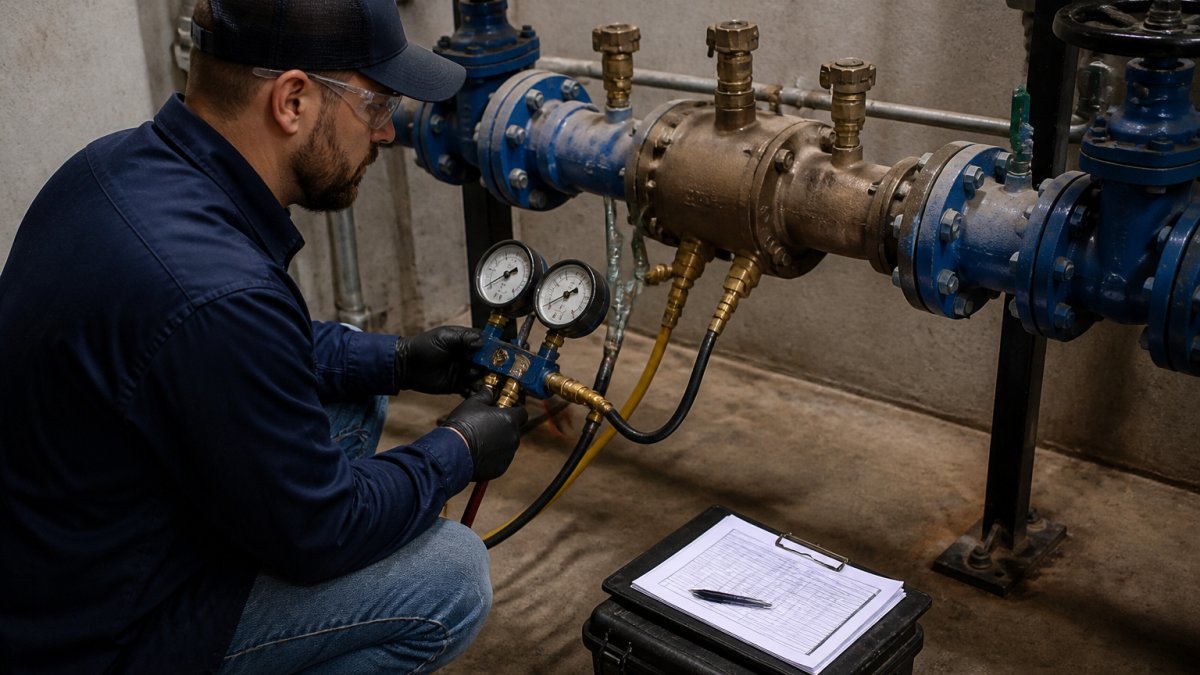
Step 1, Isolate and document the failure
The tester closes the isolation valves to take the assembly out of service and records the gauge readings at each test cock. Documentation matters as much as the repair: the utility needs to see which check failed and by how much. Photos of the assembly, the serial number, and the gauge readings protect you if the result is disputed.
Step 2, Diagnose the cause
Failures usually trace to a small set of causes: debris or scale on a check seat, a worn or torn rubber check or relief valve disc, a fouled sensing passage, or freeze damage. The cause determines whether repair is realistic. A single fouled seat is a repair; a cracked body or a corroded relief valve assembly is usually a replacement.
Step 3, Decide repair versus replace
The decision hinges on four factors:
- Part availability, common check kits are often on the truck; proprietary or obsolete parts may not be
- Assembly age and condition, a unit near the end of its service life is a poor repair candidate
- Hazard level, a higher-hazard assembly that has failed repeatedly may need an upgrade, not another repair
- Code and utility requirements, some authorities require replacement after certain failures or after a set number of retests
We tell you which scenario you are in before we leave the property, so you are not guessing about a return trip.
Step 4, Repair, then retest
Where parts allow, the repair happens on the same visit and the assembly is retested immediately. If parts must be ordered, the assembly stays isolated and out of service until the return trip, which is why confirming part availability early matters for your operations.
Step 5, Submit the results and restore service
A passing retest is not complete until the report reaches the correct authority within the required window. Once the passing report is filed and the utility accepts it, the assembly is returned to service and normal water use resumes. Keep a copy of both the failed and passing reports; utilities and auditors may ask for the full history.
If your test just failed, understanding why helps you avoid a repeat. Our breakdown of common reasons backflow tests fail covers the usual culprits before you commit to repair.
What Your Backflow Test Report Must Contain for Compliance
A compliant test report identifies the assembly, the tester, the readings, and the result, and it gets submitted to the correct authority within the required window. Missing any of those elements can void the test in the eyes of your water utility.
Your report should include:
- Property address and assembly location, make, model, and serial number
- Tester name, certification number, and gauge calibration details
- Test cocks readings and pass/fail determination
- Submission date and the authority receiving it
Report submission is where businesses lose time. Deadlines are measured in business days, and a late report can trigger penalties even when the assembly passed. If you're unsure who handles the filing, our guide on who files backflow compliance paperwork walks through the responsibility.
Backflow Testing Scheduling: After-Hours and Weekend Options That Protect Operations
After-hours and weekend appointments exist so testing doesn't cost you a business day. A temporary water interruption during operating hours can shut down a kitchen, halt production, or leave tenants without service. Scheduling around your operations solves that.
Many businesses find that evening and weekend slots reduce disruption without compromising the test itself. The assembly still gets isolated, tested, and documented the same way; the difference is timing.
We offer night and weekend appointments precisely because downtime is expensive. If you want to know how that works in practice, read our overview of after-hours backflow testing services before you book.
Costs, Response Times, and What to Expect From an Emergency Call
Emergency pricing depends on the assembly, the time of day, and whether repair parts are needed, so we quote after we understand the job rather than guessing over the phone. What we can tell you is how the call runs.
Response time is the first question every caller asks. After-hours calls get prioritized, and we confirm a window when you book. Cost breaks down into the test itself, any repair work, and retesting if the first result fails.
For a full picture of what drives the bill, our explanation of commercial backflow testing price factors lays out the variables so nothing surprises you.
| Situation | Typical Action | What to Expect |
|---|---|---|
| Routine annual test | Scheduled appointment | Test, report, submission |
| Failed test | Repair and retest | Same-visit fix or return trip |
| Utility notice | Priority response | Isolate, test, document |
| After-hours need | Night or weekend slot | Confirmed window, no business-day loss |
Book Your Emergency Backflow Testing With H-Town Backflow
A backflow problem doesn't wait for a convenient moment, and neither should your response. We serve commercial properties, multi-unit complexes, and residential irrigation systems across the City of Houston and surrounding municipalities, with flexible scheduling built to keep your water service running.
Our team is certified, our reports are built for compliance, and our night and weekend appointments exist for one reason: your operations can't afford a shutdown.
Get started with H-Town Backflow and keep your water supply safe, your testing current, and your system operating the way it should.
Frequently Asked Questions
What should a business do if it needs emergency backflow testing?
Stop using affected water fixtures, keep the assembly isolated if instructed, and call a certified tester immediately. Do not remove or tamper with the backflow prevention assembly yourself. Have your account number, property address, and assembly make and model ready. A certified tester will document the failure, perform the test, and submit the backflow test report to your water utility. If the assembly cannot be repaired on site, expect a repair or replacement quote and a retest before service is restored.
Can a business keep operating while a backflow preventer is being tested?
In most cases yes. Routine backflow testing takes a short window and involves a temporary water interruption at the assembly, not a full building shutdown. Schedule backflow testing during low-demand hours, such as before opening or after closing, to limit disruption. If the assembly fails and must be repaired or replaced, water service to the affected line may stay off longer. Ask your tester about night and weekend appointments to keep tenants and staff unaffected.
What happens if a business fails a backflow test?
A failed test means the assembly is not protecting the potable water supply as required. Your tester documents the failure on the backflow test report and notifies you and typically the water utility. You then need emergency backflow repair or replacement, followed by a retest to confirm the assembly works. Operating without a passing test can lead to fines, a water shutoff, or a compliance notice. Keep every report and repair record in case the utility requests proof.
How quickly can commercial backflow testing be scheduled?
Routine commercial backflow testing is usually booked days to weeks out, depending on the season and tester availability. Emergency calls are handled faster because a failed assembly or a utility deadline creates a compliance risk. When you call, state clearly whether this is an emergency or an annual test, give the assembly type and location, and confirm whether after-hours service is available. Flexible scheduling, including nights and weekends, shortens wait times for occupied buildings.
What documents should a business keep after a backflow test?
Keep the completed backflow test report showing the assembly details, test results, tester certification number, and date. Store the repair invoice and any replacement parts record, plus the retest report if the assembly failed. Save proof of report submission to your water utility. Retain these records for at least the length of your local inspection cycle, and keep copies off site. A simple compliance folder by property and assembly makes audits and utility requests much faster.