 how-to
Does Backflow Testing Require Water Shutdown?
Table of Contents
- Does Backflow Testing Require Water Shutdown?
- What Happens During a Backflow Test
- How Long Does a Backflow Test Take?
- Backflow Testing Requirements for Homeowners
- What Happens If a Backflow Device Fails?
- DIY vs. Professional Certification Requirements
- Mitigation Strategies for Water-Sensitive Businesses
- Conclusion
- Frequently Asked Questions
Last Updated: September 27, 2026
Does Backflow Testing Require Water Shutdown?
Backflow testing usually requires a brief water shutdown, but it is not the same as cutting water to your whole building. A certified tester isolates the backflow prevention assembly, not your entire plumbing system. Most residential tests take 15 to 30 minutes, and a commercial test with multiple assemblies can run longer.
What Happens During a Backflow Test
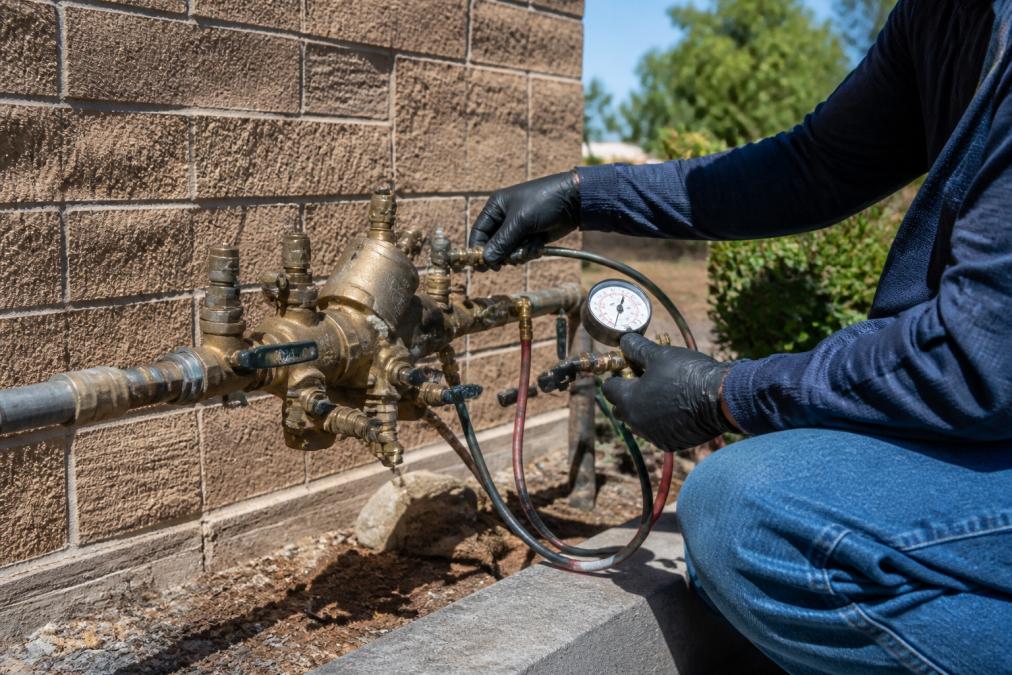
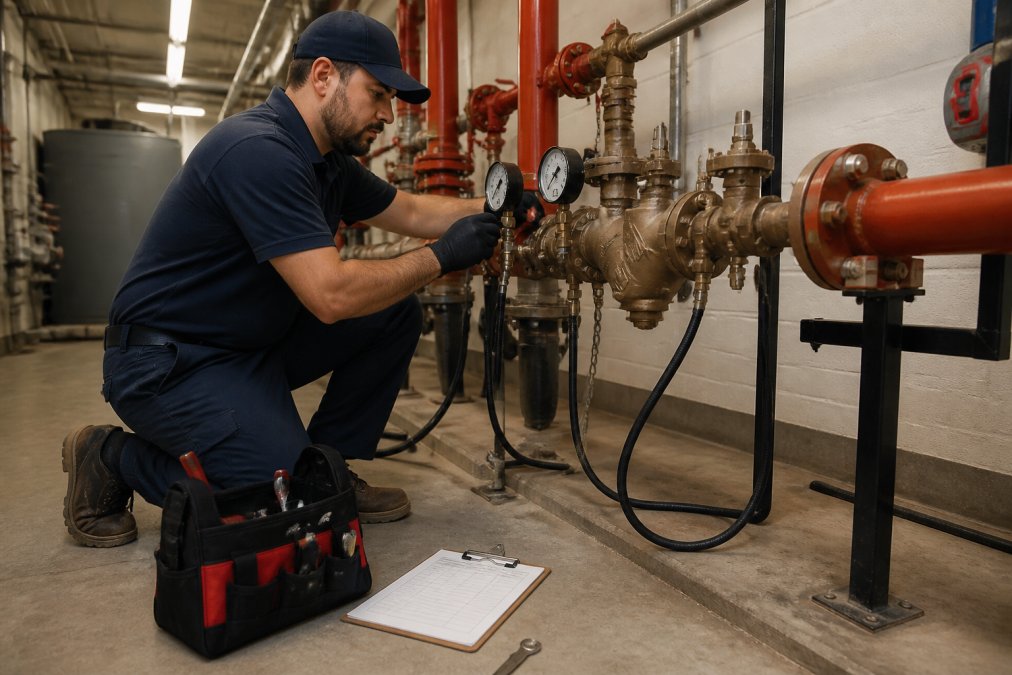
A backflow test is a check of whether your backflow prevention assembly stops contaminated water from reversing into the potable water supply. The tester measures pressure differentials across the assembly and confirms each check valve and relief valve holds.
Step-by-Step: The Testing Procedure
- Locate the assembly and confirm it matches your compliance records
- Shut the isolation valves on the assembly only
- Attach gauges to the test cocks
- Run the first check valve test
- Run the second check valve test
- Test the relief valve, where the assembly has one
- Record every reading on the inspection report
- Restore the isolation valves and confirm normal flow
That is the whole test. The water main stays on. Your building's service line stays on.
Visual Guide to Shut-Off Valves
Knowing your valves before the technician arrives saves time and confusion. Here is what to look for:
- Main shut-off valve: controls all water entering the building. The tester should not need to touch this.
- Isolation valves: sit on either side of the backflow assembly. These are the ones that get closed.
- Test cocks: small ports on the assembly where gauges connect. They should be capped and free of leaks.
- Irrigation shut-off: a separate valve for your sprinkler system, often in a green box near the curb.
How Long Does a Backflow Test Take?
The average backflow test takes 15 to 30 minutes for a single assembly. Add time for setup, paperwork, and any repair. A property with several assemblies can take an hour or more.
Here is how the time breaks down:
| Phase | Typical Duration | What Happens |
|---|---|---|
| Setup and locate | 5-10 minutes | Find assembly, check records |
| Isolation | 2-5 minutes | Close isolation valves |
| Testing | 10-20 minutes | Run gauge readings |
| Documentation | 5-10 minutes | Complete inspection report |
| Restoration | 2-5 minutes | Reopen valves, confirm flow |
Backflow Testing Requirements for Homeowners
Homeowners with irrigation systems usually need annual backflow testing. The requirement comes from state plumbing code and local municipal rules, not from a single national standard. That is why the deadline, the form, and the fee can differ from one water utility to the next, even between neighboring cities.
Who Is Actually Allowed to Test Your Assembly
This is the part most homeowner guides skip: you almost certainly cannot legally test your own backflow assembly, even though you own the property. Testing requires a certified tester who holds the credential your state or local jurisdiction recognizes.
- Passing a recognized tester certification course
- Carrying the license or registration your state or city requires
- Using calibrated test equipment with current calibration records
- Filing the inspection report with the water utility
DIY Repair vs. DIY Testing, Two Different Questions
These get conflated constantly, and the answer is different for each:
- DIY testing: not allowed in most jurisdictions. The report will be rejected.
- DIY repair: allowed in some places, restricted in others, and never advisable on the internal components. The check valves and relief valve are what keep contamination out of your drinking water. Opening the assembly yourself can void the manufacturer warranty and, if you reassemble it wrong, create a cross-connection risk you cannot see.
- DIY cosmetic work: fine. Clearing landscape growth around a valve box, keeping the assembly accessible, and photographing the serial number are all things you can and should do.
What to Have Ready Before the Tester Arrives
- Know your assembly's location and model
- Keep your compliance records in one place
- Book before the deadline, not after
- Confirm your tester is certified and will file the report
- Clear any growth or debris blocking the assembly and its isolation valves
Two Questions to Ask Every Tester
When you hire, ask: what certification do you hold, and do you file the report? A tester who leaves the paperwork to you is not saving you anything, an unfiled passing test is treated the same as no test at all.
What Happens If a Backflow Device Fails?
A failed backflow device means the assembly did not hold pressure as required, so it needs repair or replacement before it can pass. The device stays out of compliance until it does. What separates a routine fix from a compliance headache is how fast you act and whether the repair is documented properly.
The Four Failure Points Testers See Most
A backflow assembly has moving parts, and each one can fail in a specific way:
- First check valve: the most common failure. Worn elastomer seats or debris lodged on the seat let water slip past. Testers see this as a small pressure drop that fails the hold test.
- Second check valve: fails less often, but when it does, it usually means the same debris or seat wear has migrated downstream.
- Relief valve (on reduced pressure zone assemblies): a dripping or weeping relief valve is the classic sign of a fouled first check. The relief valve is doing its job, it is telling you the check upstream is leaking.
- Shut-off valves: not part of the test itself, but a seized or leaking isolation valve can prevent a valid test and force a repair before testing can even begin.
What the Repair Actually Involves
Most failures are fixed with a rubber parts kit, new check seats, springs, and O-rings, rather than a whole new assembly. A certified technician opens the assembly, replaces the worn components, reassembles it, and retests on the spot. Many testers carry common repair kits on the truck for exactly this reason.
The Compliance Clock
What happens next depends on your water utility, and the timelines are not uniform:
- Many utilities allow a short repair window, often measured in days, sometimes up to 30, before they escalate.
- Some require the failed assembly to be retested and the passing report filed within that same window.
- If the window lapses, enforcement typically starts with notices and can escalate to a non-compliance fee or, in serious cases, restriction of water service to the affected line.
The Retest Sequence
- Tester documents the failure on the inspection report and files it with the utility.
- Repair is performed, usually same-day if parts are on the truck.
- Tester retests the repaired assembly and records new readings.
- A passing report is filed, closing the compliance item.
If the repair cannot happen same-day, ask the tester to note the failure and schedule the retest before they leave. That single step prevents the most common compliance gap.
DIY vs. Professional Certification Requirements
You cannot legally test your own backflow assembly in most jurisdictions, even if you own the property. Testing requires a certified tester who holds the right credential for your area.
- Passing a recognized tester certification course
- Carrying the license or registration your state or city requires
- Using calibrated test equipment
- Filing the inspection report with the water utility
Mitigation Strategies for Water-Sensitive Businesses
Some operations cannot tolerate a water service interruption, even a short one. Restaurants, clinics, labs, and food processing sites fall into this group. The good news is that most backflow tests never touch your main supply.
Plan around these steps:
- Schedule off-hours. Night and weekend appointments keep the water on during business hours.
- Test one assembly at a time. If you have several, stagger them so no single window is long.
- Confirm isolation valves work first. This is the single biggest cause of unplanned downtime.
- Keep a backup plan. Know where your main shut-off valve is and who can reach it.
- Bundle repairs into the same visit. A failed test plus a same-day repair beats two separate appointments.
Conclusion
The shutdown question is real, but it is smaller than most property managers fear. A standard backflow test isolates one assembly for a short window, and your building keeps running.
Frequently Asked Questions
Does water have to be shut off for backflow testing?
In most cases, yes. A backflow test requires a temporary water shutdown to isolate the assembly and check its internal valves under controlled pressure. The shutdown usually lasts 10 to 30 minutes for a standard test. For large commercial systems or multi-unit buildings, it may take longer. Scheduling the test during off-hours can minimize disruption to tenants or operations.
What are the requirements for backflow testing?
Most municipal water utilities require annual testing of backflow prevention assemblies. The test must be performed by a certified tester who submits compliance records to the local water authority. Requirements vary by jurisdiction, but common triggers include irrigation systems, fire sprinkler lines, and commercial boilers. Homeowners with irrigation systems often need annual inspections to stay compliant.
How long does a water backflow test take?
A typical backflow test takes 15 to 45 minutes per assembly, depending on the device type and system complexity. The water shutdown portion is usually brief, often under 30 minutes. If repairs are needed, the process can take longer. Scheduling during low-demand hours helps reduce downtime for businesses and residents.
What happens if my backflow preventer fails inspection?
If a backflow preventer fails, the tester will document the issue and may require repairs or replacement. In many jurisdictions, you have a set window (often 10 to 30 days) to fix the problem and retest. Until it passes, the water utility may restrict or shut off water service to prevent contamination risks. A certified technician can often repair the device during the same visit.