 How-to
What Is Industrial Cross-Connection Control? A Facility Guide
Last Updated: November 9, 2026
Quick Summary
Industrial cross-connection control is the set of rules, devices and checks that stop non-drinking water from flowing back into a drinking water supply. It matters because a single unprotected connection in a plant can push chemicals, process fluids or wastewater into the pipes that deliver water to people.
- Backflow prevention is the hardware; cross-connection control is the full program that decides where it goes.
- Back-siphonage happens when supply pressure drops, such as during a water main break.
- Backpressure occurs when a pump, boiler or elevated tank pushes water backward into the supply.
- Temporary hoses left connected after a job are among the most dangerous cross-connections.
- Most jurisdictions require backflow assembly testing once a year by a certified tester.
Table of Contents
- What Industrial Cross-Connection Control Means
- How Backflow Contaminates Drinking Water
- Common Industrial Sources of Cross-Connections
- Running an Industrial Cross-Connection Survey
- Selecting Backflow Prevention by Hazard Level
- Backflow Prevention Assembly Testing and Records
- Building Your Program and Handling Test Failures
- Frequently Asked Questions
What Industrial Cross-Connection Control Means
Industrial cross-connection control is the set of rules, devices and checks that stop non-drinking water from flowing back into a drinking water supply. In a factory or processing plant, that risk is real and constant. A single unprotected connection can push chemicals, process fluids or wastewater into the same pipes that deliver water to people.
Plants are complicated. Many of them run several water systems side by side, and a facility manager has to keep those systems apart on purpose.
Potable and nonpotable water systems
Potable water is water safe to drink. It comes from the public supply or a treated source that meets drinking water standards. Nonpotable water is everything else: process water, cooling water, fire-protection water, boiler feed, or water that has been treated for industrial use but is not safe to drink.
The two systems must never mix. Piping is often color-coded and labeled to show which is which. A plant that adds a new process line without checking existing connections can create a cross-connection without anyone noticing.
Cross-connection control vs. backflow prevention
These terms are related but not the same. Cross-connection control is the whole program: finding every connection, deciding how much risk it poses, and choosing how to manage it. Backflow prevention is one tool inside that program. It is the device or method, such as a check valve or air gap, that stops the reverse flow.
In short, backflow prevention is the hardware, and cross-connection control is the plan that decides where the hardware goes and how it gets maintained.
How Backflow Contaminates Drinking Water
Backflow is the unwanted reversal of water flow. It moves water backward, from a system where it is not safe into the drinking water supply. Once that happens, contaminants can reach taps, fixtures and, in severe cases, the public water system itself.
Back-siphonage and backpressure
Two forces drive backflow. Back-siphonage happens when the supply pressure drops, for example during a water main break or heavy demand from a fire hydrant. The drop creates suction that can pull water back through a connection.
Backpressure happens when the pressure on the non-drinking side is higher than the supply pressure. A pump, a boiler or an elevated tank can push water backward into the supply. Plants with pumps and high-pressure process lines face this risk more often than most.
Common Industrial Sources of Cross-Connections
Cross-connections often hide in ordinary-looking equipment. Common sources in industrial sites include:
- Process tanks and vessels filled directly from a potable line
- Cooling towers and chillers
- Boilers and steam systems
- Wash-down hoses and fill stations
- Chemical feed and dosing equipment
- Fire-protection systems tied to the domestic supply
- Temporary hoses left connected after a job
A Watch out: the most dangerous connections are often the temporary ones. See how one industrial site prevents these cross-connections in practice for a worked example. A hose clipped to a tank for a single cleaning job can stay in place for months.
Running an Industrial Cross-Connection Survey
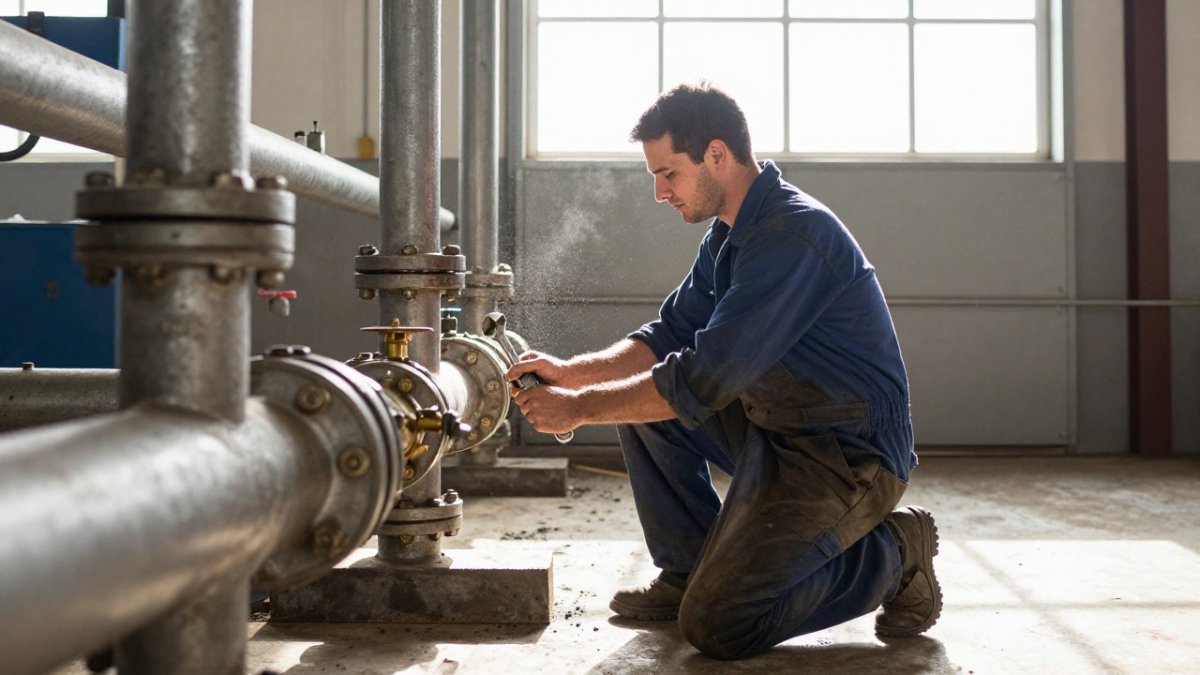
A cross-connection survey is a walk-through of the facility to find every point where potable and nonpotable water could meet. Many plants start by pulling up the piping drawings, then check the actual pipes against them. Learn how often industrial facilities need backflow testing so your survey and testing schedule line up. Drawings are often out of date.
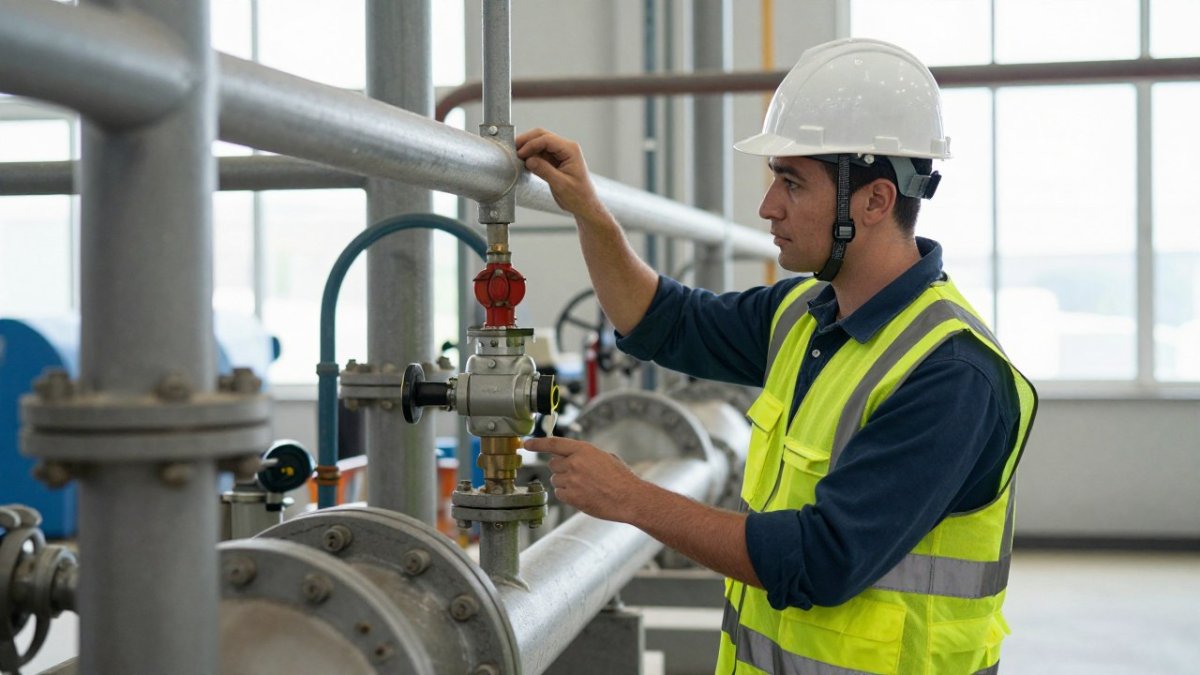
!A facility maintenance technician in a hard hat and safety vest inspecting exposed process piping and a pressure-reduced backflow assembly in an industrial plant mechanical room
During the survey, the team records each connection, the fluid it carries, and the hazard level. They also note the type of protection in place, if any. Good records make the next steps far easier. Some managers use simple spreadsheets. Others use asset management software that tracks each device and its test dates.
Selecting Backflow Prevention by Hazard Level
Not every connection needs the same protection. Hazard level sets the floor, but in an industrial plant the operating conditions usually decide the final device.
Start by classifying each connection by hazard. Most programs use three tiers:
- Low hazard: A pressure vacuum breaker or a double check valve assembly may be enough. These fit lines that carry only cooled water, clean condensate, or similar non-toxic fluids where backpressure is not possible.
- High hazard: A reduced pressure zone (RPZ) assembly or an air gap is usually required. These fit chemical feed lines, boiler feed, cooling-tower makeup, and any connection that could carry a toxic or microbiological hazard.
- Severe hazard: An air gap, which provides full physical separation, is the strongest option. Use it where a toxic chemical, a process fluid, or a wastewater stream could reach the potable line and no mechanical device gives enough assurance.
Hazard tier alone is not enough. Four operating conditions routinely rule a device in or out:
- Backpressure potential. If a pump, boiler, elevated tank, or high-pressure process line can push water backward, a device that only stops back-siphonage (such as a pressure vacuum breaker) is not adequate. You need an assembly rated for backpressure, such as an RPZ or a double check valve where the hazard is low.
- Pressure and flow. Every mechanical assembly drops pressure across the device. An RPZ typically loses more pressure than a double check valve, and that loss matters on a line feeding a process that needs a minimum pressure. Size the device for the actual flow range, not the pipe diameter, because an oversized assembly can chatter and wear early.
- Temperature. Standard assemblies have temperature limits. Hot boiler feed or steam-condensate lines may need a device rated for higher temperatures, or an air gap that has no elastomer seats to degrade.
- Chemical compatibility and continuous service. A device that sits in a chemical dosing line sees constant exposure. Check that the body, seats, and seals are compatible with the fluid, and confirm the device is rated for continuous duty if the line runs nonstop.
A common pattern in industrial plants is to over-protect low-hazard lines with an RPZ because it is the familiar choice, then under-protect a high-hazard line because the connection was added later and never surveyed. Match the device to the hazard and the conditions, and document why each choice was made.
Watch out: local plumbing and water-supply rules set the minimum protection for each hazard class, and a device that meets the standard in one jurisdiction may not be accepted in another.
For severe-hazard connections, an air gap is often the lowest-maintenance answer despite the space it takes. It has no check valves to foul and no relief valve to leak, and it gives inspectors an unambiguous physical separation. Where an air gap is impractical, an RPZ with a documented test schedule is the usual fallback.
The article sets out how each hazard tier maps to a protection method.
| Hazard level | Typical protection | Where it fits |
|---|---|---|
| Low hazard | Pressure vacuum breaker or double check valve | Cooled water, clean condensate, non-toxic fluids |
| High hazard | Reduced pressure zone (RPZ) or air gap | Chemical feed, boiler feed, cooling-tower makeup |
| Severe hazard | Air gap | Toxic chemicals, process fluids, wastewater streams |
Backflow Prevention Assembly Testing and Records
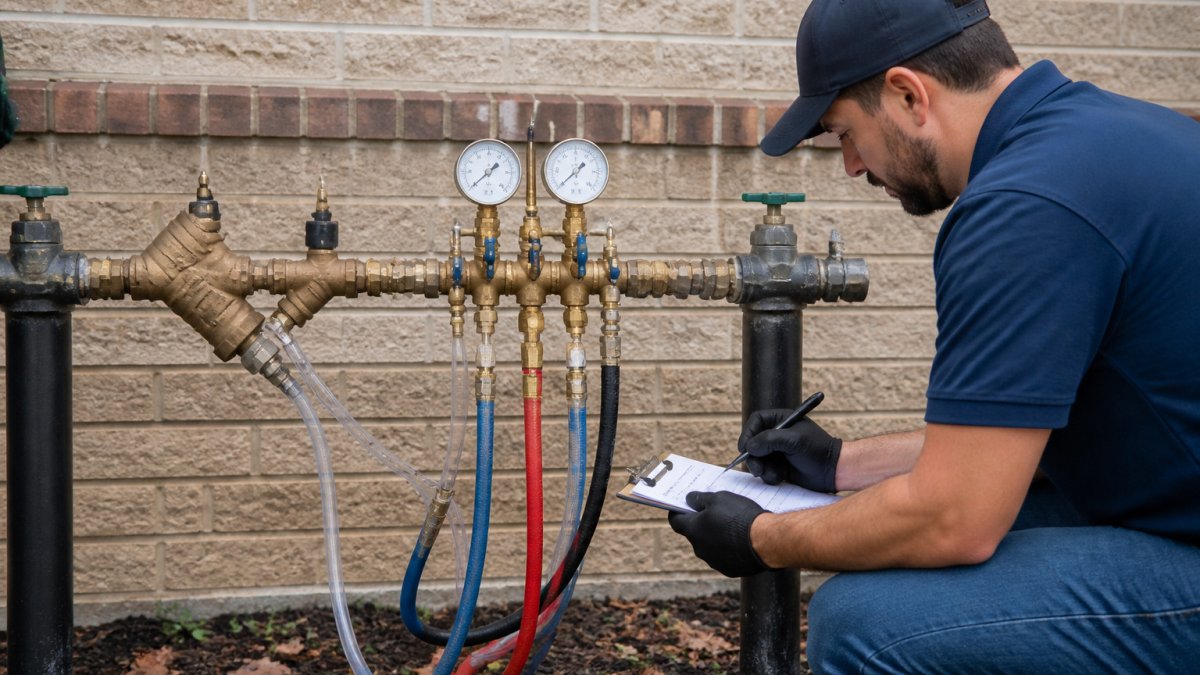
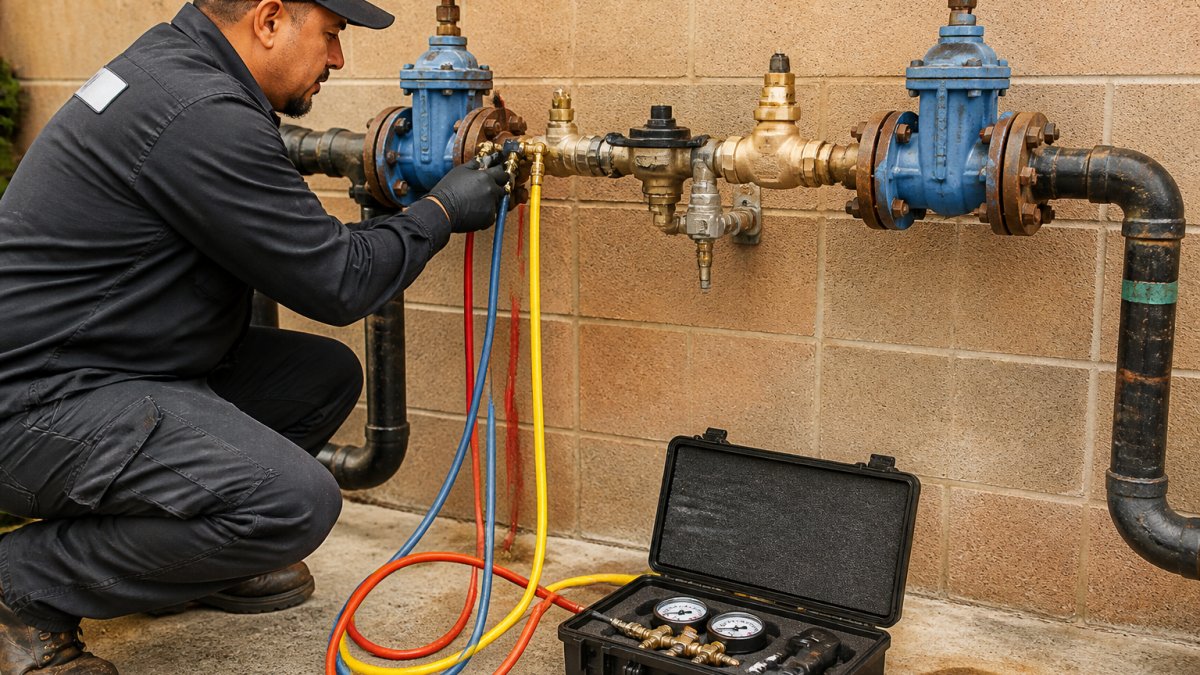
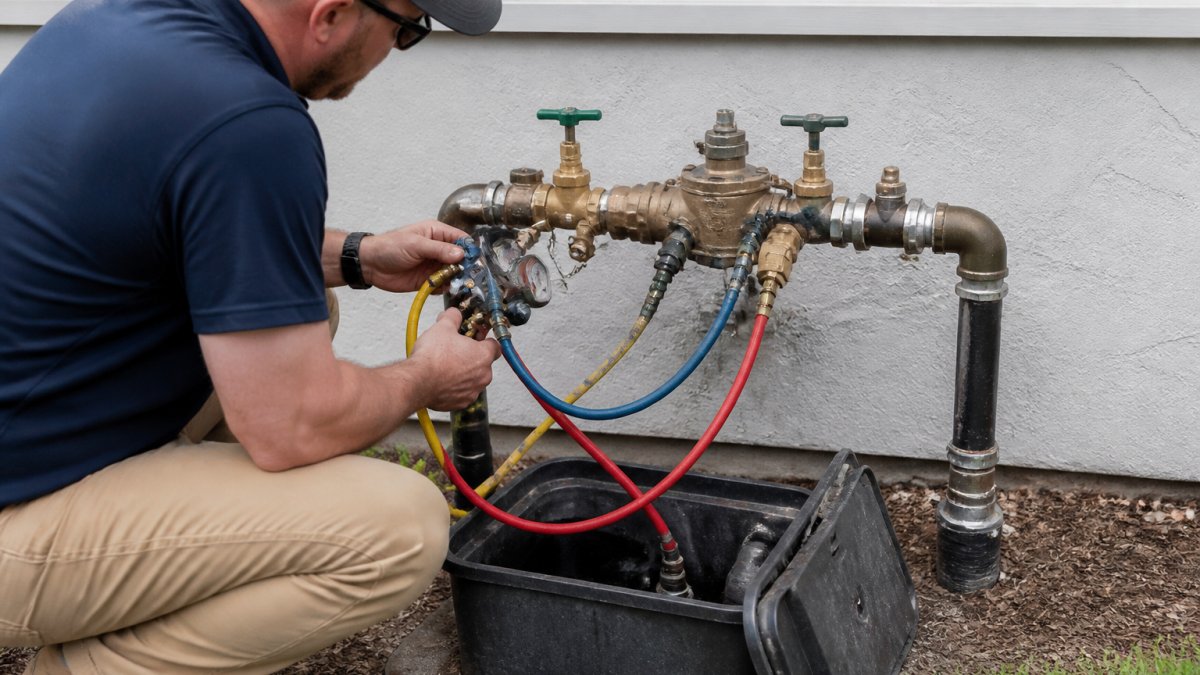
Mechanical assemblies wear out and fail quietly. A check valve can stick open, and a relief valve can leak. That is why most jurisdictions require testing at set intervals, often once a year, by a certified tester.
A tester checks each assembly with calibrated gauges and records the results. Common reasons for failure include fouled check valves, a relief valve that opens at the wrong pressure, and leaks at the test cocks. Read why backflow tests fail and what to fix before the next test. A failed assembly must be repaired and retested.
Keep every test report on file. Auditors and water utilities will ask for them, and clean records show that the program is working.
Building Your Program and Handling Test Failures
A strong program is a repeatable sequence, not a one-time survey. The facilities that stay compliant run the same steps on a schedule and keep records that an auditor or water supplier can follow without a phone call.
A practical industrial workflow looks like this:
- Build the facility inventory. List every water system in the plant, potable, process, cooling, boiler, fire protection, and washdown, and every point where they could meet. Include temporary hose stations and fill points, because those are the connections most often missed.
- Survey the site against the inventory. Walk the piping and compare it to the drawings. Drawings are frequently out of date after a few process changes, so the walk-through is what catches the real connections.
- Assign a hazard level to each connection. Record the fluid it carries, whether backpressure is possible, and the consequence if it reached the potable line. This is the step that drives every later decision.
- Select and install the device. Match the protection to the hazard and the operating conditions, then install it so it can be tested and serviced without shutting down the whole line.
- Test on schedule and keep the reports. Most jurisdictions require annual testing by a certified tester, though the interval depends on local rules and device type. File every report by device and by date.
- Track corrective actions. When a test fails, log the failure, the repair, and the retest. A closed loop of records is what shows the program is working.
Ownership matters as much as the steps. Name one person responsible for the inventory, the device list, the test schedule, and the records.
When a test fails, act in a fixed order. Isolate the affected line if the risk is real, repair or replace the assembly, and retest before returning it to service.
Audit readiness comes down to three things: a current device list, test reports that match the list, and a record of every corrective action. Water suppliers and inspectors typically ask for exactly those. If the list and the reports disagree, the program looks unmanaged even when the devices are fine.
Watch out: a failed assembly that is left in service because the repair is inconvenient is the single most common way a compliant program turns into a contamination incident.
For many facilities, outside help makes sense for surveys, testing, and repairs. Our team at H-Town Backflow can help you set up a schedule and handle testing across your site.
Backflow failures are rare, but when they happen, the consequences are serious. A written program, regular surveys and documented testing keep your facility compliant and your water safe.
Frequently Asked Questions
What is cross-connection control?
Cross-connection control is the set of practices a facility uses to prevent non-drinking water, process fluids or other contaminants from flowing back into the potable water supply. It combines identifying every connection between potable and nonpotable systems, isolating high-hazard connections with physical separation such as an air gap, and installing approved backflow prevention assemblies where isolation is not practical.
What is an industrial cross-connection?
An industrial cross-connection is any physical link between a drinking water line and a system carrying process water, chemicals, steam condensate, wastewater or other fluids. Examples include a hose bibb left submerged in a tank, a process line tied into a potable header, or a boiler feed connected to city water without protection. Because industrial fluids are often hazardous, these connections are rated high hazard and generally require the strongest protection.
How often should industrial backflow prevention assemblies be tested?
Testing frequency is set by the local water purveyor and state rules. Facilities should also test after any repair, relocation or suspected failure. Keeping test reports on file and tracking due dates in a program database helps avoid missed tests.
What should a facility do if a backflow prevention assembly fails a test?
A failed assembly should be taken out of service or isolated promptly, and the facility should notify the water purveyor as required by local rules. A certified tester can clean, repair or replace the check valves, relief valve or shutoff components, then retest the device. Document the failure, the repair and the passing retest, and review the surrounding piping for any new cross-connections that may have developed.