 ultimate-guide
Preventing Cross Connection in Industrial Sites
Table of Contents
- What Is a Cross Connection and Why It Threatens Industrial Water Supplies
- Cross-Connection Hazards in Industrial Facilities
- Air Gap vs. Backflow Preventer: Choosing the Right Protection
- Industrial Cross-Connection Control: Building a Compliant Program
- Backflow Preventer Testing and Maintenance Schedules
- Emergency Response When a Cross Connection Is Discovered
- Conclusion: Protecting Your Industrial Water Supply Year-Round
- Frequently Asked Questions
Last Updated: October 9, 2026
What Is a Cross Connection and Why It Threatens Industrial Water Supplies
A cross connection is any actual or potential physical link between a potable water supply and a source of contamination or pollution. According to the U.S. Environmental Protection Agency's cross-connection control guidance, even a brief pressure loss can pull contaminants backward into the public supply.
This guide covers how backflow happens, where cross connections hide, and how to build a program that holds up to inspection.
How Backflow Happens: Back-Siphonage vs. Backpressure
Backflow is the unwanted reversal of water flow in a plumbing system. It happens two ways, and industrial sites face both.
Back-siphonage occurs when negative pressure in the supply line pulls non-potable water backward.
Backpressure occurs when downstream pressure exceeds supply pressure.
The distinction drives device selection: high-hazard backpressure needs a reduced-pressure assembly; simple back-siphonage may only need a vacuum breaker.
Cross-Connection Hazards in Industrial Facilities
Industrial cross-connection hazards cluster around processes that combine a potable water connection with a contaminant and a mechanism that can reverse flow. A generic walkthrough that treats every hose bib the same will miss the connections that matter.
The practical approach is a process-by-process risk assessment. For each system touching potable water, document four things: the water use, the contaminant it could contact, the reversal mechanism (back-siphonage, backpressure, or both), and the hazard classification.
Process-by-Process Hazard Assessment
Cooling towers and evaporative condensers. Makeup water lines, basin fill connections, and chemical treatment injection points are the usual culprits.
Boilers and steam systems. Boiler feedwater makeup, chemical dosing, and condensate return lines all connect to potable supply.
Irrigation and landscape systems. Cross-connections to process water, reclaimed water, or chemical injection for fertigation. Hazard: moderate to high depending on the injection.
Classifying and Prioritizing Hazards
Once connections are mapped, classify each one. A high hazard is any connection where the contaminant could cause illness or death; a low hazard is a non-toxic nuisance affecting taste, odor, or appearance but not health.
Prioritize by combining hazard class with reversal mechanism and exposure. A high-hazard connection with backpressure and continuous operation outranks one that only operates during a monthly washdown.
Where the Assessment Usually Finds Gaps
In practice, the connections that get missed are the ones added after the original design: a temporary hose run to a new tank, a vendor-installed chemical injection point, a process line rerouted during a plant modification. These are exactly what a management-of-change review should catch before they go into service. Keeping the assessment as a living document, updated whenever equipment or processes change, keeps the hazard inventory accurate between formal surveys.
Air Gap vs. Backflow Preventer: Choosing the Right Protection
An air gap is the only absolute protection against backflow because it physically separates the potable supply from any contaminant. A backflow preventer uses mechanical valves and check assemblies to stop reversal, but every mechanical device can fail.
Air gap vs. backflow preventer comes down to application. Air gaps work best where you control the discharge point and can maintain the required separation.
| Protection Type | How It Works | Best For | Key Limitation |
|---|---|---|---|
| Air gap | Physical separation | Chemical feed, tanks | Requires space and drainage |
| Reduced-pressure assembly | Dual checks plus relief valve | High-hazard, backpressure | Needs annual testing |
| Double-check valve | Two check valves | Low-hazard, non-toxic | No relief protection |
| Vacuum breaker | Air inlet on pressure drop | Hose bibs, simple fixtures | Back-siphonage only |
For most industrial high-hazard connections, a reduced-pressure assembly is the standard choice. For low-hazard, non-toxic lines, a double-check valve assembly is often sufficient.
Industrial Cross-Connection Control: Building a Compliant Program
Industrial cross-connection control starts with a survey, then moves to device selection, installation, testing, and recordkeeping. A program that skips the survey usually protects the wrong things.
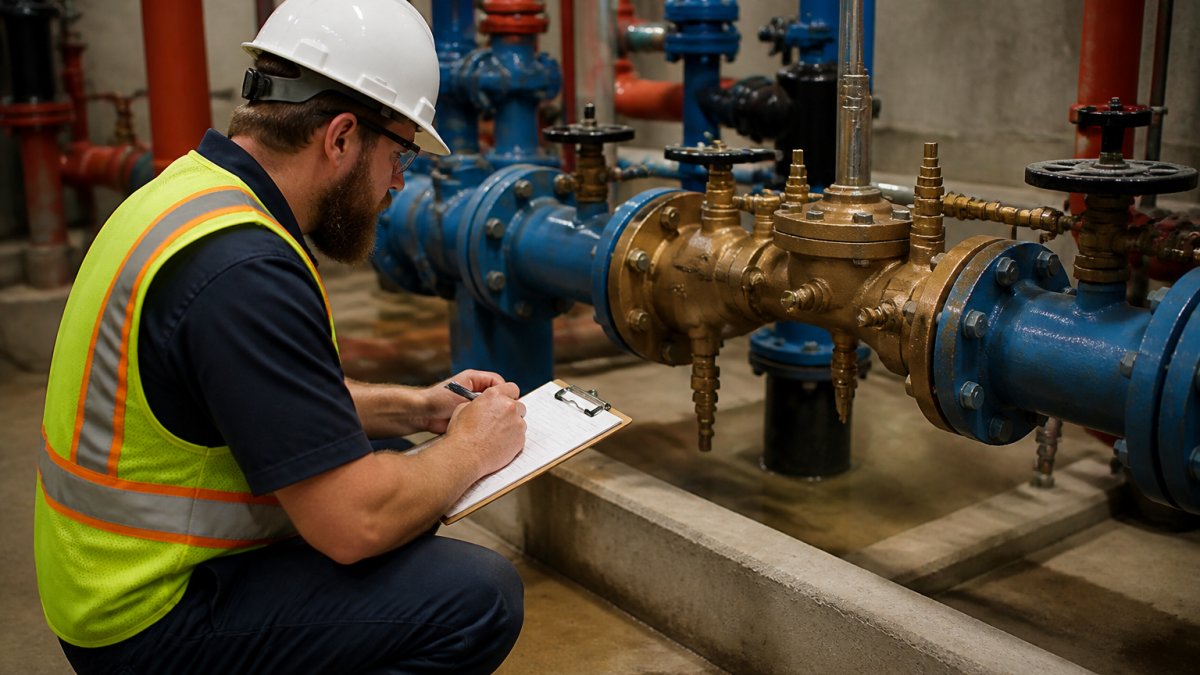
Here is a recommended implementation workflow:
- Survey every connection. Walk the site and map potable versus non-potable lines.
- Classify each hazard. High hazard means toxic or health-threatening; low hazard means non-toxic nuisance.
- Select the device by hazard and application. Match the assembly to the risk, not to habit.
- Install to code. Follow the plumbing code requirements adopted in your jurisdiction for clearances and drainage.
- Test on schedule. Annual testing is the baseline for most assemblies.
- Keep records. Document surveys, tests, repairs, and corrective actions.
Isolation vs. Containment Protection
Isolation protection places a device at each individual hazard inside a facility. Containment protection places a single device at the service entrance to protect the public water utility from the entire site.
Most industrial sites need both. Isolation protects workers and internal processes; containment protects the municipal supply. Installing only containment leaves internal cross connections unguarded; installing only isolation leaves the utility exposed.
Backflow Preventer Testing and Maintenance Schedules
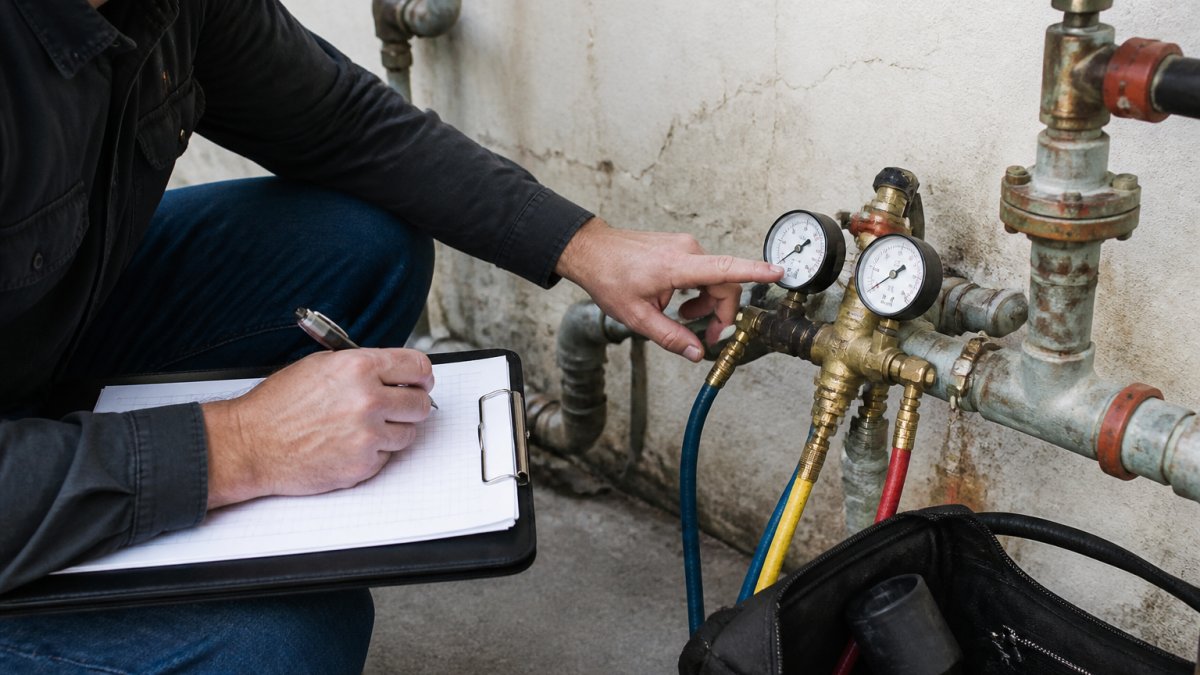
Backflow preventer testing and maintenance follows a predictable rhythm: annual testing, routine inspection, and immediate repair when a device fails. Most compliance programs require annual testing by a certified tester, following a defined procedure for each assembly type. What separates a compliant program from a fragile one is not test frequency but the records and corrective-action discipline behind it.
A Workable Testing and Maintenance Schedule
| Task | Frequency | Who Performs It |
|---|---|---|
| Full assembly test | Annually (or as required by the local water authority) | Certified tester |
| Visual inspection | Quarterly | Facility staff |
| Internal inspection | Per manufacturer guidance | Certified tester |
| Repair after failure | Within the window set by the water authority | Certified tester |
| Record submission | After each test | Facility owner |
| Hazard reassessment | Annually and after any process change | Program owner |
The annual test interval is the baseline in most jurisdictions, but some water authorities require more frequent testing for high-hazard assemblies or devices that have failed before. Confirm the interval with the utility that supplies the site, because it can differ from the general plumbing code.
Records That Survive an Audit
A passing test report is not enough on its own. An audit-ready record set includes, for each assembly: a unique device ID and location, assembly type and size, hazard class, installation date, every test date with the tester's certification number, test results by check, repair history, and corrective action after any failure.
A simple spreadsheet or a computerized maintenance management system both work. The failure mode is not the tool but records scattered across paper files, email, and a tester's truck.
Performance Measures Worth Tracking
Four metrics tell you whether the program is actually working:
- Test completion rate, the percentage of required annual tests completed on time. A rate below 100 percent means devices are operating untested.
- Failure rate, the percentage of assemblies that fail on test. A rising rate can signal aging devices, debris in the line, or a process change that altered pressure conditions.
- Overdue device count, the number of assemblies past their test due date. This is the number a water authority will ask about first.
Track these monthly. A program that reports them can show a utility or an auditor exactly where it stands without scrambling.
When a Device Fails
A failed device is not a paperwork problem, it is a contamination risk. A reduced-pressure assembly that fails its relief valve test is no longer protecting the supply. Corrective action should be scheduled immediately, not next quarter.
Treat a failed assembly as an active protection gap until it is repaired and retested: isolate the connection if the process allows, notify the program owner, and document the interim control.
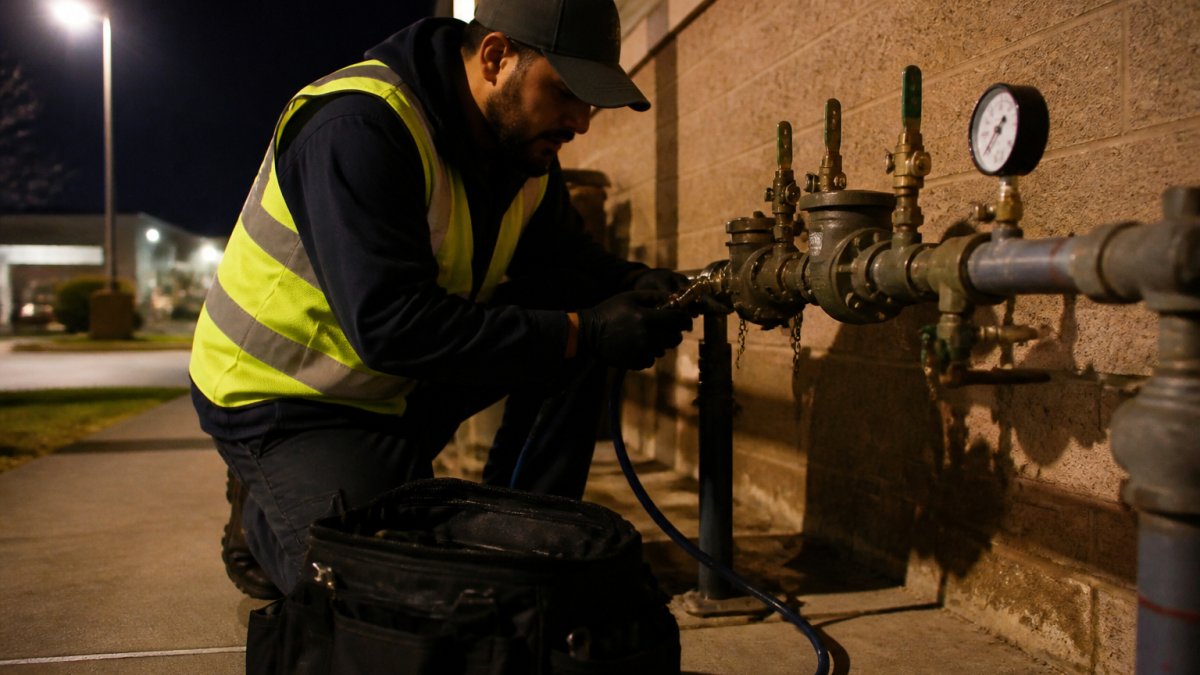
H-Town Backflow provides prompt and reliable backflow testing and repair services to ensure your water supply remains safe and free from contaminants. Serving the Greater Houston area and surrounding municipalities, our experienced team helps keep your systems compliant and operating safely. We offer flexible scheduling, including night and weekend appointments, to ensure your operations continue without water service interruption.
Emergency Response When a Cross Connection Is Discovered
Emergency response when a cross connection is discovered should follow a fixed sequence: isolate, notify, correct, and document. Speed matters because every minute the connection stays open is a minute contamination can travel.
- Isolate the connection. Close the valve or remove the physical link.
- Notify the water utility and your health department if contamination is suspected.
- Correct the connection with an approved device or air gap.
- Document the incident with photos, dates, and corrective actions.
- Retest the affected assembly before returning it to service.
Facility owners should keep a written incident procedure on hand so staff who discover a cross connection know exactly who to call and what to shut off.
Conclusion: Protecting Your Industrial Water Supply Year-Round
Cross-connection control is not a one-time inspection, it is a year-round discipline. Sites that survey regularly, test on schedule, and respond fast to device failures stay compliant and keep their water safe.
H-Town Backflow provides prompt, reliable backflow testing and repair for industrial and commercial properties, with flexible scheduling that includes night and weekend appointments to prevent water service interruption.
Frequently Asked Questions
What is a cross-connection in an industrial water system?
A cross-connection is any actual or potential link between potable water and a non-potable source. In industrial settings, this could be a process water line tied to the drinking water supply, a chemical feed system without proper separation, or a submerged inlet in a cooling tower. When pressure drops in the main water supply, contaminants can be pulled backward through that link, a condition called backflow. Preventing cross connection starts with identifying every point where industrial process water, chemicals, or wastewater could contact drinking water.
How often should industrial backflow prevention assemblies be tested?
Most municipal water utilities require annual testing of backflow prevention assemblies, though high-hazard industrial connections may need more frequent inspection. Reduced-pressure zone assemblies, double-check valve assemblies, and vacuum breakers all require testing by a certified tester. Your water utility sets the exact schedule, and failing to meet it can result in fines or water service termination. H-Town Backflow offers night and weekend appointments so testing does not interrupt your operations.
What should a facility do if a cross-connection is discovered?
Immediately isolate the affected line and stop any operation that could push contaminants toward the potable supply. Notify your water utility and your backflow prevention provider. A certified tester should inspect the assembly, document the hazard, and recommend corrective action, which may include repair, replacement, or installation of a new prevention device. Keep a written record of the incident and the corrective steps taken. Prompt action limits liability and protects public health.
Which backflow prevention method is appropriate for an industrial process?
The right method depends on the hazard level. An air gap provides the highest protection and works well for chemical feed lines or process tanks. A reduced-pressure zone assembly suits high-hazard connections where an air gap is not practical. Double-check valve assemblies handle low-hazard situations like fire sprinkler systems. For irrigation and hose bibs, a vacuum breaker may be sufficient. A hazard assessment by a certified professional determines the correct device for each connection.
How can industrial sites maintain an effective cross-connection control program?
Start with a full connection survey to map every cross-connection on site. Assign each one a hazard level and install the appropriate prevention device. Schedule annual testing with a certified tester and keep records for at least five years. Train staff to recognize backflow risks and report changes to the plumbing system. Review the program after any process change, renovation, or new equipment installation. H-Town Backflow can handle testing, repair, and compliance paperwork for facilities across the Greater Houston area.
Will backflow testing shut down water service to my building?
In most cases, testing a backflow prevention assembly takes 20 to 45 minutes and does not require shutting off water to the entire building. The tester isolates the assembly itself, not the whole system. For large industrial sites with multiple assemblies, scheduling testing during off-hours or weekends prevents any disruption. H-Town Backflow offers flexible scheduling, including night and weekend appointments, so tenants and production lines stay unaffected.