 how-to
What Happens During a Backflow Inspection: Step-by-Step
Table of Contents
- Why Your Water Purveyor Requires a Backflow Inspection
- What You'll Need Before the Tester Arrives
- Step 1: The Visual Examination of Your Backflow Preventer
- Step 2: The Backflow Preventer Testing Procedure Explained
- What Happens If a Backflow Test Fails
- How to Request a Backflow Testing Extension
- After the Inspection: Reports, Records, and What Comes Next
- Frequently Asked Questions
Last Updated: October 4, 2026
Why Your Water Purveyor Requires a Backflow Inspection
A backflow inspection is the annual test that proves your backflow preventer still blocks contaminated water from reversing into the clean supply.
Here is the short version. A certified tester arrives, inspects the device, runs a pressure test, and files a report with your water purveyor.
But the details matter.
The EPA's cross-connection control guidance explains how back-siphonage and back-pressure can pull pollutants into potable water.
What You'll Need Before the Tester Arrives
Preparation is simple, and it saves time. A tester who can reach the device without moving stored equipment finishes faster.
Have these ready before the appointment:
- Clear access to the backflow preventer and its shut-off valves
- The device's make, model, and serial number
- Your account number with the water purveyor
If your device sits in a locked mechanical room, unlock it or leave a key. Testers lose more time waiting for access than they spend testing.
For residential customers with an irrigation system, the device is often in a green box near the curb.
Step 1: The Visual Examination of Your Backflow Preventer
The visit starts with a visual examination, and it matters more than people expect. A tester can spot mechanical wear, leaks, and freeze damage before touching a gauge.
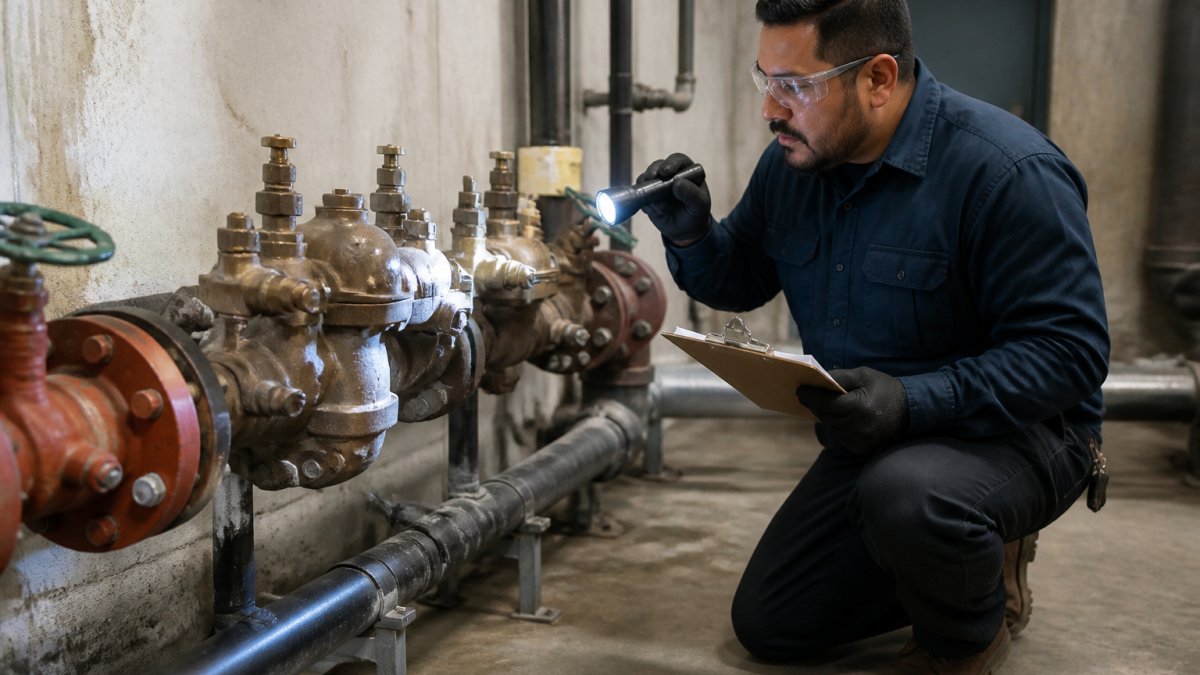
What the Tester Checks on the Device and Shut-Off Valves
The tester looks at the whole assembly, not just the main body. Key checks include:
- Cracks, corrosion, or mineral buildup on the housing
- Leaks at the check valve and relief valve ports
- The condition of the shut-off valves on both sides
- Whether the device matches the model on file with the water purveyor
A device that fails the visual examination usually needs repair before any pressure test makes sense. There is no point testing a valve that cannot hold.
Step 2: The Backflow Preventer Testing Procedure Explained
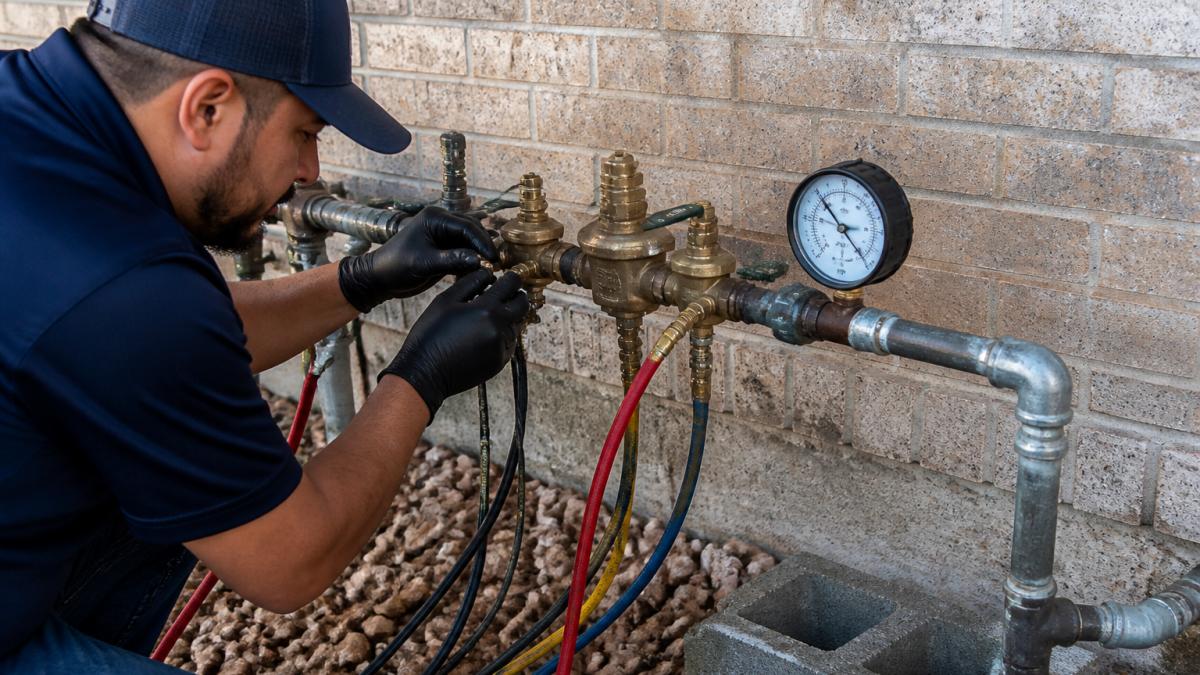
The backflow preventer testing procedure uses a calibrated test kit to measure pressure differentials inside the device. The tester connects gauges to the test ports and opens and closes valves in a set sequence.
How the Pressure Test Works on a Reduced Pressure Zone Assembly
A reduced pressure zone assembly has two check valves and a relief valve. The tester confirms each one holds under pressure.
The sequence works like this:
- Record the supply pressure at the first test port.
- Check that the first check valve holds against reverse flow.
- Confirm the second check valve closes tight.
- Verify the relief valve opens at the correct pressure differential.
- Log every reading on the test report.
If any check valve leaks, the relief valve should discharge water. That discharge is the device doing its job, not a failure of the test.
How Long Testing Takes and Whether Water Gets Shut Off
Most tests take 20 to 45 minutes per device. Water service is interrupted only briefly, usually for a few minutes while the tester works the shut-off valves.
For commercial buildings, we schedule around your operating hours. We offer night and weekend appointments, so testing does not cut into business hours or leave tenants without water during the day.
What Happens If a Backflow Test Fails
A failed test means the device did not hold pressure, and the fix depends on what broke.
Common causes include worn check valve seats, debris lodged in the assembly, freeze damage from a hard winter, and corrosion on older brass or cast-iron bodies. The age of the device matters: a rebuild kit on a 20-year-old assembly is often throwing money at a part that is already past its service life.
Repair vs. Replace: How the Decision Gets Made
Most testers and repair techs walk through the same logic:
- Single failed check or relief valve on a device under roughly 10 years old, rebuild kit or replacement parts, then retest.
- Multiple failed components on the same device, usually cheaper to replace the assembly than to rebuild it piece by piece.
- Cracked, corroded, or freeze-split housing, full replacement, no repair option.
- Device no longer matches the approved model on file with the water purveyor, replacement with a currently approved assembly, which may require a plumbing permit and inspection.
A rebuild kit typically costs a fraction of a new assembly, but the labor to tear down and reassemble a device can rival the parts cost. That is why a device with two or three failing components often gets replaced outright.
The Compliance Clock After a Failure
A failed test does not pause your annual deadline. In most jurisdictions, the water purveyor expects a passing retest within a set window, commonly 10 to 30 days from the original test date, and the device stays flagged as non-compliant until that passing report is filed.
What that means in practice:
- The tester files the failed report with the purveyor.
- You receive notice that the device is out of compliance.
- Repair is scheduled, parts are ordered if needed.
- A retest is performed, sometimes the same day if the fix is simple, more often within a week or two.
- The passing report is filed, and the compliance flag clears.
If the retest window lapses, the purveyor can escalate: a second notice, a fine, or in serious cases a shut-off of water service to the property until the device passes.
Same-Day Fixes vs. Multi-Day Repairs
Many failures are fixable the same day if the tester carries the right parts. Debris in the assembly is the classic example, clean and flush the device, retest, done. Worn seats on a common model are also often a same-day fix if the kit is on the truck.
A cracked housing is the exception. It usually means a new device, a permit, and a scheduled install, which can push the passing retest out by days or weeks.
How to Request a Backflow Testing Extension
An extension is not a right, it is a discretionary accommodation from your water purveyor, and the process runs through the utility, not the tester. That distinction matters because a tester cannot grant you more time, no matter how far in advance you book.
Most purveyors publish their extension policy in the same place they publish the testing requirement: the cross-connection control program page, the annual notice mailed with the testing reminder, or the utility's backflow portal.
What Most Purveyors Actually Require
A workable extension request usually includes:
- Your account number and the device's location and serial number
- The reason for the delay, a scheduled repair, a part on backorder, a property sale in progress, or a documented hardship
- A proposed completion date, not an open-ended 'soon'
- Confirmation that a certified tester is already booked, with the appointment date if possible
The reason matters more than the paperwork. Purveyors routinely grant extensions for a device awaiting a replacement part or a repair already in progress. They rarely grant them for 'I forgot' or 'I have not called a tester yet,' because those are the exact situations the testing program exists to prevent.
Timing: Before the Deadline, Not After
Send the request before the annual deadline, not after. Most purveyors treat a late request as a violation and process it as a compliance issue rather than an accommodation.
A common pattern is a request window that opens 30 days before the deadline and closes on the deadline itself. If you are inside that window and you have a real reason, submit the request immediately, do not wait for the tester's confirmation email to arrive first.
What an Extension Does and Does Not Change
An approved extension moves the compliance deadline. It does not move the certification date on the device, and it does not reset the annual clock.
It also does not transfer between testers. If you switch backflow testing companies mid-extension, the new tester still has to file against the same device record and the same extended deadline. The purveyor tracks the device, not the vendor.
When an Extension Is the Wrong Move
If the device is already known to be failing, do not request an extension to delay the test, request a repair and a retest. Filing a failed report and then asking for more time looks like an attempt to avoid the compliance record, and some purveyors will flag the account.
Similarly, if the property is being sold, the extension request should come from the current owner of record, with the buyer's information attached if the purveyor allows it.
After the Inspection: Reports, Records, and What Comes Next
The test report is the real deliverable, and it goes to your water purveyor. A certified tester signs it, and the purveyor files it as proof of regulatory compliance.
Keep your own copy. We recommend storing three years of reports, since auditors and buyers often ask for history during a property review.
Here is what happens after the tester leaves:
- The report is submitted to the water purveyor, usually within a few business days.
- You receive a copy for your records.
- If the device passed, your annual certification is current for another year.
- If it failed, you schedule repair and a retest.
One thing most guides skip: your device's certification date does not reset when you change testers.
Frequently Asked Questions
How long does a backflow inspection take?
Most residential devices take 15 to 30 minutes. Commercial assemblies, such as reduced pressure zone devices, can take 30 to 60 minutes depending on size and access. The backflow inspection itself is quick; the paperwork and any repairs add time. If your device fails, expect a second visit after parts are replaced or the assembly is rebuilt.
Does water get shut off during a backflow test?
Yes, briefly. The certified tester closes the shut-off valve to isolate the device, which stops water flow for the duration of the pressure test. For most homes and small businesses, that is under 30 minutes. Facilities that cannot lose water pressure should schedule testing during off-hours; many providers offer night and weekend appointments to avoid disrupting tenants or operations.
What happens if my backflow device fails inspection?
The tester documents the failure on the test report and notifies you and the water purveyor. You then have a limited window, often 10 to 30 days depending on municipal requirements, to repair or replace the device and have it retested. Ignoring the notice can lead to fines or water service termination. Ask whether same-day repairs are available to avoid a second trip.
How do I request a backflow testing extension?
Contact your water purveyor's cross-connection control office before your certification expires. Explain the reason, such as a scheduled repair or access issue, and ask for the extension in writing. Requirements vary by municipality, so confirm the deadline and any fees. A licensed backflow tester can often file the request on your behalf and document the reason for the delay.
Backflow compliance only works when someone tracks every device, every deadline, and every report. H-Town Backflow handles that for commercial and residential properties across the Greater Houston area, with certified testing, repair, and direct reporting to your water purveyor. Our flexible scheduling, including night and weekend appointments, keeps your water on and your operations running. Send us your device list and let us keep your system compliant year after year.