 Ultimate guide
Backflow Prevention Device Installation Standards: 2026 Guide
Last Updated: October 23, 2026
Quick Summary
Backflow prevention device installation standards require matching the assembly to the hazard level, installing it at the correct height and orientation, and leaving clearance for testing. Most assemblies need an initial test at installation and annual testing after that, with results filed with the local water authority.
- Pressure vacuum breakers must sit at least 12 inches above the highest downstream outlet.
- RPZ assemblies need drainage capacity for relief discharge and cannot sit in a vault that may flood.
- Leave working room on the test cock side so a certified tester can attach gauges.
- Confirm the local requirement in writing before design, since neighboring municipalities may adopt different code editions.
- Submit the test report to the correct authority in the correct format, or a passing test counts as a compliance failure.
Table of Contents
- Backflow Prevention Device Types and How They Dictate Installation
- Backflow Preventer Installation Requirements: Height, Orientation, and Protection
- Backflow Preventer Clearance Requirements for Testing and Repair Access
- Backflow Preventer Testing Requirements After Installation and Annually
- Which Codes and Standards Govern Backflow Prevention Device Installation
- Common Installation Mistakes That Fail Inspection
- Conclusion
- Frequently Asked Questions
Backflow Prevention Device Types and How They Dictate Installation
The device you install determines almost everything about how it must be installed. A backflow prevention device is a mechanical assembly that stops contaminated water from reversing flow into a potable supply line, and each type carries its own installation rules. At H-Town Backflow, we see the same pattern across commercial and residential properties: the assembly is chosen first, then the installation is forced to fit around it.
Four device types dominate field work:
- Air gaps provide the highest protection level and rely on a physical separation between the supply and the receiving vessel. Installation depends on maintaining that visible gap, so the receiving fixture must be sized and positioned to accept it.
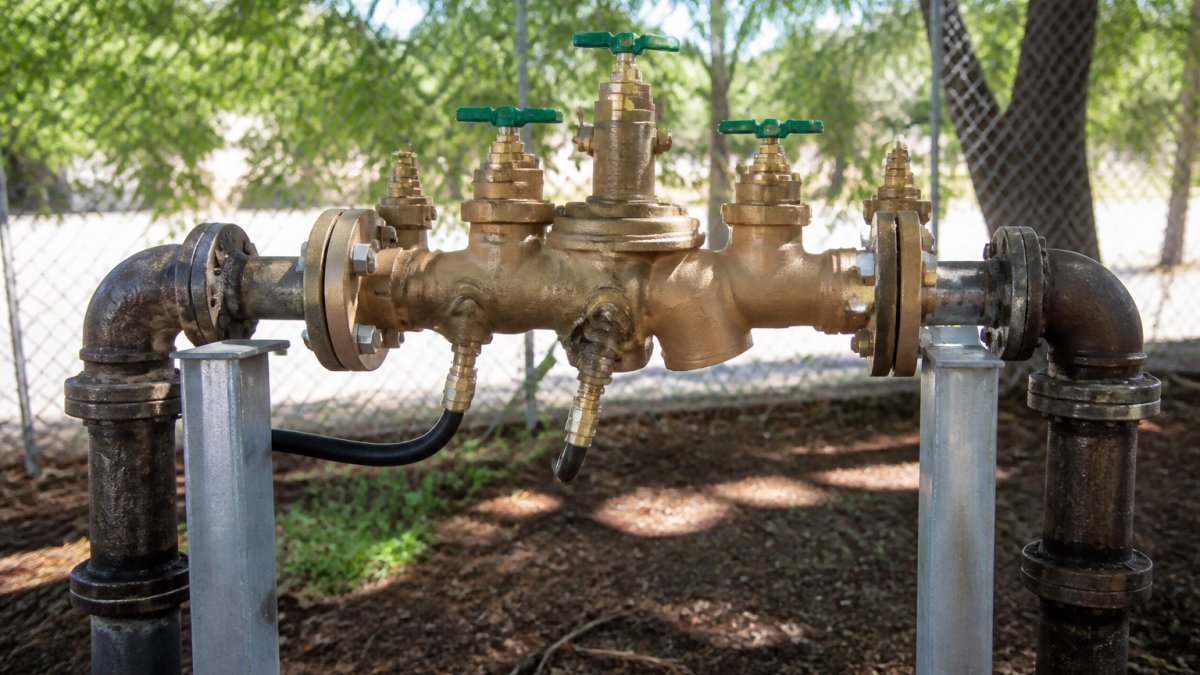
- Reduced pressure zone assemblies (RPZ) protect against both backpressure and backsiphonage. They require drainage capacity for relief discharge and cannot be installed below grade in a vault that may flood.
- Double check valve assemblies suit low-hazard applications and need only inline space, but they offer no relief port, so they cannot discharge.
- Pressure vacuum breakers protect against backsiphonage only and must sit at least 12 inches above the highest downstream outlet.
Choosing the wrong type is the most expensive mistake in this trade. If the hazard level calls for an RPZ and a double check goes in, the installation fails review regardless of how clean the pipework looks.
Backflow Preventer Installation Requirements: Height, Orientation, and Protection
Height and orientation rules exist so the assembly can actually do its job. A pressure vacuum breaker installed below the downstream outlets it protects is functionally useless, because backsiphonage lifts water into the device from below. The common standard is a minimum of 12 inches above the highest downstream point, measured from the critical level marked on the device.
Orientation matters just as much. Most assemblies are approved for horizontal installation only, and the relief valve on an RPZ must point downward so discharge is visible and drains freely. Flip an assembly on its side and you void the manufacturer's approval, which means the device is no longer a compliant installation even if it tests clean.
Protection from the environment is the third leg:
- Install above grade wherever possible, or in a drained vault rated for the location
- Keep the assembly out of standing water and away from areas subject to flooding
- Protect against freezing with heat trace or an insulated enclosure, never by wrapping the relief port
- Leave the assembly accessible, not buried behind drywall or welded into a sealed chase
The University of Southern California's Foundation for Cross-Connection Control and Hydraulic Research maintains the list of approved assemblies, and a device that is not on that list should never be specified.
Backflow Preventer Clearance Requirements for Testing and Repair Access
Clearance is the requirement most often ignored during rough-in, and it is the one that costs the most later. A backflow preventer clearance requirement is the minimum unobstructed space left around an assembly so a certified tester can attach gauges, read test cocks, and remove the device for repair without cutting pipe.
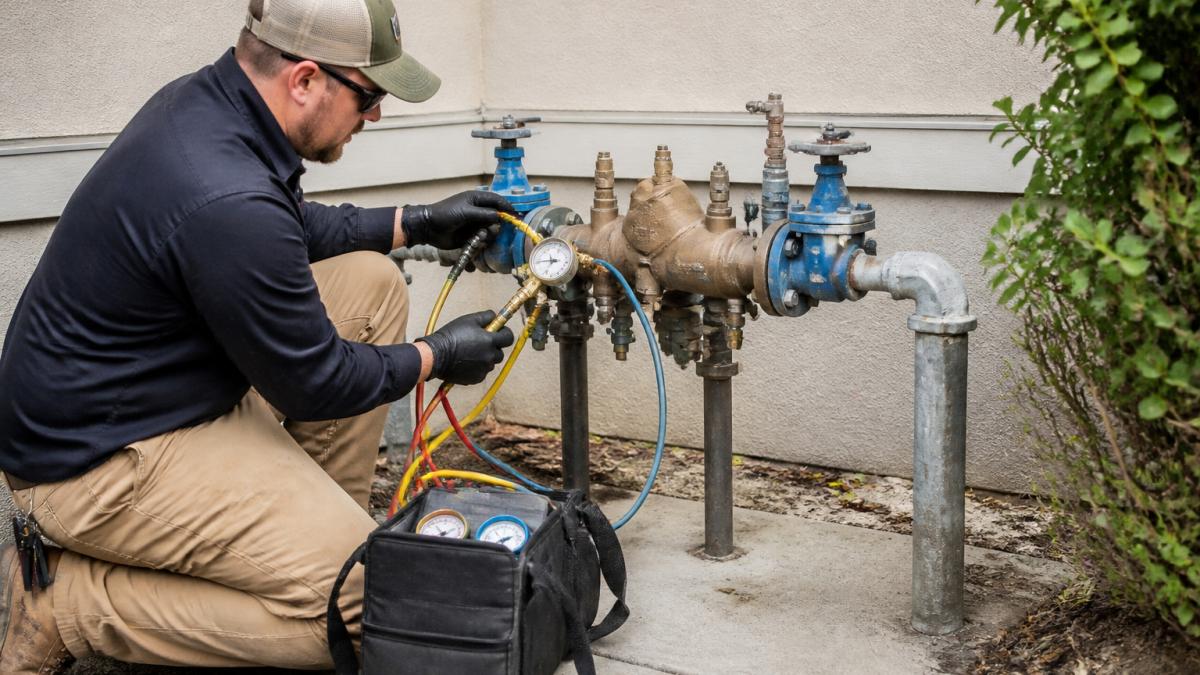
We recommend treating clearance as a hard design constraint, not an afterthought. In practice, that means leaving working room on the test cock side of the assembly, keeping the relief port discharge visible from a standing position, and never boxing an assembly into a ceiling cavity with less than a body's width of access.
If you are coming from a residential irrigation setup, expect commercial clearances to be stricter. A small lawn system may tolerate a compact install; a multi-story building's domestic water service will not.
Backflow Preventer Testing Requirements After Installation and Annually
Testing is not optional, and the first test happens before the device ever carries water in normal service. Backflow preventer testing requirements generally call for an initial test at installation, performed by a certified tester, with results submitted to the local water authority. After that, annual testing is the norm for most assemblies.
The test itself is quick. A standard check on a reduced pressure zone assembly involves isolating the device, connecting a differential pressure gauge to the test cocks, and verifying that each check valve and the relief valve hold at their required values. Water service interruption is brief and usually limited to the assembly itself rather than the whole building.
What most guides miss is the paperwork side. The test report must go to the correct authority in the correct format, and a passing test that never gets filed counts as a compliance failure. This is where property managers lose time: chasing down which municipality wants which form.
Which Codes and Standards Govern Backflow Prevention Device Installation
No single national code governs every installation. The rules come from a stack of sources, and the one that applies depends on where the assembly sits and who supplies the water.
The primary layer is the local plumbing code adopted by the jurisdiction, which sets installation, clearance, and testing requirements. Above that sits state-level plumbing and cross-connection rules. Federal rules enter through the Safe Drinking Water Act, which authorizes the national drinking water program and underpins state cross-connection control efforts, and through OSHA's general industry standards where backflow protection touches workplace safety.
Industry standards fill the gaps. The American Society of Mechanical Engineers publishes performance standards for backflow preventers, and the American Water Works Association publishes installation practices for service line assemblies. Manufacturer instructions carry legal weight too: an assembly installed contrary to its listing is noncompliant no matter what the code says.
The practical takeaway is to confirm the local requirement in writing before design. Two neighboring municipalities can adopt different code editions, and the difference shows up at inspection.
Common Installation Mistakes That Fail Inspection
Most failed inspections trace back to a short list of preventable errors. The pattern is consistent: installers who know plumbing but not cross-connection rules make the same five mistakes.
| Mistake | Why It Fails | The Fix |
|---|---|---|
| Wrong device type for the hazard level | Does not meet required protection | Match assembly to hazard classification before ordering |
| Installed below the critical level | Device cannot prevent backsiphonage | Raise the assembly to the required height above downstream outlets |
| No drainage for relief discharge | RPZ discharge floods the vault or space | Provide a drained receptor sized for full relief flow |
| Insufficient clearance for testing | Tester cannot connect gauges | Leave working room on the test cock side |
| Missing or late test report | Compliance file is incomplete | Submit results to the authority on schedule |
A common mistake is treating the inspection as a formality. Inspectors check the device listing, the installation height, the drain path, and the test report. Any one of those missing sends the job back.
Conclusion
Getting an assembly installed to standard is a coordination problem: the right device, at the right height, with the right clearance, tested and documented on schedule. Most compliance headaches come from skipping one of those steps during design and paying for it at inspection.
H-Town Backflow handles testing and repair across the Greater Houston area and surrounding municipalities, with flexible scheduling that includes night and weekend appointments so water service interruption stays minimal. Our team keeps your required testing current, helps you maintain safe system operation, and works around your building's schedule rather than the other way around. Get started with H-Town Backflow and keep your assembly compliant without shutting down your property.
Frequently Asked Questions
What standards govern backflow prevention device installation?
Installation is governed by a mix of national standards and local plumbing codes. Nationally, ASSE 1003, ASSE 1013, ASSE 1015, and ASSE 1020 cover device performance, while the Uniform Plumbing Code and International Plumbing Code set installation rules that local authorities adopt and amend. In practice, the authority having jurisdiction, usually the municipal water department or building official, has the final say on approved device types, placement, and clearance. Always confirm the local amendment before ordering equipment or scheduling installation.
Where should a backflow prevention assembly be installed?
Place the assembly downstream of the water meter and upstream of any branch or fixture it protects, so all water serving the hazard passes through it. Install it on the customer's side of the meter, in a location that stays accessible for testing and repair year-round. For irrigation systems, the assembly goes on the irrigation line before the first valve or head. Keep it out of flooded pits, away from chemical storage, and clear of any connection that could bypass it. Local rules may require a specific distance from the meter or property line.
How much clearance is required around a backflow preventer?
Most codes call for at least 12 inches of clear space on the sides and top of the assembly, and enough room in front to attach test hoses and operate test cocks. The relief valve port on a reduced pressure zone assembly must discharge at least 12 inches above grade or the floor, and the device must sit high enough that the relief port never floods. Clearance matters because a tester cannot properly connect gauges or observe relief discharge in a cramped space. Confirm the exact dimensions with the local water authority before building an enclosure.
Does a backflow preventer need to be installed above ground?
Reduced pressure zone assemblies generally must be installed above ground or in a vault that drains and stays accessible, because the relief valve must discharge visibly and the device cannot be buried. Pressure vacuum breakers must sit at least 12 inches above the highest downstream outlet, which usually means above ground. Double check assemblies can sometimes go below grade in a vault if local rules allow it. The hazard level and the device type decide the answer, so check the approved list from the water authority before digging.
Do backflow prevention assemblies need to be tested after installation?
Yes. A newly installed assembly must be tested by a certified tester before it is placed in service, and the test report goes to the water authority. The test confirms the check valves hold and, for reduced pressure zone assemblies, that the relief valve opens at the correct differential. Installation without a passing test report is usually treated as non-compliant. Keep the report on file and note the test date, because it starts the annual testing clock for that device.
How often should a backflow prevention assembly be inspected or tested?
Most water authorities require annual testing, and some high-hazard or industrial connections require testing more often. Between tests, inspect the device for leaks, corrosion, discharge from the relief valve, and physical damage, and keep the area around it clear. If the assembly is repaired or relocated, it needs a new test. Track the due date and schedule early, because a lapsed test can lead to notices, fees, or water service interruption until the device passes.