 Ultimate guide
7 Signs Backflow Testing Is Worth It for Your Property
Last Updated: October 25, 2026
Quick Summary
Yes, backflow testing is worth it for any property with a testable assembly, because a failed device can push hazardous substances into the same pipes you drink from. The annual test fee is a small fraction of the potential penalty, repair, or service interruption cost.
- Backflow testing is priced per assembly, not per hour, and most testers discount the per-device rate as the count rises.
- A single backflow test typically takes 15 to 30 minutes on site once the tester has access to the device.
- Extensions are granted at your water provider's discretion, so request one before the deadline and get it in writing.
- Some jurisdictions charge a separate fee for each retest, so ask whether repair and retest can happen on the same visit.
- Testing requirements are set locally, so confirm device requirements and deadlines with your water provider first.
Table of Contents
- The Real Question: Is Backflow Testing Worth It?
- What Backflow Testing Cost Actually Buys You
- What Does a Backflow Test Check?
- How Long Does Backflow Testing Take?
- How to Request a Backflow Testing Extension
- When a Failed Test Means Repair, Retest, or Replacement
- How to Verify Your Local Requirements and Deadlines
- Schedule Your Backflow Test Before the Deadline
- Frequently Asked Questions
The Real Question: Is Backflow Testing Worth It?
Backflow testing is the scheduled inspection of a mechanical device that stops contaminated water from reversing into the clean supply, and yes, it is worth it for any property with a testable assembly.
The cost of a test is visible and predictable. The cost of a cross-connection event is invisible until someone gets sick or the water authority shuts off service.
What Backflow Testing Cost Actually Buys You
You are not paying for a technician to look at a valve. You are paying for a certified tester, calibrated gauges, a documented result, and a report filed with your water provider. To judge whether that bundle is worth the fee, see both sides of the ledger.
The cost side: what drives the fee
Backflow testing is priced per assembly, not per hour, and the fee is built from a handful of factors:
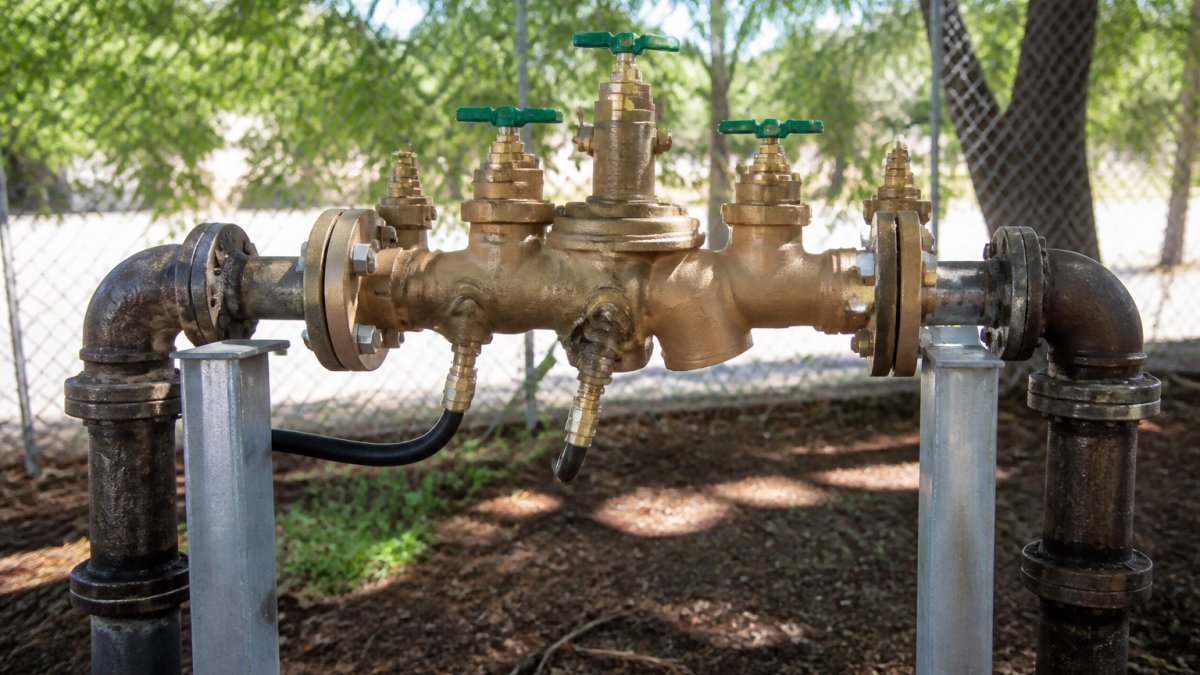
- Device type. A reduced-pressure assembly takes longer to test than a double check because it has more test cocks and a relief valve to read, so expect it at the higher end of any tester's range.
- Number of assemblies. Most testers discount the per-device rate as the count rises, because travel and setup are shared. One device is the most expensive per unit; ten on one site are the cheapest.
- Access and location. A device in an open mechanical room is a quick job; one in a locked vault, crawlspace, or tenant suite adds labor and sometimes a return trip.
Because those factors vary so widely, a single published number would be misleading. Most testers quote per property after confirming device type and count. Ask for the quote to break out test, repair, retest, and filing so you can compare bids on the same basis.
The risk side: what an untested device can cost
Now weigh the fee against what a failed or untested device can trigger:
- Compliance penalties. Many water providers and health departments assess fines or fees for late testing, and some escalate with each notice cycle. Check your provider's published schedule rather than assuming a national figure.
- Service interruption. A provider can suspend or restrict water service to a noncompliant property. For a business, that is lost revenue and displaced tenants; for a homeowner, a habitability problem.
- Emergency repair labor. A device that fails under pressure, or a cross-connection event discovered after the fact, usually means emergency rates.
The decision framework
A practical way to judge whether testing is worth it for a given property:
- Is the device required? If your water provider or health department requires testing, the compliance cost of skipping is real and the decision is largely made for you.
- What is the downside exposure? A single-family home with an irrigation device has modest exposure. A commercial building, restaurant, medical office, or property with fire-suppression connections has a much larger one.
- What is the fee as a share of that exposure? For most properties, the annual test fee is a small fraction of the potential penalty, repair, or interruption cost. That ratio is the honest answer to "is it worth it."
- Is the device old or failure-prone? A device with a history of failures is a stronger candidate for testing plus a repair-or-replace plan than a new device with a clean record.
What Does a Backflow Test Check?
A backflow test checks whether your backflow preventer actually stops reverse flow under real pressure conditions. They measure it. Here is a step-by-step walkthrough of what happens during the inspection.
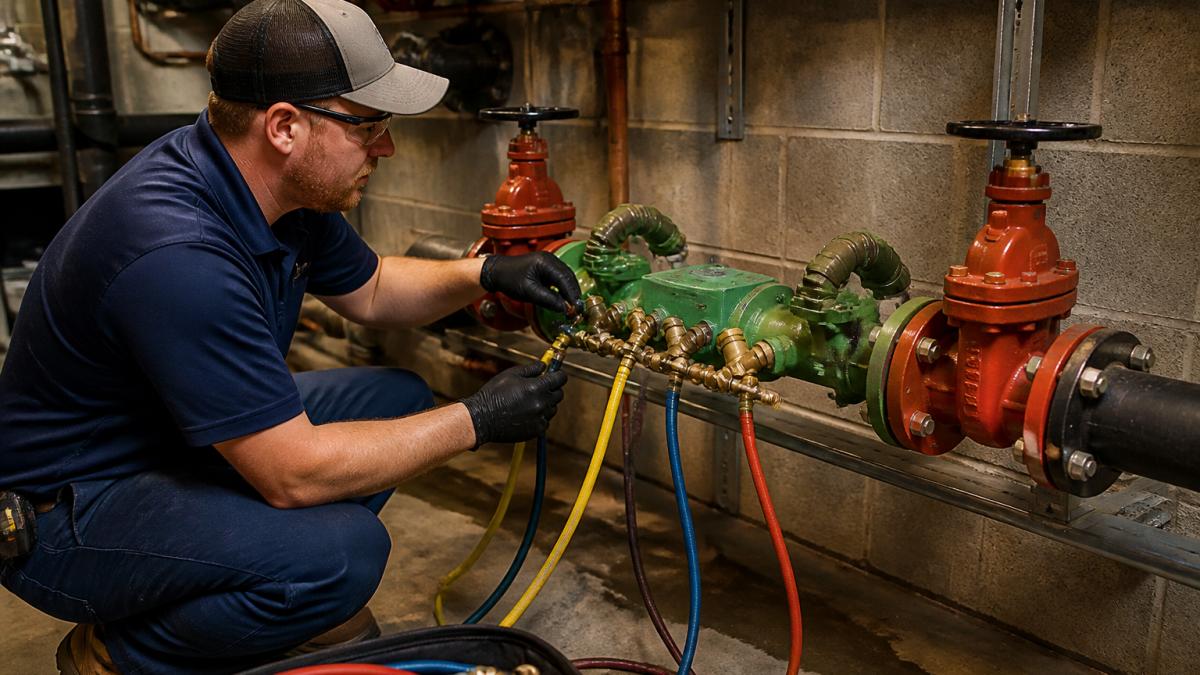
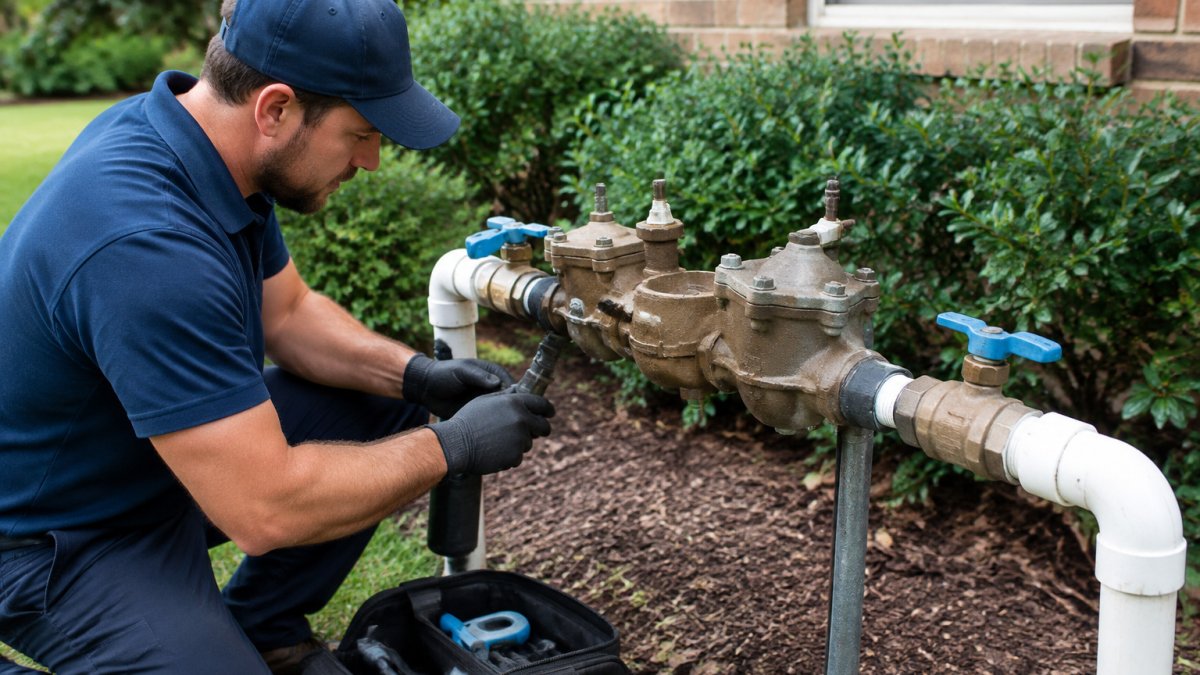
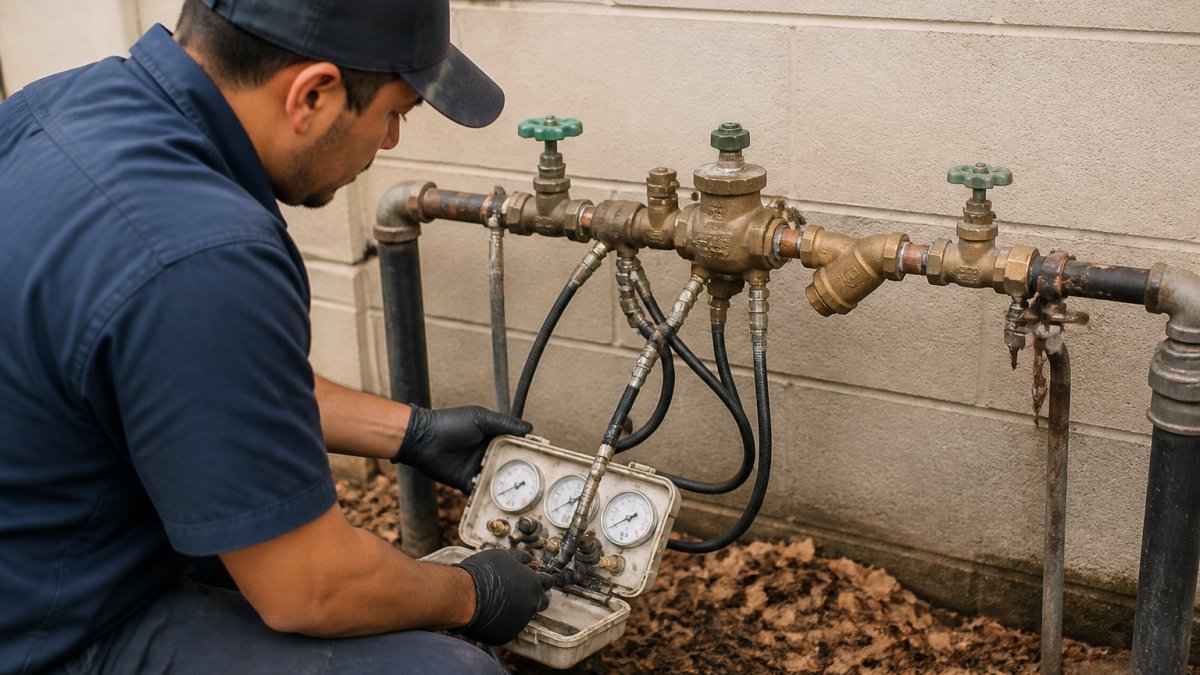
For a reduced-pressure assembly, the technician isolates the device, attaches calibrated test gauges to the test cocks, and reads the pressure differential across the check valves and the relief valve.
For a double check assembly, the procedure is shorter: two check valves, two differential readings, pass or fail.
What the test does not do is repair anything. It produces a measurement and a record.
How Long Does Backflow Testing Take?
A single backflow test typically takes 15 to 30 minutes on site once the tester has access to the device. The appointment itself, including setup and paperwork, usually runs under an hour.
Several things stretch that window:
- Access. If the assembly sits behind a locked panel or in a tenant space, someone has to open it.
- Device condition. A corroded or seized test cock slows the job and sometimes forces a return visit.
- Number of assemblies. A property with six devices takes proportionally longer than one with a single device.
That last point answers the question we hear most. Will tenants lose water? For most single-device tests, the shutdown is limited to the assembly's line and lasts minutes.
How to Request a Backflow Testing Extension
A backflow testing extension is a formal request to your water provider or local health department asking for more time past your compliance deadline, and it is granted at their discretion, not the tester's.
What actually works:
- Find your notice. The deadline and the reporting authority are printed on the notice or listed in your provider's published requirements.
- Call before the deadline, not after. Extensions requested after a lapse are treated very differently from ones requested in advance.
- Give a real reason. Device access problems, a scheduled repair, or a property sale in progress are the kinds of explanations providers consider.
- Get it in writing. A verbal okay is not a compliance record.
Watch out: assuming an extension is automatic because you called. Until you have written confirmation, the original deadline stands, and a missed deadline can mean a notice, a penalty, or interrupted service.
When a Failed Test Means Repair, Retest, or Replacement
A failed test is a measurement, not a verdict. The right response depends on which component failed and how badly. Understanding the common causes of failed tests helps you judge whether repair or replacement is likely.
| Test Result | Likely Cause | Typical Next Step |
|---|---|---|
| Check valve fails to hold | Debris, worn seat, damaged disc | Clean or rebuild, then retest |
| Relief valve opens early | Fouled seat, spring wear | Repair kit, then retest |
| Multiple readings out of range | Corrosion, freeze damage, age | Evaluate replacement |
| Device will not hold at all | Structural failure | Replacement |
Small failures, like a bit of debris on a valve seat, often clear with a clean and a retest. Repeated failures on the same assembly point toward replacement, and at that stage patching it annually stops making financial sense.
The thing nobody tells you about retests: some jurisdictions charge a separate fee for each return visit, so a repair-and-retest done in one trip is cheaper than two separate appointments. Ask whether the tester can repair on the same visit before you book.
How to Verify Your Local Requirements and Deadlines
Testing requirements are set locally, which means the rules that apply to a property in one municipality may not match the next one over. There is no single national deadline. But before you chase a deadline, confirm the device is actually regulated, and then verify the specifics in a reliable order.
Step 1: Does this property need testing?
Work through these questions. A "yes" anywhere means you likely have a testable assembly and should confirm with your provider.
- Does the property have an irrigation system? Irrigation is one of the most common sources of testable devices, because a sprinkler line can sit in standing water and fertilizer.
- Does it have a fire-suppression system? Fire connections often require a backflow preventer, and the device type and testing schedule may differ from the domestic line.
- Does it have a pool or spa? Fill lines and recirculation systems can create cross-connections.
If none of those apply, you may still have a device, check the incoming service line for an assembly with test cocks. When in doubt, call the provider and describe the property; they will tell you whether a device is required.
Step 2: Verify the requirement in the right order
- Your water provider. Most publish device requirements, testing frequency, and reporting procedures on their website. This is the first stop because the provider usually runs the program.
- Your local health department. Where the health authority runs the program, it holds the official requirement list.
- Your notice or permit paperwork. The device type and due date are usually printed there.
- Your tester. A certified local tester files reports routinely and knows which authority expects what.
Step 3: Confirm the details people miss
- Who files the report. The report usually has to come from the tester, not the property owner, so confirm your tester files it and keeps a copy for you.
- Which deadline applies. The deadline belongs to the device, not the building, so a property with several assemblies may have several dates.
- Whether the tester is on the approved list. Some providers publish a list of approved testers; confirm yours is on it before booking.
- What the submission procedure is. Some providers accept online filing, some require a specific form, and some want the report within a set number of days after the test.
Schedule Your Backflow Test Before the Deadline
The cheapest test is the one booked before the deadline. After it, you are negotiating from a weaker position: rush scheduling, possible penalties, and the risk of a service interruption you did not plan for.
A short pre-booking checklist:
- Confirm the device type and due date on your notice
- Confirm the tester is certified and will file the report
- Ask whether repair and retest can happen on the same visit
- Ask about after-hours slots if a daytime shutdown hurts operations
If you are ready to book, get on the schedule before your date arrives. Find a certified local tester and book before your deadline.
The deadline on your notice does not move because you were busy.
Frequently Asked Questions
Is backflow testing worth the cost?
For most properties with a testable device, yes. The annual fee is small next to the consequences of a failed test or a contamination event: fines, potential service shutoff, liability for waterborne illness, and emergency repair bills. Backflow testing also catches worn check valves before they fail and keeps your drinking water supply separated from irrigation, fire-suppression, and industrial lines. If your water provider requires testing, skipping it is not a saving, it is a deferred penalty.
Can I test a backflow preventer myself?
No. Most water authorities require testing by a certified tester who submits the test report directly to the water provider and local health department. The gauges used to check an RP assembly or check valve need calibration and the tester needs a license or certification recognized in your area. A self-test will not satisfy a compliance requirement, and an untrained hand on a testable device can damage seals or leave the assembly in a non-compliant state.
What happens if I skip a required backflow test?
Expect a notice first, then escalating consequences: fines, a compliance deadline, and in some cases suspension of water service until a passing test report is on file. Commercial property owners also carry liability if contaminated water reaches tenants or the public supply through an untested cross-connection. If you missed a deadline, contact your water provider about a backflow testing extension before the penalty stage, and get a certified tester scheduled immediately.
Does backflow testing interrupt water service?
Usually not. A standard test on most assemblies takes 15 to 30 minutes and typically does not require shutting off water to the building. If a repair or replacement is needed, a brief shutdown may be necessary, which is why after-hours and weekend appointments exist for commercial sites. Ask your tester in advance how long the visit will take and whether any isolation of the water supply is expected so you can notify tenants or staff.