 ultimate-guide
Preventing Water Contamination in Commercial Buildings
Table of Contents
- Why Water Contamination Prevention Matters for Commercial Properties
- Common Causes of Water Contamination in Commercial Buildings
- Building a Commercial Building Water Management Plan
- Commercial Backflow Prevention: How It Protects Your Water Supply
- Backflow Preventer Testing and Repair: What Facility Managers Need to Know
- Water Contamination Prevention Checklist for Facility Maintenance
- Conclusion
- Frequently Asked Questions
Last Updated: October 15, 2026
Why Water Contamination Prevention Matters for Commercial Properties
Preventing water contamination in commercial buildings is the practice of protecting a potable water supply from backflow, stagnation, and biological growth through routine inspection, testing, and system design. The EPA's drinking water guidance treats cross-connection control as a core public health function, not an optional line item.
Water contamination in a commercial property rarely announces itself. A slow cross-connection or a dead-end pipe can sit unnoticed for months before anyone tastes or smells a problem.
Below, we break down the causes, the compliance steps, and the checklist we would hand a facility manager on day one.
Common Causes of Water Contamination in Commercial Buildings
Most contamination events trace back to two mechanisms: pressure reversal and stagnation. Both are preventable with routine maintenance, and both are frequently ignored until a test fails.
Backflow and Cross-Connections
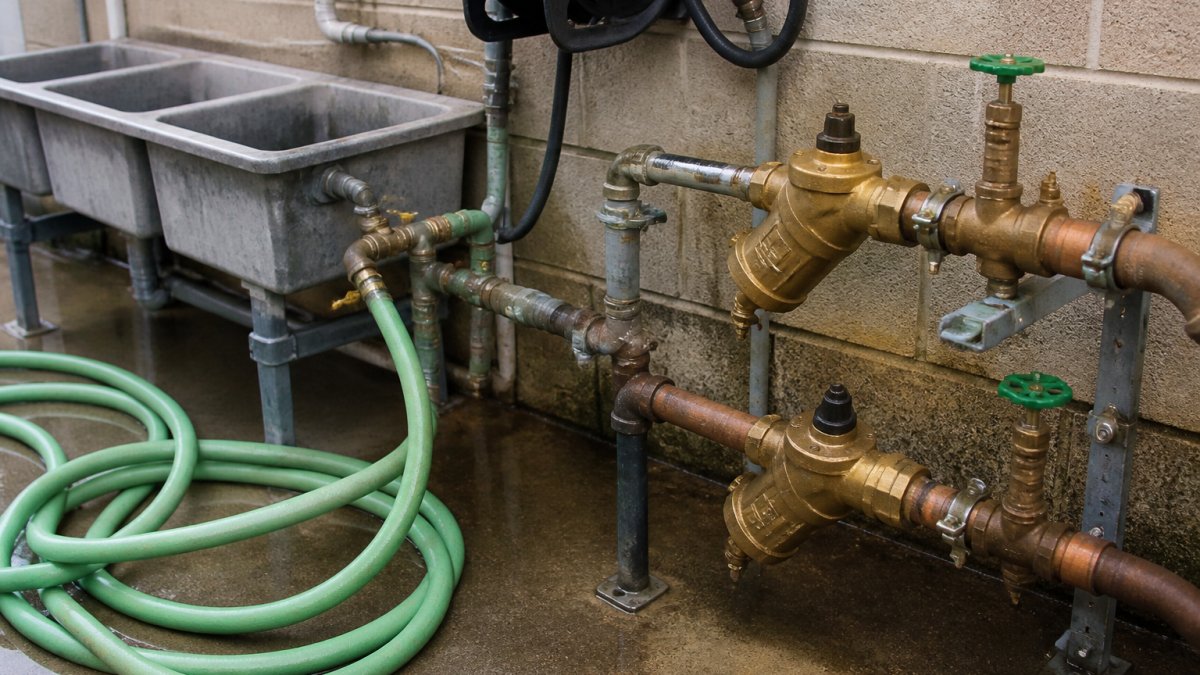
Backflow is the unintended reversal of water flow that pulls non-potable water into the potable supply. It happens when pressure drops on the supply side while a downstream system, such as an irrigation line or boiler feed, keeps pushing water the wrong way. A cross-connection is any physical link between potable and non-potable piping that makes this reversal possible.
Common sources include:
- Irrigation systems tied directly into the domestic supply
- Fire sprinkler lines with chemical additives
- Boiler and cooling tower makeup water
Water Stagnation and Biofilm Growth
Water that sits still loses its residual disinfectant. Within days, biofilm can form on pipe walls, and warm, stagnant sections become breeding grounds for waterborne pathogens. Dead-end piping, oversized systems running below capacity, and seasonal vacancies all accelerate this. Cooling towers and HVAC systems with poor turnover are repeat offenders.
Building a Commercial Building Water Management Plan
A commercial building water management plan is a documented program that identifies water system risks, assigns responsibility, and sets a testing and maintenance schedule. Without a written plan, maintenance becomes reactive, and reactive maintenance is expensive. A workable plan has five moving parts: a system inventory, a hazard-ranked risk assessment, control measures tied to each risk, a monitoring schedule, and a validation loop that proves the controls still work.
Risk Assessment and Compliance Documentation
Start with a system inventory. Map every point where potable water could contact a non-potable source, then rank each by consequence and likelihood. Document the following for every device:
- Location and type of backflow preventer
- Last test date and result
- Responsible party for annual testing
Keep this documentation current. When a regulator or insurer asks for records, a binder of dated test reports answers the question in minutes. A scramble through email does not.
A hazard ranking usually sorts connections into three tiers:
| Hazard tier | Typical connections | Minimum protection |
|---|---|---|
| High | Chemical injection, cooling tower makeup, lab sinks, medical equipment | Reduced pressure zone assembly or air gap |
| Moderate | Fire sprinkler lines with additives, boiler feed, commercial dishwashing | Reduced pressure zone assembly |
| Low | Irrigation without chemicals, hose bibs, decorative fountains | Double check valve assembly or vacuum breaker |
Ranking by tier matters because it drives device selection, testing frequency, and the paperwork a regulator will ask to see. A plan that lists devices without hazard tiers is a list, not a program.
Control Measures, Monitoring, and Validation
Once risks are ranked, each one needs a control measure and a way to prove the control is working. The CDC guidance on building water systems frames this as a water management program with defined control points, not a one-time inspection.
Common control measures include:
- Maintaining residual disinfectant at the point of use, not just at the meter
- Flushing dead legs and low-use fixtures on a fixed schedule
- Testing backflow assemblies on the interval the local authority requires
Monitoring is where most plans fail. A plan that says "inspect cooling towers" without naming who inspects, how often, and what reading triggers action is unenforceable.
Validation closes the loop. Once a year, review test results, repair records, and any contamination events, then update the plan. A plan that has not changed in three years is not being used.
Insurance, Liability, and the Business Case
Few articles on this topic connect water contamination prevention to insurance and liability, and that is a gap worth closing. Commercial property policies increasingly ask about water management practices during underwriting, and a documented plan with current test records is the kind of evidence that supports a favorable review.
That is the practical argument for treating the plan as a business document, not a compliance chore. The same records that satisfy a regulator also answer an insurer's questions and support a defense if a tenant alleges harm.
Commercial Backflow Prevention: How It Protects Your Water Supply
Commercial backflow prevention uses mechanical devices and air gaps to stop reverse flow before it reaches the potable supply. The right device depends on the degree of hazard at each connection, and the wrong device fails quietly.
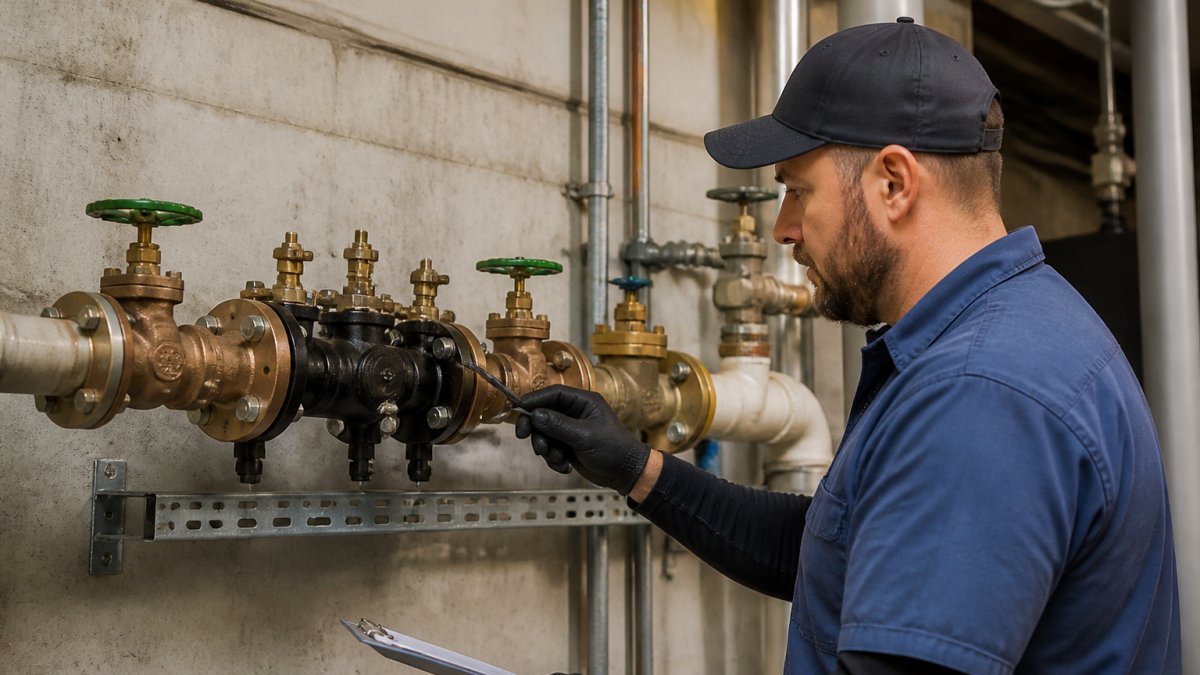
A reduced pressure zone assembly handles the highest-hazard applications, such as chemical injection or cooling tower makeup. A double check valve assembly suits lower-hazard connections. Air gaps remain the most reliable option where they can be installed.
Matching the device to the hazard level is the single most important decision in a backflow program. An undersized or wrong-type assembly passes a test one year and fails the next.
The University of Southern California's cross-connection control manual remains one of the most detailed public references on device selection and hazard classification.
Backflow Preventer Testing and Repair: What Facility Managers Need to Know
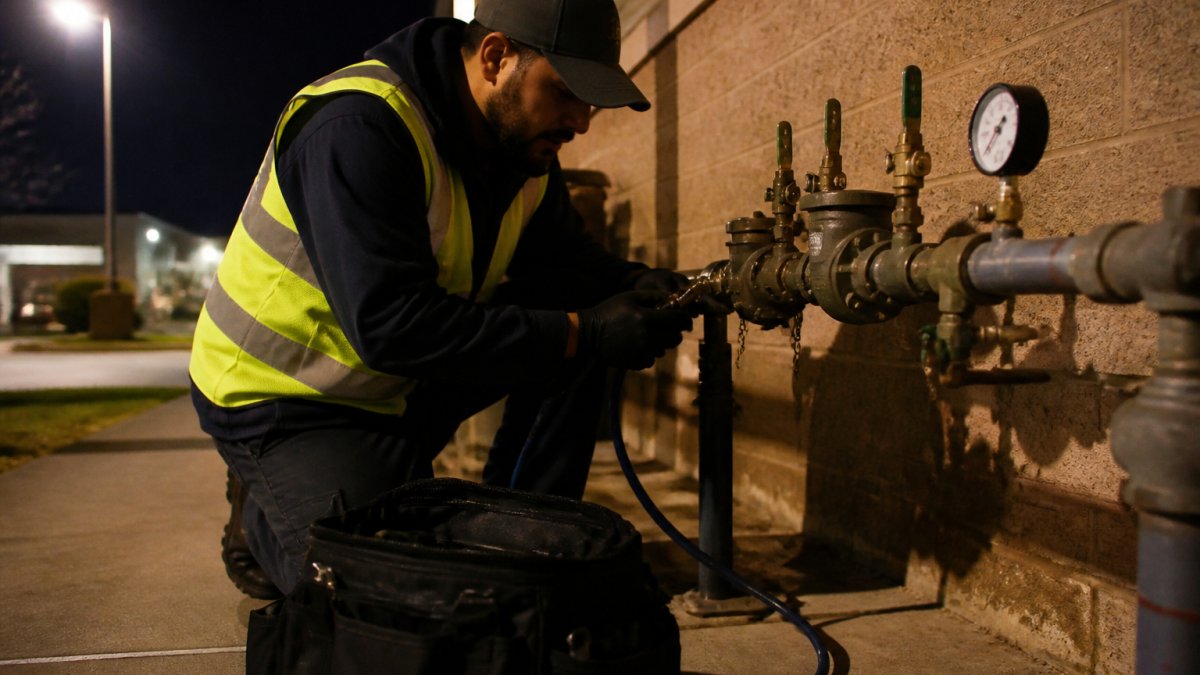
Backflow preventer testing and repair keeps a device working and keeps the property compliant. Testing verifies that the assembly holds pressure and closes correctly; repair restores a device that fails.
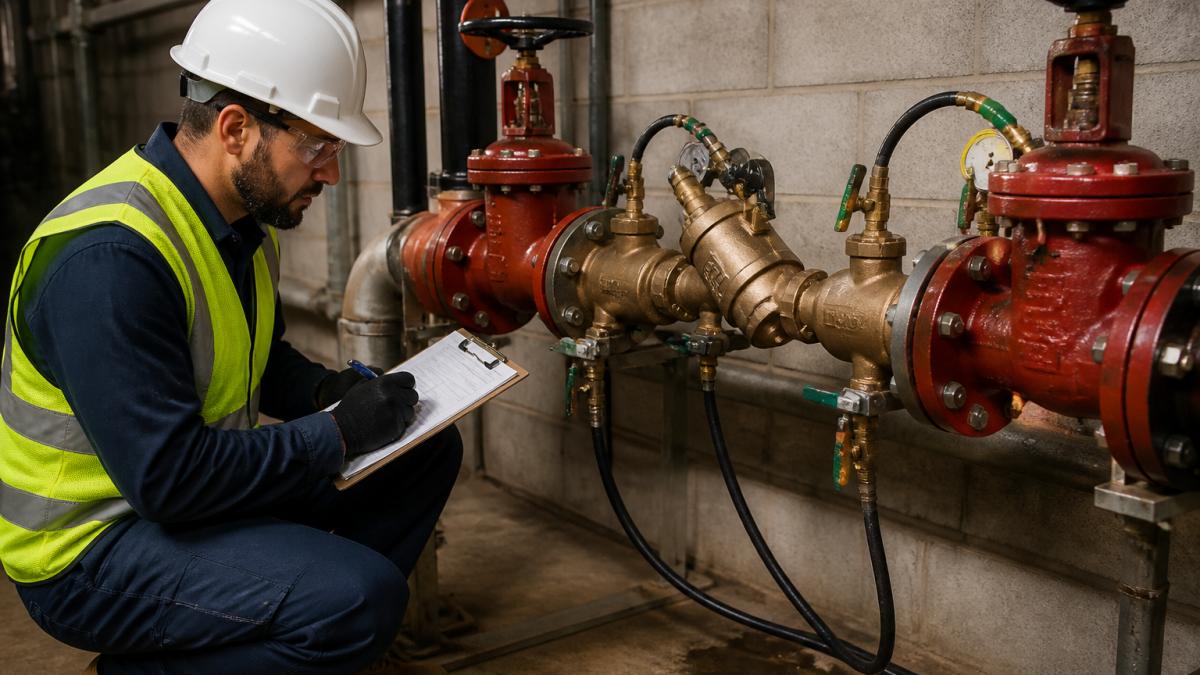
Here is how a service call is typically approached:
- Confirm the device type and hazard level against the site records
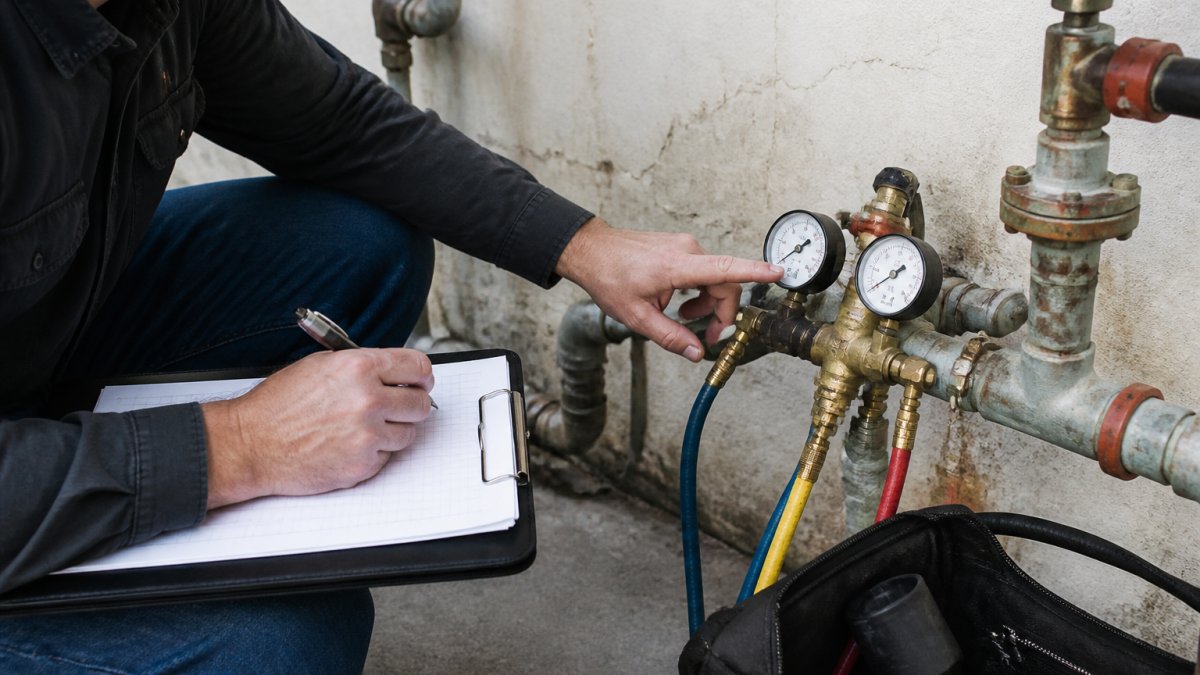
- Isolate the assembly and connect test equipment to the test cocks
- Run the pressure differential checks for the specific assembly type
- Record results and tag the device
- If it fails, diagnose the cause and complete the repair on the same visit where parts allow
Most assemblies pass on the first attempt. A failed test usually points to a worn check valve, debris, or a device that was never the right type for the application.
Water Contamination Prevention Checklist for Facility Maintenance
A water contamination prevention checklist turns a vague obligation into a repeatable routine. Use the table below to assign each task an owner and a frequency, then track completion. The table covers the baseline; the sections that follow cover the seasonal swings and the monitoring technology that most checklists leave out.
| Task | Frequency | Owner |
|---|---|---|
| Test backflow assemblies | Annually | Compliance lead |
| Inspect cooling towers | Monthly | HVAC tech |
| Flush low-use fixtures and dead legs | Weekly | Maintenance |
| Check shut-off valves | Quarterly | Maintenance |
| Review test documentation | Annually | Facility manager |
| Inspect building envelope and roof | Twice yearly | Building engineer |
| Test water quality at point of use | Quarterly | Facility manager |
| Verify leak detection sensors | Monthly | Building engineer |
Water Quality Testing and Filtration
Testing is the only way to know whether the controls in the plan are actually holding. A basic commercial program tests for residual disinfectant, pH, temperature, and turbidity at representative points of use, not just at the incoming service line.
Filtration is a supporting control, not a substitute for one. Point-of-use filters help where a fixture or piece of equipment is especially sensitive, but they do nothing for stagnation in the piping behind the wall.
Monitoring, Leak Detection, and Smart Building Integration
Most guides stop at manual rounds. Modern facilities pair manual inspections with sensor networks that catch problems between rounds.
A practical monitoring stack includes:
- Pressure and flow sensors on the domestic supply to flag sudden drops or reversals
- Temperature sensors on hot and cold loops to catch the swings that encourage pathogen growth
- Leak detection sensors in mechanical rooms, risers, and below-grade spaces
Smart building platforms can tie these readings into the same system that runs HVAC and lighting, which means a water anomaly shows up alongside the other building data instead of in a separate silo. The trade-off is real: sensors add cost and require calibration, and a sensor that is not verified monthly is worse than no sensor because it creates false confidence.
Seasonal Maintenance and Emergency Response Steps
Seasonal swings stress water systems. Freeze events crack piping and expose cross-connections; summer demand pushes irrigation and cooling loads higher. Build the calendar around those risks.
A seasonal split that works for most commercial properties:
- Spring: test irrigation backflow assemblies before the season starts, inspect roof drains, flush any lines that sat idle over winter
- Summer: increase cooling tower inspection frequency, watch for stagnation in low-occupancy zones, verify irrigation cross-connection controls
- Fall: drain and winterize exterior lines, service boilers before heating demand, inspect the building envelope before freeze events
Emergency response matters just as much. When a contamination event is suspected:
- Shut off the affected supply at the nearest isolation valve
- Notify occupants and post signage at all fixtures
- Isolate the affected zone and document the time
- Call a certified tester to assess the assembly and system
- Follow local health department guidance before restoring service
The CDC guidance on building water systems recommends reopening a building's water system methodically after any period of low use, since stagnant water can carry pathogens.
Keep an updated valve map posted near the main shut-off. In an emergency, the person on site is rarely the person who knows the building. A labeled map cuts response time in half.
A checklist that is not signed and dated is not a record. If a regulator or insurer asks for proof of maintenance, an unsigned table proves nothing. Have the person who completes each task initial and date it.
Conclusion
Water contamination in a commercial property is a compliance problem, a liability problem, and a tenant trust problem all at once. The fix is a documented plan, correctly matched devices, and a testing schedule that never lapses. H-Town Backflow handles backflow testing and repair with flexible scheduling, including night and weekend appointments, so your water stays on and your records stay current.
Frequently Asked Questions
How can commercial buildings prevent water contamination?
Prevention starts with a commercial building water management plan that covers backflow prevention, plumbing maintenance, and regular water quality testing. Install and test backflow preventers annually, flush low-use fixtures to avoid stagnation, and monitor for leaks. A written plan that assigns responsibilities and schedules inspections keeps your building compliant and your tenants safe from waterborne pathogens.
What causes water contamination in commercial building plumbing?
The most common causes are backflow from cross-connections, water stagnation in unused pipes, corrosion in aging piping systems, and biofilm growth inside cooling towers and HVAC systems. Hydrostatic pressure changes and faulty shut-off valves can also allow contaminants to enter the potable water supply. Regular risk assessment and preventative maintenance address these issues before they affect water quality.
What is a water management plan for a commercial building?
A water management plan documents how your building controls water safety risks. It includes a risk assessment of all water systems, identification of control measures like chemical treatment and filtration systems, monitoring schedules, and corrective actions. The plan should name responsible staff, outline compliance requirements, and be reviewed annually. It covers everything from cooling towers to irrigation lines.
When should a commercial backflow prevention device be tested or repaired?
Most municipalities require annual testing of backflow preventers, though some high-hazard applications need testing more often. Test immediately after installation, repair, or relocation. If a device fails, repair or replace it before restoring water service. Scheduling backflow preventer testing and repair through a certified provider keeps your system compliant and prevents contaminated water from entering your supply.
How can commercial buildings reduce the risk of Legionella?
Control Legionella by maintaining hot water temperatures above 140°F at the heater and above 122°F at the tap, flushing low-use fixtures weekly, and cleaning cooling towers on a set schedule. Water quality testing and chlorination or other chemical treatment methods reduce bacterial growth. Document all maintenance in your water management plan to demonstrate compliance during inspections.
What should a facility manager do if building water may be contaminated?
Shut off the affected water supply immediately using designated shut-off valves, notify tenants not to use the water, and contact a certified testing provider. Do not resume use until water quality testing confirms the supply is safe. Document the incident, the suspected cause, and all corrective actions for your compliance records and insurance provider.