 blog
Commercial Backflow Testing Service in Houston: What to Compare
Quick Summary
Commercial backflow testing checks that the devices protecting your water supply from contamination are working correctly. Each assembly must be tested by a certified tester, and the signed report must be filed, so compare providers on credentials, scope, pricing, turnaround, and failure support.
- Commercial properties often have several assemblies, each needing its own test and separate report.
- Confirm the tester's certification is current before the visit, since lapsed credentials can get a report rejected.
- A test without a filed report leaves the compliance task unfinished, so confirm what the quote covers.
- Ask for an itemized quote separating test fees, travel, after-hours premiums, repair labor, and report fees.
- A failed device must be repaired or replaced and retested before the property is back in compliance.
Table of Contents
- What Commercial Backflow Testing Involves in Houston
- City of Houston Backflow Testing Requirements
- How to Verify a Tester's Credentials and Certification
- Comparing Providers: Pricing, Turnaround, and Scheduling
- What Happens When a Device Fails: Repair and Replacement
- Commercial Property Compliance Checklist for Facility Managers
- Booking Your Commercial Backflow Test With H-Town Backflow
- Frequently Asked Questions
What Commercial Backflow Testing Involves in Houston
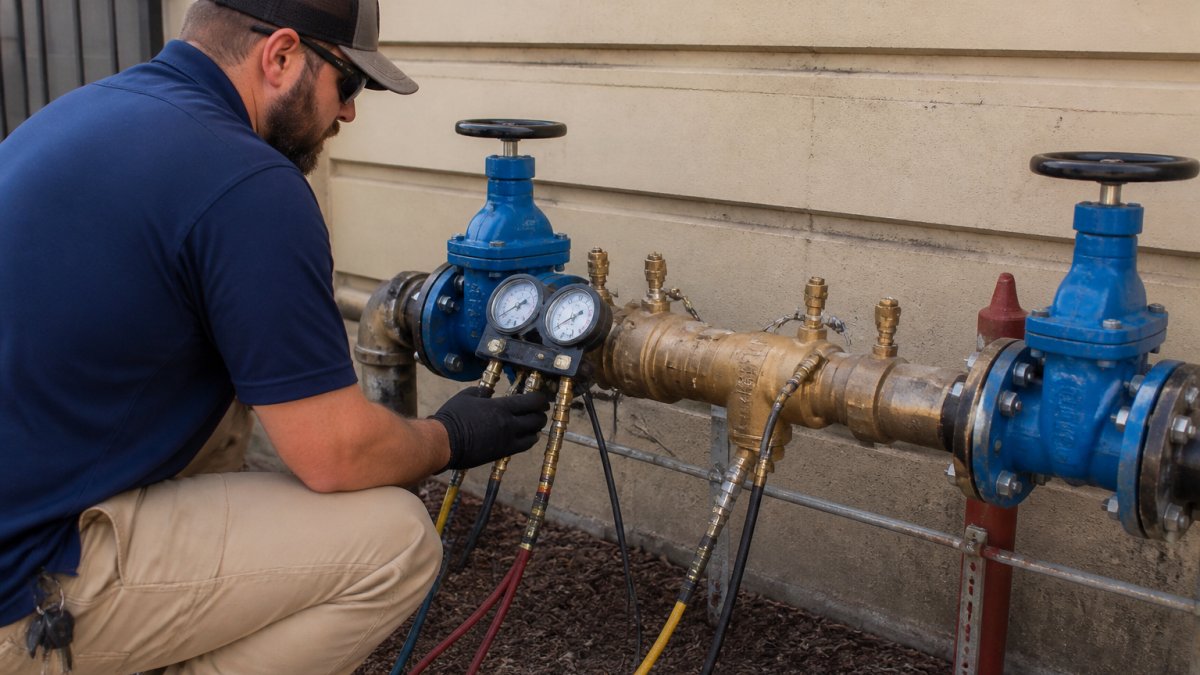
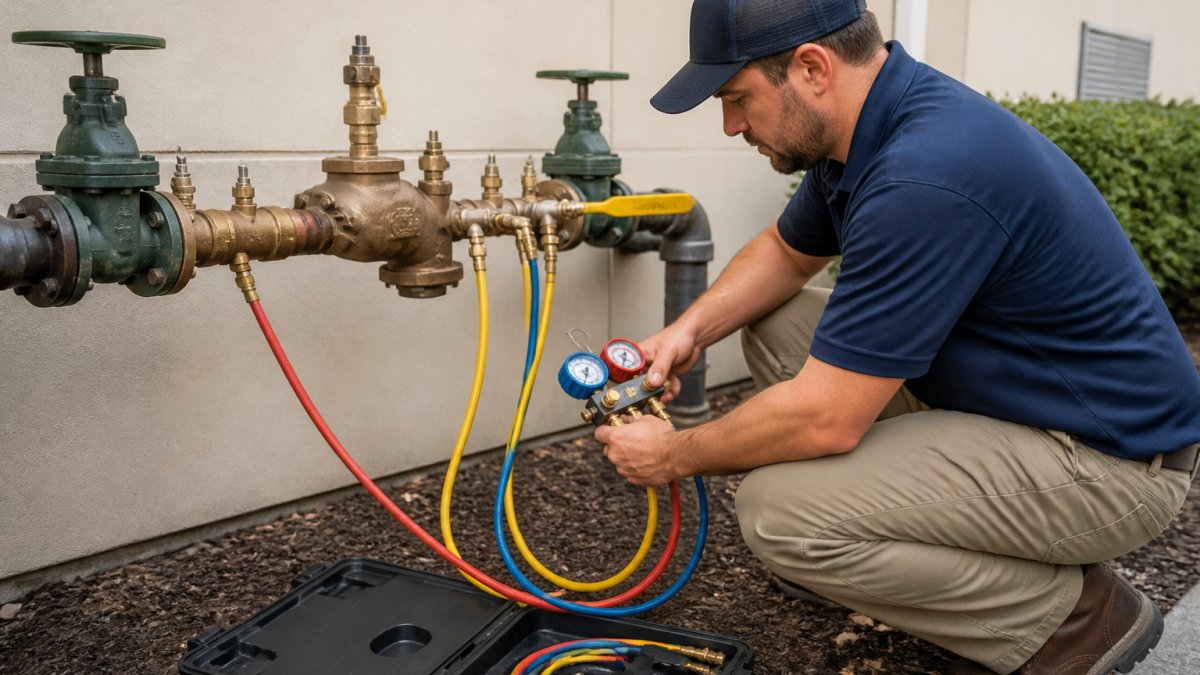
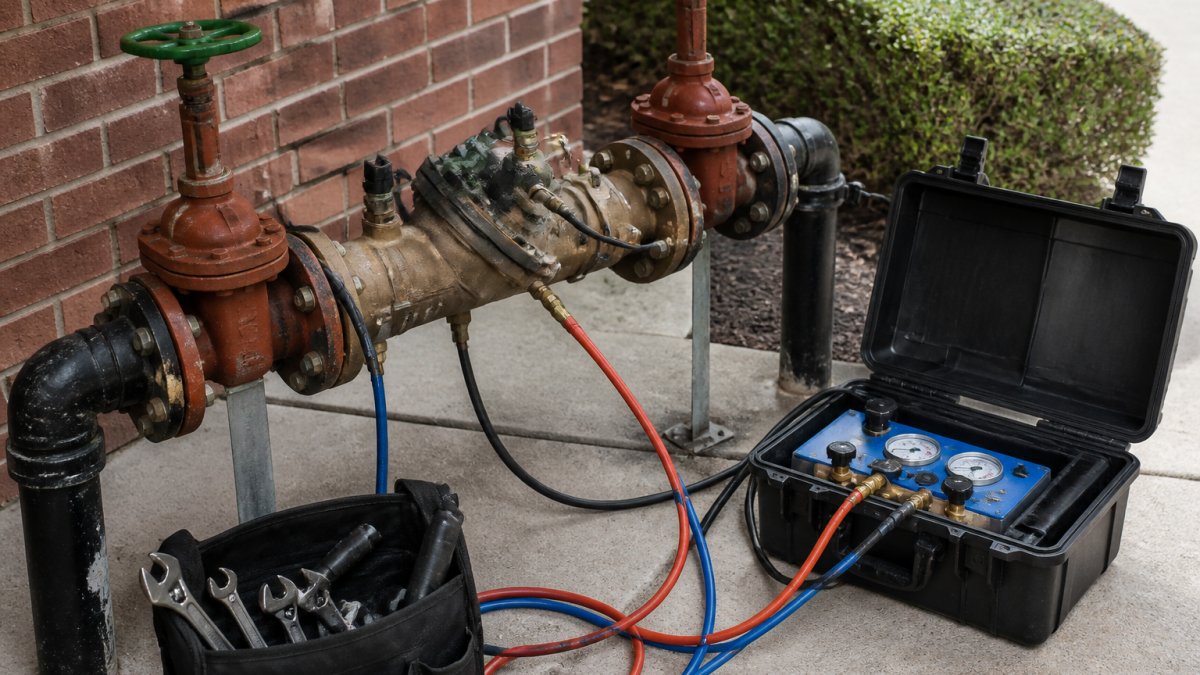
Commercial backflow testing checks that the devices protecting your water supply from contamination are working correctly. Backflow prevention assemblies are generally tested periodically by a certified tester who measures the valves against required pressure readings and records the results. A failed device can allow water from your building to flow back into the public supply, so the test is a safety check as much as a compliance step.
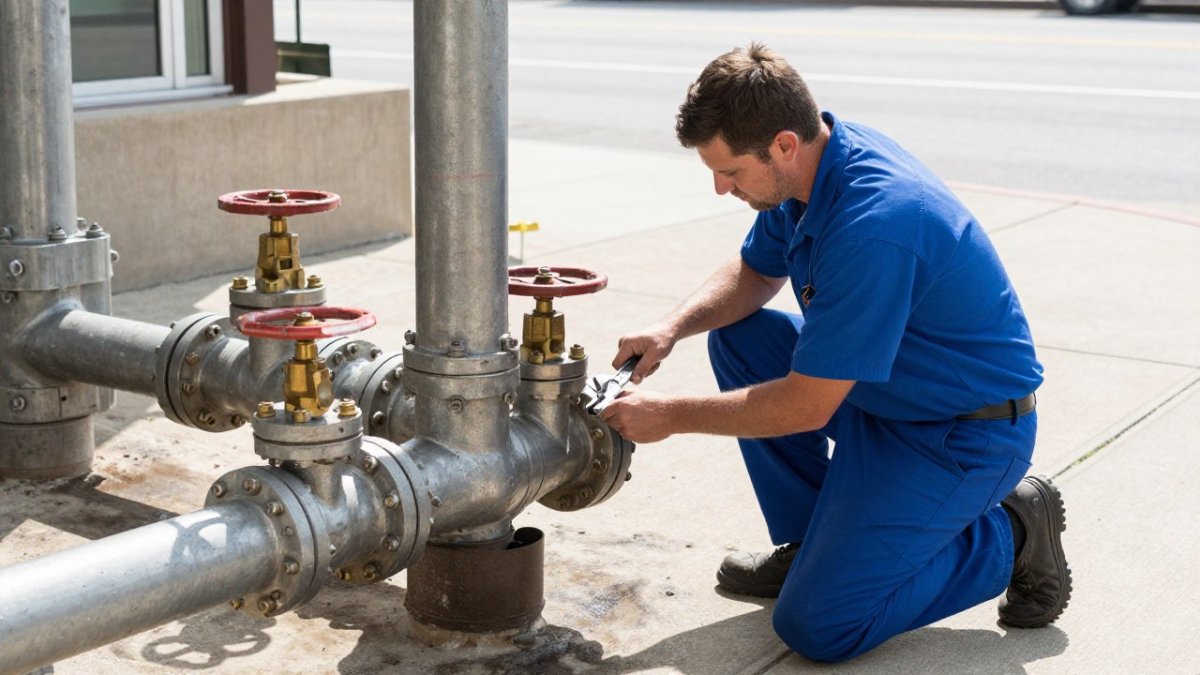
Commercial properties often have several assemblies. A single site might have a fire line, a domestic water service, and a irrigation system, each with its own device. Each one must be tested and reported separately, which is why the scope of the job matters when you compare quotes.
City of Houston Backflow Testing Requirements
Commercial backflow prevention assemblies are generally subject to periodic testing requirements, and the property owner or facility manager is typically responsible for compliance. Check the City of Houston's current requirements for specific deadlines. The practical workflow has four moving parts, and each one is where compliance quietly breaks down.
1. Know your due dates. Each assembly has its own test anniversary based on the prior test date, so a property with a domestic line, a fire line, and an irrigation device can have three different deadlines in a single year. Build a register that lists every assembly by type, location, serial number, and last test date, then calculate the next due date from that record rather than from memory.
2. Use an accepted tester and procedure. The test must be performed by a certified backflow prevention assembly tester using the accepted field-test procedure for that assembly type. Confirm the tester's certification is current before the visit, not after, a report from a tester whose credential has lapsed may be rejected.
3. Submit the report through the approved channel. Test reports are typically submitted to the city through its established process, and should be complete: assembly details, test readings, tester information, and the pass or fail result. Incomplete or late filings can cause compliance problems even when the device passed.
4. Handle failures on a clock. A failed assembly is not the end of the process, it triggers repair or replacement and then a retest, and the retest report has to be submitted as well. The property is not back in compliance until the passing retest is on file.
City of Houston backflow prevention program
Requirements can differ between jurisdictions, so it helps to confirm that a provider is familiar with the permitting and reporting process that applies to your property. Ask any tester which jurisdictions they routinely file in and how they track due dates across multiple assemblies, because that tracking is the part most property managers underestimate.
How to Verify a Tester's Credentials and Certification
Before you hire anyone, confirm that the technician holds a current backflow tester certification recognized in Texas. Ask for the tester's license number and check it against the state's public records. A certified tester should be able to show you proof of certification without hesitation.
Also confirm that the company carries liability insurance and is authorized to perform tests in the City of Houston. Once you have the paperwork, you can check the tester's qualifications independently rather than relying on a sales pitch. For a step-by-step walkthrough, see our guide on how to verify backflow technician credentials.
Comparing Providers: Pricing, Turnaround, and Scheduling
Most commercial buyers compare backflow testers on the headline test price, which is the least useful number in the quote. A better approach is to score providers on five criteria that actually determine total cost and compliance risk: credentials, scope, pricing structure, turnaround, and post-failure support.
Credentials. Confirm the tester's certification is current and that the company carries liability insurance and is set up to file in your jurisdiction. A provider who cannot produce a certification number on request should be avoided.
Scope. Ask whether the quote covers testing only, or testing plus report preparation and submission. A test without a filed report is an unfinished compliance task, and the submission step is where cheap quotes often stop.
Pricing structure. Providers price differently, per assembly, per visit, or a hybrid, and the structure matters more than the rate. A per-visit model can be cheaper for a property with several assemblies tested in one trip; a per-assembly model is easier to budget across a portfolio. Ask for an itemized quote that separates the test fee, any trip or travel charge, after-hours premium, repair labor and parts, and report or submission fees.
Turnaround. Get three numbers in writing: how soon a technician can be scheduled, how long the on-site test takes per device, and when the signed report will be delivered. For a property with a deadline approaching, the report delivery date is the number that matters.
Post-failure support. Ask whether the provider can repair on the same visit, how quickly they can source a replacement assembly, and whether they retest after the repair. A low test price paired with slow repair turnaround can cost far more in downtime than a higher upfront rate.
Reading an Itemized Quote
An itemized quote should show the cost of each test, any repair or parts charges, travel fees, and report or submission fees. Be cautious of quotes that bundle everything into one vague number. If a line item is unclear, ask the provider to explain it in writing before you approve the work.
Watch out: a quote that excludes the test report or city submission can leave you with an unfinished compliance task, so confirm what the price covers before you sign.
After-Hours and Weekend Availability
Many commercial properties cannot afford to lose water service during business hours, which makes evening and weekend testing attractive. Ask whether the provider offers scheduled off-hours appointments, and whether any after-hours rate is clearly stated in advance. Some providers charge a premium for these visits, so get that number before you book. For details on what off-hours service involves, see our overview of after-hours backflow testing services.
For a broader look at which companies are worth considering, read our 2026 guide to Houston backflow testing companies. For context on what commercial testing typically costs, see our commercial backflow testing cost breakdown.
The table below sums up the five criteria the article uses to compare backflow testing providers.
| Criterion | What to check | Why it matters |
|---|---|---|
| Credentials | Current certification and liability insurance | Lapsed credentials can get a report rejected |
| Scope | Testing only, or testing plus report and submission | A test without a filed report is unfinished |
| Pricing structure | Per assembly, per visit, or hybrid | Structure matters more than the rate |
| Turnaround | Scheduling lead time, test duration, report delivery | Report delivery matters most near a deadline |
| Post-failure support | Same-visit repair, replacement sourcing, retest | Slow repair can cost more than a higher test price |
What Happens When a Device Fails: Repair and Replacement
A failed test does not always mean the device must be replaced. Many failures come from fouled check valves, worn seals, or debris, and a qualified technician can often repair them on the same visit. When repair is not possible, the assembly must be replaced, and the new unit must be tested before the property is back in compliance.
Ask each provider how they handle failures. Find out whether they can repair on the spot, how quickly they can source a replacement, and whether they retest after the work is done. These answers matter more than the base test price if a device fails. To understand the usual causes of failure, read our article on common reasons backflow tests fail.
Commercial Property Compliance Checklist for Facility Managers
Use this checklist to keep your property on track:
- List every backflow prevention assembly on the property, with its type and location
- Record the date of each device's last test and its next due date
- Confirm the tester's current certification and insurance
- Get an itemized quote that includes testing, reporting, and submission
- Ask how the provider handles failed devices and retesting
- Keep signed test reports on file for your records
Tracking these items in one place makes annual compliance far less stressful, especially for properties with many assemblies.
Booking Your Commercial Backflow Test With H-Town Backflow
At H-Town Backflow, we test and repair backflow prevention assemblies for commercial and residential properties across the Greater Houston area. We offer night and weekend appointments so your operations can continue without water service interruption. Our team can help you keep your testing schedule current.
Ready to schedule? Send us your property details and the number of assemblies on site, and contact H-Town Backflow through its website for availability and a quote. Get started with H-Town Backflow and keep your water supply safe and compliant.
Frequently Asked Questions
How much does a backflow test cost in Houston?
H-Town Backflow has not published fixed pricing for this article, and cost depends on the number of devices, device type, site access, and whether repairs are needed. Request an itemized quote that separates the test fee, any parts, and any travel or after-hours charges so you can compare providers on the same basis. For current prices and a quote for your property, contact H-Town Backflow directly through its website.
Is backflow testing mandatory for commercial properties in Houston?
Backflow prevention assemblies installed on commercial water connections generally require periodic testing by a certified tester, and the City of Houston sets the submission rules and deadlines. Confirm your device list and due dates with the city's current requirements before scheduling, because the requirements apply by device type and connection. Keeping test reports on file helps during inspections and when property changes hands.
How long does a commercial backflow test take?
Most single-device tests are completed in a relatively short visit, while properties with many assemblies take longer because each device must be tested and documented. Ask the provider how long a visit typically takes for your device count and whether testing can be scheduled to limit disruption to tenants or operations. Confirm whether water service needs to be interrupted during testing.
What happens if a backflow preventer fails its test?
A failed assembly must be repaired or replaced and then retested before it is considered compliant. Ask whether the provider can make minor repairs on the same visit and how quickly it can schedule a retest. Keep the failed test report, the repair record, and the passing retest report together so you have a complete compliance trail.