 how-to
Annual Backflow Testing for Multi-Unit Housing
Table of Contents
- Why Annual Backflow Testing Matters for Multi-Unit Housing
- What Backflow Is and How Contamination Enters Your Water Supply
- Backflow Testing Requirements for Property Managers
- Your Commercial Backflow Testing Checklist
- Step 1: Build a property-wide device inventory
- Step 2: Confirm each deadline against the water provider's record
- Step 3: Assign responsibility across the property team
- Step 4: Book a certified tester and confirm credentials
- Step 5: Plan tenant access and communication
- Step 6: Review the report and log the next deadline
- How Much Does Backflow Testing Cost?
- What Belongs in a Backflow Preventer Annual Test Report
- What Happens When a Device Fails Its Test
- Conclusion
- Frequently Asked Questions
Last Updated: October 18, 2026
Why Annual Backflow Testing Matters for Multi-Unit Housing
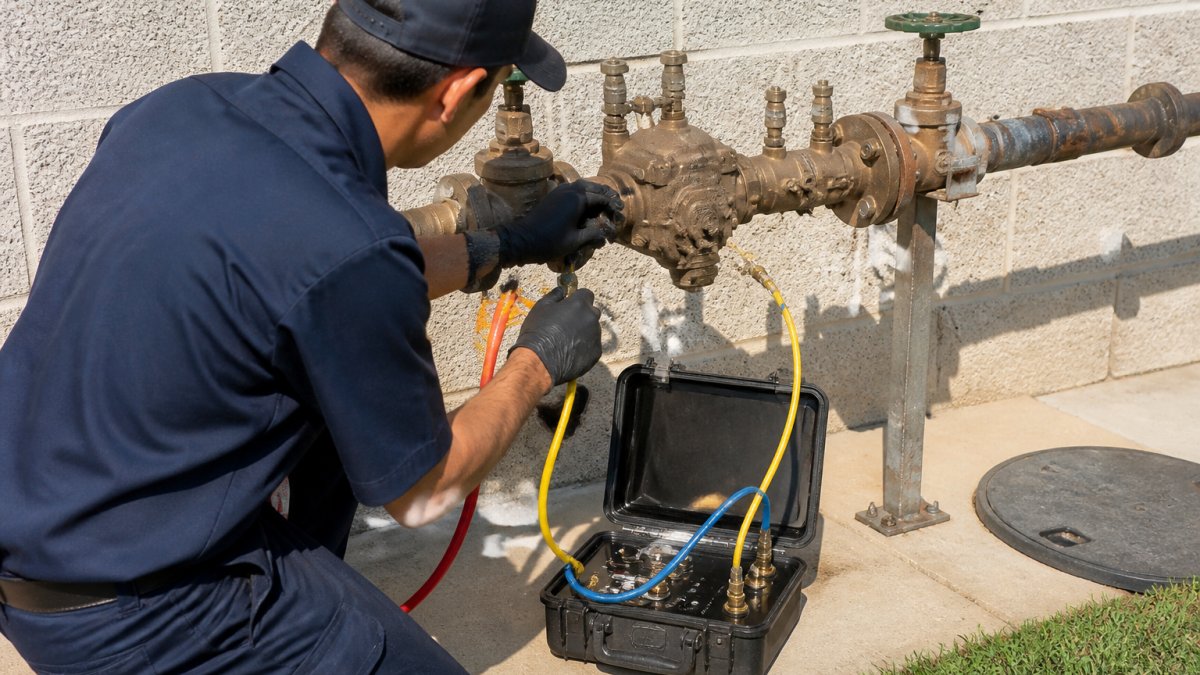
Annual backflow testing for multi-unit housing protects every tenant who turns on a tap. It confirms that the devices separating your building's water supply from potential contamination sources are working as designed. H-Town Backflow offers flexible scheduling, including night and weekend appointments, to ensure your operations continue without water service interruption.
Here's the core problem. A multi-unit building has dozens of water connections. Irrigation lines, boiler feeds, fire sprinkler systems, laundry rooms, and pool fill lines all create potential cross-connections. If pressure drops, water can flow backward through any of them. One failed device can put the whole building's drinking water at risk.
The EPA's cross-connection control guidance treats backflow prevention as a public health requirement, not an optional upgrade. That framing matters. A single contamination event can trigger boil-water notices, health investigations, and liability exposure that far outweighs the cost of testing.
Most property managers treat annual testing as paperwork. It isn't. It's the only scheduled check that proves your devices still work.
What Backflow Is and How Contamination Enters Your Water Supply
Backflow is the reverse flow of water through a pipe, moving contaminated water back into the clean supply. It happens two ways: backpressure and backsiphonage.
- Backpressure occurs when downstream pressure exceeds supply pressure. A boiler or pump can cause this.
- Backsiphonage occurs when supply pressure drops. A water main break or heavy firefighting demand can pull water backward.
Both create the same result: cross-connection contamination. Irrigation water, chemical feeds, and greywater can enter the drinking supply.
Multi-unit housing is especially exposed. Buildings have many cross-connections in a small footprint. A common mistake is assuming a single device protects the whole property. It doesn't. Each cross-connection needs its own protection.
Backflow Testing Requirements for Property Managers
Backflow testing requirements for property managers start with one rule: every testable assembly needs an annual test. Most water providers require testing every 12 months, and the deadline runs from the last test date, not the calendar year.
The Texas Commission on Environmental Quality sets the framework that local water providers enforce. Your specific rules come from your municipality or water utility, and those rules vary. Some require test reports within a set number of days. Some require the tester to file directly. Know which applies to each property.
Which Devices and Properties Require Annual Testing
Not every device needs testing. Testable assemblies typically include:
- Reduced pressure zone (RPZ) assemblies
- Double check valve assemblies
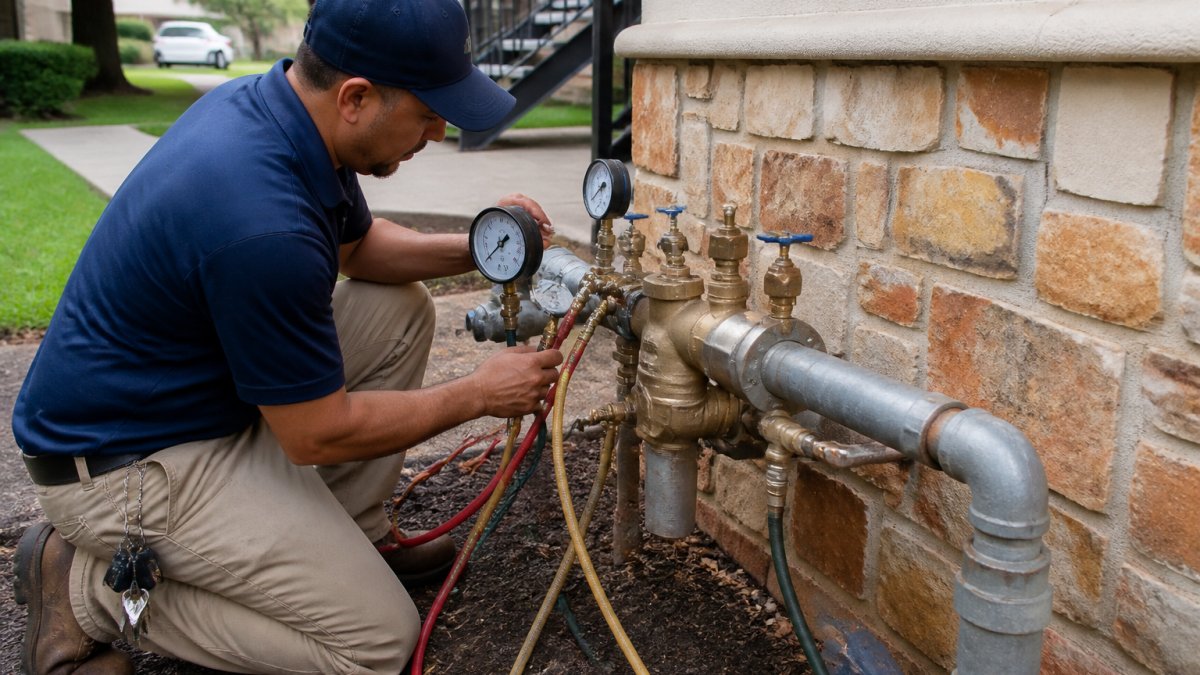
- Pressure vacuum breakers on irrigation systems
- Spill-resistant vacuum breakers
Residential irrigation systems usually need testing too. Commercial properties, HOAs, and multi-unit buildings almost always have at least one testable assembly.
Your Commercial Backflow Testing Checklist
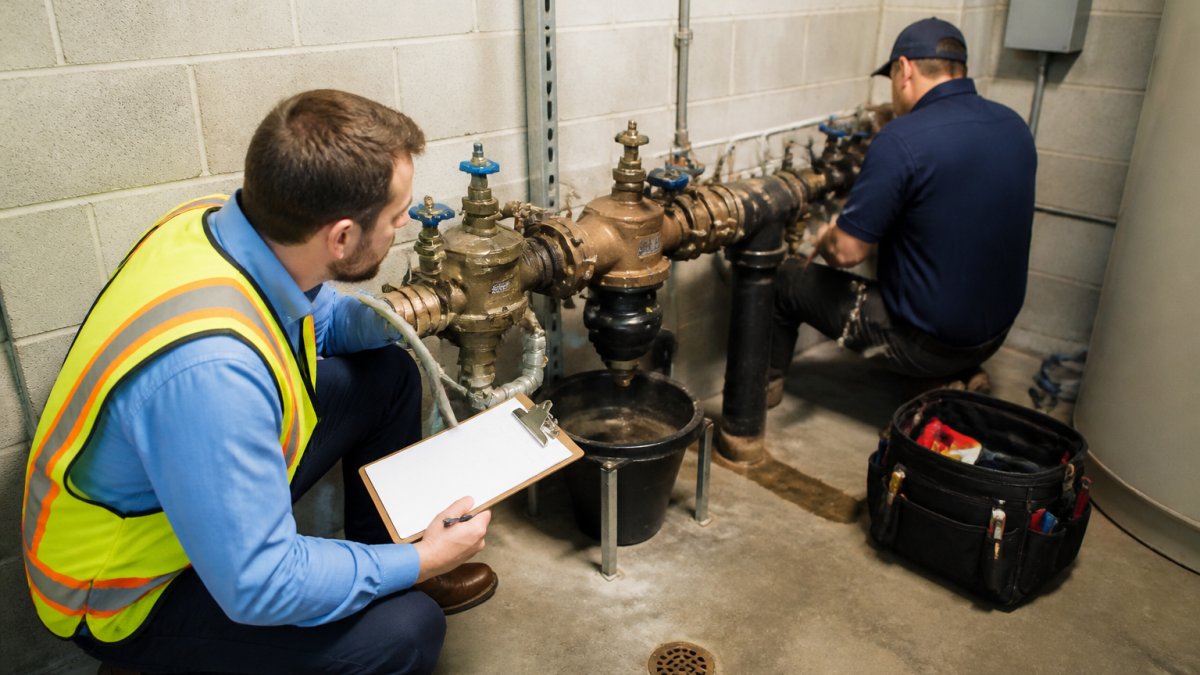
A commercial backflow testing checklist keeps multi-unit properties on schedule and audit-ready. The difference between a portfolio that passes every inspection and one that scrambles each year is not effort, it's a repeatable system. Use this sequence for every building, and assign an owner to each step.
Step 1: Build a property-wide device inventory
This is the step most portfolios skip, and it's the one that prevents missed deadlines. Walk every building and record each assembly in a single spreadsheet or asset-management system with these fields:
- Property name and street address
- Building, floor, and room or vault location
- Device type (RPZ, double check, pressure vacuum breaker, spill-resistant vacuum breaker)
- Make, model, size, and serial number
- Last test date and next due date
- Water provider and account number
- Tester name and certification number from the last test
Photograph each device and its test tag, and attach the photo to the row. When a device is replaced, the serial number changes and the test history follows the device, not the building, so update the row rather than creating a new one, and note the replacement date.
Step 2: Confirm each deadline against the water provider's record
The 12-month clock usually runs from the last test date, not the calendar year, but the exact rule comes from your water provider. Pull the provider's record for each account and reconcile it against your inventory. Discrepancies are common after a device swap or a change in management, and they are the leading cause of surprise violation notices.
Step 3: Assign responsibility across the property team
Multi-unit housing rarely has one person who owns compliance end to end. Write down who does what:
- Owner or asset manager: approves the testing budget and signs repair authorizations above a set threshold.
- Property manager: owns the inventory, books the tester, and confirms reports are filed.
- HOA or board: approves access to shared mechanical spaces and common-area devices.
- Maintenance team: escorts the tester, unlocks rooms, and confirms water is restored after testing.
- Tenants: provide access to in-unit devices and receive notice of scheduled testing.
A one-page responsibility matrix prevents the most common failure mode: everyone assumes someone else booked the test.
Step 4: Book a certified tester and confirm credentials
Confirm state certification and calibrated test equipment before scheduling. Ask for the tester's certification number and gauge calibration date in writing, and keep that record with the test report.
Step 5: Plan tenant access and communication
Send written notice at least several days before the visit. Most tests need only brief access to utility rooms and do not require shutting off building water, but tenants should still know when a tester may enter. For occupied units, offer a window rather than a single time, and post notice in shared laundry rooms and mechanical areas.
Step 6: Review the report and log the next deadline
Confirm pass or fail status, verify the report reached the water provider, and immediately update the next-due date in your inventory. Set a reminder 60 days before the deadline so scheduling does not slip.
How Much Does Backflow Testing Cost?
Backflow testing cost depends on the device type, count, and access difficulty, so pricing is provided for each property individually. Flat rates are not published because a single RPZ in an easy-access vault and a dozen assemblies across a high-rise are not the same job.
What drives the price:
- Device type and size. RPZ assemblies cost more to test than small vacuum breakers.
- Number of devices. Portfolio pricing usually beats single-device pricing.
- Access and scheduling. After-hours or weekend appointments may carry different rates.
For a firm quote on your properties, contact our team with your device list. We'll confirm pricing before any work begins.
The bigger cost is non-compliance. Fines, retest fees, and water service interruptions add up fast. Budget testing as a fixed annual line item and the surprise disappears.
What Belongs in a Backflow Preventer Annual Test Report
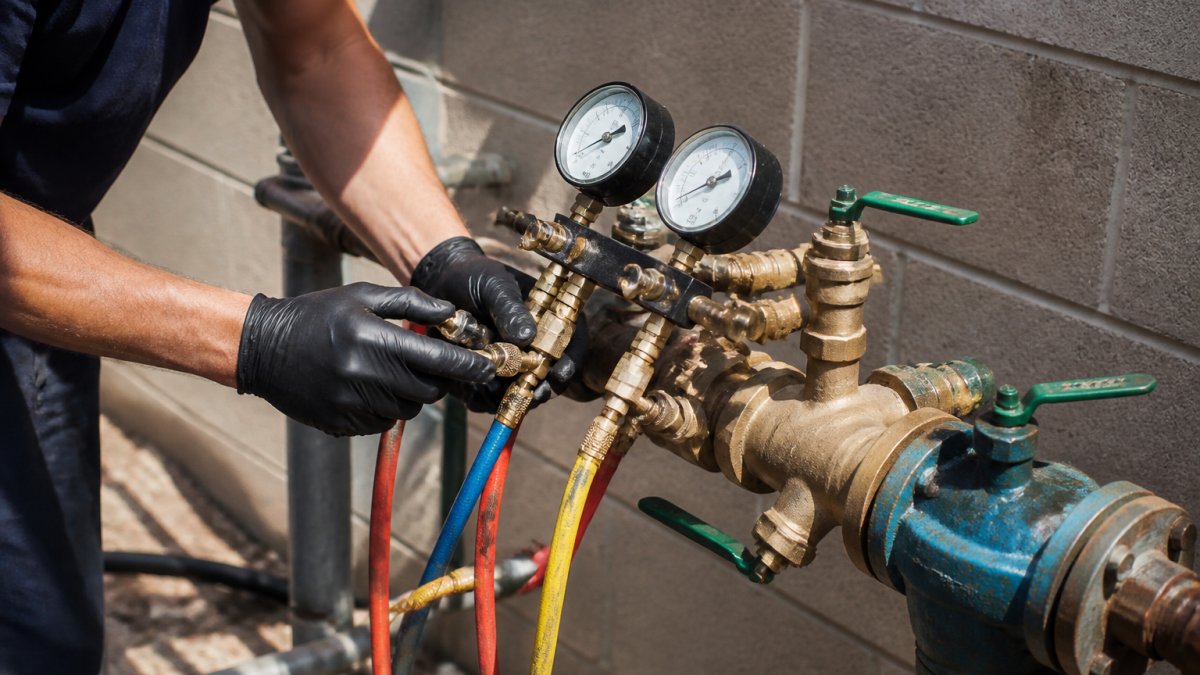
A backflow preventer annual test report is the legal record proving your device passed. It should include:
- Device make, model, size, and serial number
- Test date and the tester's certification number
- Certified gauge information and calibration date
- Pass or fail result for each check
- Repair details if the device failed
- Signature of the certified tester
Keep a copy for your records and confirm the report reached your water provider. In multi-unit housing, store reports by property and device so an inspector can pull them quickly.
What Happens When a Device Fails Its Test
A failed test doesn't always mean replacement. It means the device needs repair and a retest, and the failed assembly may need to stay out of service until it passes. In a multi-unit building, the hours after a failure are when compliance is won or lost, so work the decision tree in order.
Immediate response: isolate and protect
- Confirm the failure in writing. Get the failed test report from the tester with the specific check that failed, a fouled check valve reads differently from a ruptured relief valve.
- Determine whether the device can stay in service. Some failures allow continued service with a retest scheduled; others require the assembly to be isolated or the water supply to that branch shut off. Follow the tester's and water provider's direction, and document the temporary protection in place.
- Notify the right people. Tell the owner or asset manager, the property manager, and any affected tenants. If a shared system is isolated, post notice at the affected fixtures.
Repair-or-replace decision tree
- Minor internal failure (fouled check, worn seat, damaged O-ring): rebuild with a manufacturer rebuild kit. This is the most common outcome and the least expensive.
- Relief valve failure on an RPZ: often repairable, but confirm the cause, repeated discharge can indicate a downstream pressure problem that will recur.
- Cracked or corroded body, or obsolete model with no available parts: replace the assembly. Match the replacement to the original's rated capacity and approval listing.
- Repeated failures within a short window: investigate the system, not just the device. Debris, water hammer, or thermal expansion may be damaging the assembly.
Authorization and scheduling
Repair above a set dollar threshold usually needs owner or board approval. Get the repair authorization in writing before work begins, and schedule the retest as soon as the repair is complete. Delays between repair and retest are what turn a warning into a violation.
Retest and reporting
- Retest the repaired device with a full procedure, not a spot check.
- File the corrected report with the water provider so the pass result replaces the fail on record.
- Update the inventory with the repair details, retest date, and next due date.
- Keep the paper trail, failed report, repair invoice, retest report, stored by property and device.
Conclusion
Multi-unit housing leaves little room for missed backflow deadlines. Between tenant coordination, device tracking, and local reporting rules, compliance takes real organization. H-Town Backflow handles the testing and repair side so your properties stay protected and on schedule. We offer night and weekend appointments to avoid water service interruption, service the City of Houston and surrounding municipalities, and keep your required testing up to date. Get started with H-Town Backflow and protect your building's water supply.
Frequently Asked Questions
How often do backflow preventers need to be tested?
Most jurisdictions require annual backflow testing, meaning once every 12 months. Some water providers set different schedules for certain assembly types or risk levels, so confirm the interval with your local water authority. Mark the testing deadline on your calendar as soon as the previous test is filed, and build in a buffer of a few weeks so a failed test and retest don't push you past the deadline. Late testing can trigger fines, water service interruption, or both.
Who is responsible for backflow testing in a multi-unit property?
The property owner or manager is typically responsible for arranging and documenting testing for assemblies that serve the building's shared water supply. Tenants may be responsible for devices inside individual units, such as private irrigation connections, depending on the lease and local rules. Build a responsibility matrix that lists each device, its location, and who owns the testing duty. This prevents gaps where a device goes untested because both parties assumed the other handled it.
What happens if a backflow preventer fails its annual test?
A failed test means the assembly is not providing adequate protection and must be repaired or replaced, then retested. In many jurisdictions the water provider must be notified, and water service may be at risk until the device passes. Work with a certified tester who can diagnose the failure, source parts, and schedule a retest quickly. Keep the failed test report and the passing retest report together so your compliance file shows a complete record.
Do all buildings in a multi-unit property need separate backflow tests?
Not necessarily. Testing is tied to individual backflow prevention assemblies, not buildings. A property with one assembly serving the whole site may need only one test, while a property with separate assemblies for irrigation, fire protection, and each building will need each device tested. Walk the property with a certified tester to inventory every assembly, record its type and location, and confirm with your water provider which devices fall under the testing requirement.